
Little Prudy’s Captain Horace
Sophie May
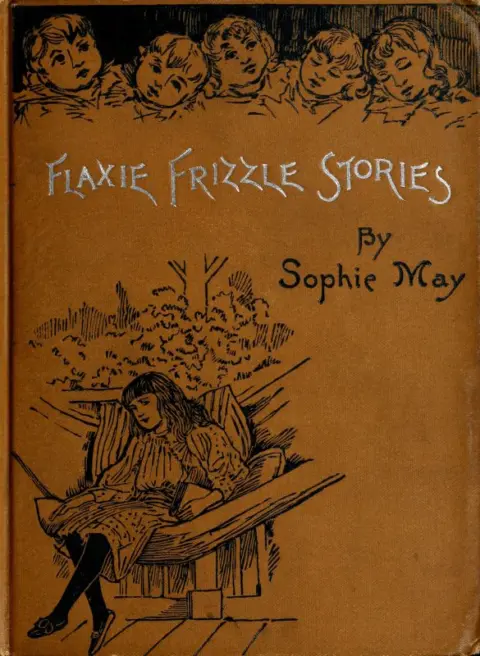
THE CLASSIC COLLECTION · 1878
"Little Pitchers" by Sophie May is a children's novel written in the late 19th century. The story revolves around the charming and whimsical lives of young twins, Pollio and Posy Pitcher, as they navigate their early childhood experiences in a small town. The narrative captures their playful personalities and the loving dynamics within their family, highlighting themes of innocence, curiosity, and familial bonds. The opening of the book introduces Pollio and Posy, who at the beginning are four years old and full of life and imagination. The narrative provides a colorful description of their home in Rosewood and presents their contrasting characters: Pollio, who is amusingly homely and comical, and Posy, who is beautiful and sweet-natured. As the twins venture into their daily lives, readers witness their innocence and playful mischief intertwined with life lessons about obedience and kindness. The opening chapters set the stage for the twins' adventures and the heartwarming interactions with their family members, offering a glimpse into a bygone era's simplicity and charm.
Introduction adapted from the source catalogue; source summaries may be automatically generated.
Free to read · English · 26,453 words · No account needed
MAKE TIME FOR A GOOD BOOK
On by default. Untick to stop anonymous reading totals. Each page counts after 10 seconds in view. How this works.
Anonymous counting is on unless you have switched it off.
I must confess he did not hurt the dog one bit. Beppo did not feel the horse-whip any more than if it had been a wisp of straw; but he hung his head in grief, for it was the first blow he had ever received. When all was over, he gave a side-glance at his master, as if to say, “I’ll never do so again: I won’t bark any more.” And then he lay down very meekly on a cushion of hay; and the judge went back to bed, thinking he had done his duty, but feeling sorry enough to cry.
There was no more noise that night from Beppo; though two or three carriages passed, and he must have heard them, and wanted to bark.
Next morning he lingered about the yard, ashamed to come into the house.
“Poor fellow, he takes it to heart!” said the judge; and then told what
happened.
The children looked sober; and Posy gazed through her tears at Pollio, who winked hard, and tried to brave it out. Friend Littlefield was glad to see that they all cared so much for the dog.
But, just as the breakfast-bell rang, Teddy rushed into the parlor,
exclaiming,—
“Papa, our pears are stolen!”
“Pears, child! What pears?”
“Why, you know those two trees bending down to the ground,—the nicest pears there are in the world. Well, there isn’t a thing left but just the leaves!”
“And that must have been what Beppo was barking for. No doubt he heard the thieves at work, and was trying to let us know it. The faithful old creature!” said the judge, looking distressed, but thinking much more about the dog than about the pears.
“O papa! And you w’ipped him!” cried Pollio, whirling round and round
on the floor.
“Yes,” sighed papa, “I whipped him.”
Pollio didn’t try any longer to brave it out: he swept through the room like a hurricane, to go and have a cry on his dear dog’s neck.
“How’d I feel if my papa had w’ipped me when I wasn’t naughty!” said he. But he couldn’t possibly imagine it; for he had never been punished even by a “love-pat” in his whole little life.
Beppo was hugged half to death by the children; and the judge himself stroked his head, called him “fine fellow,” and fed him from his own hand with broiled beef-steak.
“Does he know you’re sorry, papa?” asked Pollio.
“Well, I think he has some notion of it: at any rate, he knows we’re good friends once more. See, he wags his tail, and looks quite cheerful again.”
Your reading position is saved on this browser. Take it to another device with a library code. Reading pages adapt to text, rather than matching a printed edition.
BEHIND THE BOOK
This eBook is for the use of anyone anywhere in the United States and most other parts of the world at no cost and with almost no restrictions whatsoever. You may copy it, give it away or re-use it under the terms of the Project Gutenberg License included with this eBook or online at www.gutenberg.org. If you are not located in the United States, you will have to check the laws of the country where you are located before using this eBook. Read the source licence.
The original source file, including credits and licence, is retained by this library. Request an original-format copy at no charge. Please include the book title and Project Gutenberg identifier #48862.
KEEP YOUR CURIOSITY GOING
Coulson Kernahan

Maurice Baring
Frances Wright
Cécile Tormay

Frederic Jesup Stimson

W. H. P. (William Henry Pope) Jarvis

