
Little Prudy’s Captain Horace
Sophie May
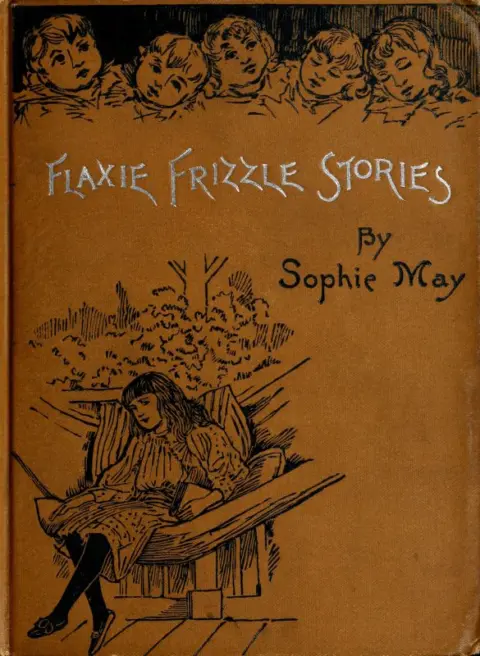
THE CLASSIC COLLECTION · 1878
"Little Pitchers" by Sophie May is a children's novel written in the late 19th century. The story revolves around the charming and whimsical lives of young twins, Pollio and Posy Pitcher, as they navigate their early childhood experiences in a small town. The narrative captures their playful personalities and the loving dynamics within their family, highlighting themes of innocence, curiosity, and familial bonds. The opening of the book introduces Pollio and Posy, who at the beginning are four years old and full of life and imagination. The narrative provides a colorful description of their home in Rosewood and presents their contrasting characters: Pollio, who is amusingly homely and comical, and Posy, who is beautiful and sweet-natured. As the twins venture into their daily lives, readers witness their innocence and playful mischief intertwined with life lessons about obedience and kindness. The opening chapters set the stage for the twins' adventures and the heartwarming interactions with their family members, offering a glimpse into a bygone era's simplicity and charm.
Introduction adapted from the source catalogue; source summaries may be automatically generated.
Free to read · English · 26,453 words · No account needed
MAKE TIME FOR A GOOD BOOK
On by default. Untick to stop anonymous reading totals. Each page counts after 10 seconds in view. How this works.
Anonymous counting is on unless you have switched it off.
THE moment Dr. Field arrived, Pollio set up a perfect howl. The doctor was a cross-looking man, with black eyebrows that met over his nose, and the children had always been afraid of him. Pollio said once he “couldn’t see his eyes, his eye-bushes were so fick.”
“You need not fancy this boy’s brain is injured,” said Dr. Field. “You see he knows me, and dislikes me as much as ever.”
He smiled sadly as he spoke; for he was sorry to be disliked.
“The colt has bruised his back a little; but I cannot tell how much till he stops screaming. I think I will go away now, and come again when he is calmer.”
Everybody but mamma left the room; and they tried to keep the house quiet, or as quiet as they could on Fourth of July. Billy Barstow had turned his colt into the meadow, and was pacing the dining-room in great distress, with no head on his shoulders but his own. The wolf’s head was in the stable-yard, and the dog was smelling at it, and wondering to what tribe it belonged.
“How’s Pollio?” was Billy’s question of everybody he saw. “O Eliza! mayn’t I go up and listen at the keyhole? I want to see if I can hear him groaning.”
“Hush! You’ve done enough mischief for one day, Billy Barstow!—knocking the senses out of that dear little innocent child! There’s no knowing as he’ll ever speak again,” sobbed Eliza.
“Billy, you mustn’t ’sturb my Pollio,” said little Posy sternly.
“Come here to me, you darling precious Posy!” said Eliza, seizing the pale child in her arms. “Don’t you want some jelly?”
This was Eliza’s idea of “pacifying children.” But Posy was too wretched to care for jelly.
When Pollio had been left alone with his mother for an hour or so, he grew calmer. She bathed his head, but did not talk, except to say in a soothing tone,—
“Poor little Pollio! Mamma’s little Pollio!”
“O mamma!” said he, speaking for the first time, “I don’t feel as well
as I used to.”
“No, dear, we all know it.”
“The wolf stepped on me,—with a cap on.”
“The wolf was only Billy Barstow, dear.”
“Well, but it hurt,” cried Pollio, hiding his head in the bed-clothes.
When the doctor came again, he found his little patient better than he
had expected.
“But,” said he, “we can’t tell even yet how much his back is injured. Keep him very quiet, and don’t let him sit up for a day or two.”
Your reading position is saved on this browser. Take it to another device with a library code. Reading pages adapt to text, rather than matching a printed edition.
BEHIND THE BOOK
This eBook is for the use of anyone anywhere in the United States and most other parts of the world at no cost and with almost no restrictions whatsoever. You may copy it, give it away or re-use it under the terms of the Project Gutenberg License included with this eBook or online at www.gutenberg.org. If you are not located in the United States, you will have to check the laws of the country where you are located before using this eBook. Read the source licence.
The original source file, including credits and licence, is retained by this library. Request an original-format copy at no charge. Please include the book title and Project Gutenberg identifier #48862.
KEEP YOUR CURIOSITY GOING
Coulson Kernahan

Maurice Baring
Frances Wright
Cécile Tormay

Frederic Jesup Stimson

W. H. P. (William Henry Pope) Jarvis

