THE CLASSIC COLLECTION✦Thorns of regretCLASSIC FREE BOOKS
Thorns of regret
Alex. McVeigh, Mrs. Miller
THE CLASSIC COLLECTION · 1886
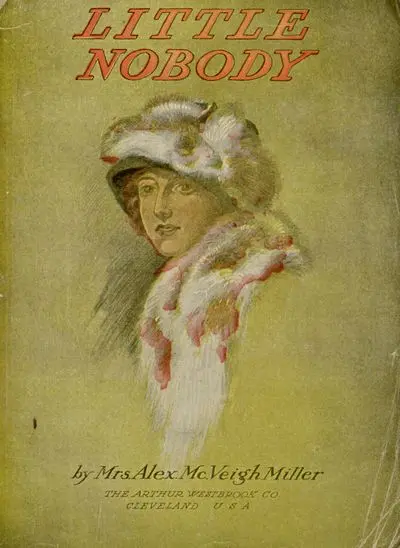
"Little Nobody" by Mrs. Alex. McVeigh Miller is a novel written in the late 19th century. The story centers around a mysterious young girl, known simply as "Little Nobody," and the complicated lives of the adults who surround her, including a Northern journalist named Eliot Van Zandt, and a retired actress, Madame Lorraine, who seems to own her. Set against the vibrant backdrop of New Orleans during a time of social intricacies and hidden identities, the novel explores themes of social status, innocence, and the harsh realities of adult malice. At the start of the novel, we meet Eliot Van Zandt, a journalist who arrives in New Orleans and is instantly captivated by the city's charm. Soon, he encounters Madame Lorraine, who invites him into her world that includes a intriguing young girl, the titular Little Nobody. Their first encounter reveals that Little Nobody has a complex and tumultuous life, living under the fickle care of Madame Lorraine while navigating her own desires for freedom and identity. The opening chapters hint at a tumultuous backstory of jealousy, rivalry, and a hidden life, promising a rich exploration of the relationships and power dynamics between the characters as the narrative unfolds.
Introduction adapted from the source catalogue; source summaries may be automatically generated.
Free to read · English · 63,014 words · No account needed
MAKE TIME FOR A GOOD BOOK
On by default. Untick to stop anonymous reading totals. Each page counts after 10 seconds in view. How this works.
Anonymous counting is on unless you have switched it off.
He heard her in amazement. Soulless--that beautiful, spirited-looking creature! Could it be? He saw the dark eyes lighten as the men began to praise her dauntless riding that day. They were very expressive, those large, almond-shaped eyes. Surely a soul dwelt behind those dark-fringed lids.
Some one proposed cards, and madame assented with alacrity, without seeing Eliot Van Zandt's gesture of disgust. He refused point-blank to take a hand in the game, and said, with reckless audacity:
"Do not mind me; I am always unlucky at play; so I will amuse myself instead with Little Nobody."
Her eyes flashed, but when Mme. Lorraine vacated the seat upon the sofa, she came over and took it, not with any appearance of forwardness, but as a simple matter of course. Then, looking up at him, she said, with child-like directness:
"And so you are a Yankee? I am surprised. I have always hated the Yankees, you know. My father was a Confederate soldier, madame says. He was killed the last year of the war, just a month before I was born."
Mme. Lorraine looked around with a dark frown, but Van Zandt pretended not to see it as he answered:
"Do you mean that you will not have me for your friend, ma'amselle, because I was born in Boston, and because my father fell fighting for the Stars and Stripes?"
"A friend? What is that, monsieur?" she queried, naïvely; and Markham, to whom the conversation was perfectly audible from his corner of the card-table, looked around, and said, teasingly:
"It is something that you will never be able to keep, ma'amselle, by reason of your pretty face. All your friends will become your lovers."
"Hold your tongue, Colonel Markham; I was not talking to you, and it's ill manners to break into a conversation," said the girl, shortly.
She broke off a white camellia from a vase near her, and held it lightly between her taper fingers as she again addressed herself to the journalist:
"I like your word 'friend.' It has a nice sound. But I don't quite
understand."
"I must try to explain it to you," he replied, smiling. "I may tell you, since Markham has broached the subject, that the poets have said that friendship is love in disguise, but the dictionary gives it a more prosaic meaning. Let us find it as it is in Webster."
"Webster?" stammeringly, and Mme. Lorraine looked around with her
disagreeably sarcastic laugh.
"Monsieur Van Zandt, you bewilder my little savage. She can not read."
But a light of comprehension flashed instantly into the puzzled eyes.
She pulled Eliot's sleeve.
"You mean books. Come, you will find plenty in the library."
Your reading position is saved on this browser. Take it to another device with a library code. Reading pages adapt to text, rather than matching a printed edition.
Alex. McVeigh, Mrs. Miller
Alex. McVeigh, Mrs. Miller

Alex. McVeigh, Mrs. Miller

Alex. McVeigh, Mrs. Miller
BEHIND THE BOOK
This eBook is for the use of anyone anywhere in the United States and most other parts of the world at no cost and with almost no restrictions whatsoever. You may copy it, give it away or re-use it under the terms of the Project Gutenberg License included with this eBook or online at www.gutenberg.org. If you are not located in the United States, you will have to check the laws of the country where you are located before using this eBook. Read the source licence.
The original source file, including credits and licence, is retained by this library. Request an original-format copy at no charge. Please include the book title and Project Gutenberg identifier #46958.
KEEP YOUR CURIOSITY GOING
Coulson Kernahan

Maurice Baring
Frances Wright
Cécile Tormay

Frederic Jesup Stimson

W. H. P. (William Henry Pope) Jarvis