THE CLASSIC COLLECTION✦Thorns of regretCLASSIC FREE BOOKS
Thorns of regret
Alex. McVeigh, Mrs. Miller
THE CLASSIC COLLECTION · 1886
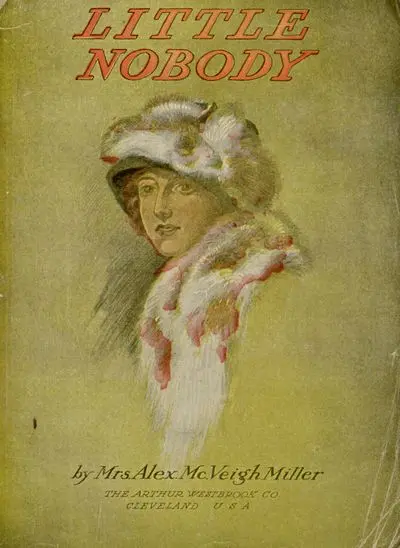
"Little Nobody" by Mrs. Alex. McVeigh Miller is a novel written in the late 19th century. The story centers around a mysterious young girl, known simply as "Little Nobody," and the complicated lives of the adults who surround her, including a Northern journalist named Eliot Van Zandt, and a retired actress, Madame Lorraine, who seems to own her. Set against the vibrant backdrop of New Orleans during a time of social intricacies and hidden identities, the novel explores themes of social status, innocence, and the harsh realities of adult malice. At the start of the novel, we meet Eliot Van Zandt, a journalist who arrives in New Orleans and is instantly captivated by the city's charm. Soon, he encounters Madame Lorraine, who invites him into her world that includes a intriguing young girl, the titular Little Nobody. Their first encounter reveals that Little Nobody has a complex and tumultuous life, living under the fickle care of Madame Lorraine while navigating her own desires for freedom and identity. The opening chapters hint at a tumultuous backstory of jealousy, rivalry, and a hidden life, promising a rich exploration of the relationships and power dynamics between the characters as the narrative unfolds.
Introduction adapted from the source catalogue; source summaries may be automatically generated.
Free to read · English · 63,014 words · No account needed
MAKE TIME FOR A GOOD BOOK
On by default. Untick to stop anonymous reading totals. Each page counts after 10 seconds in view. How this works.
Anonymous counting is on unless you have switched it off.
But no place of concealment presented itself. The broad pavement showed a long, unbroken space of moonlit stone, save where one tall tree reared its stately height outside the curb-stone, and flung long, weird shadows across the front of madame's house.
Carmontelle looked up and down the street, and shook his head.
"I can see no hiding-place but the tree," he said.
"We need none better, unless you are too stout to scale it," Van Zandt answered, coolly, turning a questioning glance upon the rather corpulent form of his good-looking companion.
"You will see," laughed the Southerner, softly.
He glanced up and down the street, and seeing no one in sight, made a bound toward the tree, flung out his arms, and scaled it with admirable agility, finding a very comfortable seat among its low-growing branches. Van Zandt followed his example with boyish ease, and they were soon seated close to each other on the boughs of the big tree, almost as comfortable as if they had been lounging on the satin couches of madame's recherché salon. It was delightful up there among the cool green leaves, with the fresh wind blowing the perfume of madame's flowers into their faces.
"I feel like a boy again," said the journalist, gayly.
"Softly; we are opposite the windows of madame's chamber, I think,"
cautioned Carmontelle.
"She will not come up yet; she will wait in the salon for Remond. It is but a few minutes to midnight."
A step approached, and they held their breath in excessive caution.
It passed on--only a guardian of the peace pacing his beat serenely, his brass buttons shining in the moonlight.
Van Zandt whispered:
"I am not sure but we should have invoked the aid of the law in our
trouble."
But Pierre Carmontelle shook his head.
"The law is too slow sometimes," he said. "We will place the little girl in some safe refuge first, then, if Madame Lorraine attempts to make trouble, we will resort to legal measures. I am not apprehensive of trouble on that score, however, for madame really has no legal right to the girl. Has she not declared scores of times that her maid died, and left the child upon her hands, and that, only for pity's sake, she would have sent her off to an orphan asylum?"
Steps and voices came along the pavement--two roystering lads, fresh from some festal scene, their steps unsteady with wine. They passed out of sight noisily recounting their triumph to each other. Then the echo of wheels in the distance, "low on the sand, loud on the stone."
"Are you armed?" whispered the Louisianian, nervously.
"No."
Your reading position is saved on this browser. Take it to another device with a library code. Reading pages adapt to text, rather than matching a printed edition.
Alex. McVeigh, Mrs. Miller
Alex. McVeigh, Mrs. Miller

Alex. McVeigh, Mrs. Miller

Alex. McVeigh, Mrs. Miller
BEHIND THE BOOK
This eBook is for the use of anyone anywhere in the United States and most other parts of the world at no cost and with almost no restrictions whatsoever. You may copy it, give it away or re-use it under the terms of the Project Gutenberg License included with this eBook or online at www.gutenberg.org. If you are not located in the United States, you will have to check the laws of the country where you are located before using this eBook. Read the source licence.
The original source file, including credits and licence, is retained by this library. Request an original-format copy at no charge. Please include the book title and Project Gutenberg identifier #46958.
KEEP YOUR CURIOSITY GOING
Coulson Kernahan

Maurice Baring
Frances Wright
Cécile Tormay

Frederic Jesup Stimson

W. H. P. (William Henry Pope) Jarvis