THE CLASSIC COLLECTION✦Thorns of regretCLASSIC FREE BOOKS
Thorns of regret
Alex. McVeigh, Mrs. Miller
THE CLASSIC COLLECTION · 1886
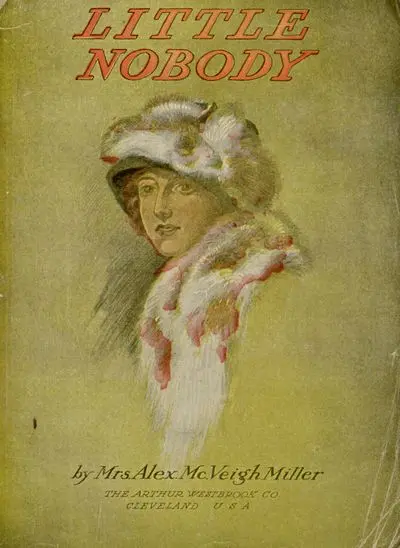
"Little Nobody" by Mrs. Alex. McVeigh Miller is a novel written in the late 19th century. The story centers around a mysterious young girl, known simply as "Little Nobody," and the complicated lives of the adults who surround her, including a Northern journalist named Eliot Van Zandt, and a retired actress, Madame Lorraine, who seems to own her. Set against the vibrant backdrop of New Orleans during a time of social intricacies and hidden identities, the novel explores themes of social status, innocence, and the harsh realities of adult malice. At the start of the novel, we meet Eliot Van Zandt, a journalist who arrives in New Orleans and is instantly captivated by the city's charm. Soon, he encounters Madame Lorraine, who invites him into her world that includes a intriguing young girl, the titular Little Nobody. Their first encounter reveals that Little Nobody has a complex and tumultuous life, living under the fickle care of Madame Lorraine while navigating her own desires for freedom and identity. The opening chapters hint at a tumultuous backstory of jealousy, rivalry, and a hidden life, promising a rich exploration of the relationships and power dynamics between the characters as the narrative unfolds.
Introduction adapted from the source catalogue; source summaries may be automatically generated.
Free to read · English · 63,014 words · No account needed
MAKE TIME FOR A GOOD BOOK
On by default. Untick to stop anonymous reading totals. Each page counts after 10 seconds in view. How this works.
Anonymous counting is on unless you have switched it off.
"Have you anything new?" she inquired. "Because I have invited several young ladies and gentlemen, and ordered a supper here after the performance at the theater. Of course, I want you all to do credit to Bryant."
"We haven't a new thing," declared Edith, lugubriously. "You and Ida will have to uphold the honor of the family by your elegant dressing, for Maud and I will be sure to look like dowdies."
Mme. Sylvie did not seem to take the information much to heart. She
said carelessly:
"And Eliot's wife?"
"Oh, she will be a dowdy, too," replied roguish Edith.
So Sylvie and Ida could scarcely believe their eyes that evening when Maud and Edith sallied in, the dark-haired Maud in gold-colored satin, red roses, and rubies, and Edith in lustrous rose-color with white lace flounces, while diamonds flashed from her throat and ears. Both girls looked as handsome in their way as the bisque dolls who were splendid in Parisian toilets and a profusion of gleaming jewels.
Sylvie stared in amaze and jealous displeasure.
"You told me you had nothing fit to wear!" she exclaimed, acrimoniously.
"I beg your pardon--nothing new," Edith replied, dimpling with mischief. "These are our mother's old dresses made over."
"But diamonds and rubies--I am sure Bryant told me that all your mother's jewels were sold to help pay your father's debts when he failed!" Sylvie exclaimed, in wonderment and displeasure.
"So they were," Maud answered. "But, Sylvie, these do not belong to us. We borrowed them from Una."
Ida Hayes broke in with inexpressible anger and spite:
"I thought Eliot was too poor to give such jewels to his wife."
Edith flashed her a glance of scorn.
"Fortunately poverty is no disgrace, Ida," she said. "But Eliot did not give them to Una. They were bridal presents from her Southern friends."
"Dear me, Sylvie! and you said she was poor and a nobody!" Ida exclaimed, insolently, turning around to her sister.
"Eliot said so," Sylvie answered; and forthwith there began a war of words that was fortunately stopped by Bryant's entrance, and his instant laying on the table of the heated subject of debate.
On his part he was glad to see his young sisters so charmingly dressed and looking so lovely. He took the exciting fact of Una's jewels with manly equanimity.
"There is no reason why Una should not have them," he said. "Her adopted father, Pierre Carmontelle, is one of the richest men in the South. If he and his friends gave her costly bridal presents, it was no more than she had a right to expect."
Your reading position is saved on this browser. Take it to another device with a library code. Reading pages adapt to text, rather than matching a printed edition.
Alex. McVeigh, Mrs. Miller
Alex. McVeigh, Mrs. Miller

Alex. McVeigh, Mrs. Miller

Alex. McVeigh, Mrs. Miller
BEHIND THE BOOK
This eBook is for the use of anyone anywhere in the United States and most other parts of the world at no cost and with almost no restrictions whatsoever. You may copy it, give it away or re-use it under the terms of the Project Gutenberg License included with this eBook or online at www.gutenberg.org. If you are not located in the United States, you will have to check the laws of the country where you are located before using this eBook. Read the source licence.
The original source file, including credits and licence, is retained by this library. Request an original-format copy at no charge. Please include the book title and Project Gutenberg identifier #46958.
KEEP YOUR CURIOSITY GOING
Coulson Kernahan

Maurice Baring
Frances Wright
Cécile Tormay

Frederic Jesup Stimson

W. H. P. (William Henry Pope) Jarvis