THE CLASSIC COLLECTION✦Thorns of regretCLASSIC FREE BOOKS
Thorns of regret
Alex. McVeigh, Mrs. Miller
THE CLASSIC COLLECTION · 1886
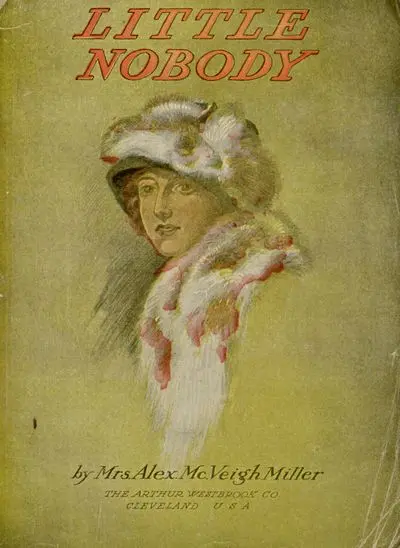
"Little Nobody" by Mrs. Alex. McVeigh Miller is a novel written in the late 19th century. The story centers around a mysterious young girl, known simply as "Little Nobody," and the complicated lives of the adults who surround her, including a Northern journalist named Eliot Van Zandt, and a retired actress, Madame Lorraine, who seems to own her. Set against the vibrant backdrop of New Orleans during a time of social intricacies and hidden identities, the novel explores themes of social status, innocence, and the harsh realities of adult malice. At the start of the novel, we meet Eliot Van Zandt, a journalist who arrives in New Orleans and is instantly captivated by the city's charm. Soon, he encounters Madame Lorraine, who invites him into her world that includes a intriguing young girl, the titular Little Nobody. Their first encounter reveals that Little Nobody has a complex and tumultuous life, living under the fickle care of Madame Lorraine while navigating her own desires for freedom and identity. The opening chapters hint at a tumultuous backstory of jealousy, rivalry, and a hidden life, promising a rich exploration of the relationships and power dynamics between the characters as the narrative unfolds.
Introduction adapted from the source catalogue; source summaries may be automatically generated.
Free to read · English · 63,014 words · No account needed
MAKE TIME FOR A GOOD BOOK
On by default. Untick to stop anonymous reading totals. Each page counts after 10 seconds in view. How this works.
Anonymous counting is on unless you have switched it off.
"Compliments of Eliot Van Zandt and his bride, the 'Little Nobody.'"
"Oh!" the girl cried, with a shiver; but Eliot had already thrown it upon the stage at the feet of the tragedy queen, who was bowing and smiling in response to an enthusiastic recall.
Among a dozen floral tributes she saw that pure, white, bride-like one flung from the opera-box. She took it up, lifted it to her lips, and bowed, then scanned the name written on the card, while Eliot watched her with a triumphant smile, Una with nameless fear.
Eliot was quite curious to note what effect that startling card would have upon the wicked actress. It seemed to him that she would be stunned, that she would fall to the floor in abject terror, crying out for mercy from him she had wronged.
Una, too, expected every instant that she would fall down unconscious, overcome by fear and anger.
Neither one comprehended the stoicism, the incomparable will-power of the gifted, wicked French woman.
Terrible and overwhelming as was the knowledge thus suddenly acquired, Mme. Lorraine neither by word nor sign gave any evidence that she had received a shock. She merely stood still--very still--for a minute or so with her eyes riveted upon the card, and the audience, suspecting nothing of this strange by-play, received the impression that the writing on the card was rather illegible, hence the slowness of the actress in deciphering the name.
At last, with an inward shudder, madame lifted her eyes from the bit of pasteboard upon which she had been gazing as one looks at a serpent hidden among flowers. Her glance went straight to the box where Eliot and Una, so beautiful, so happy, in their youth and love, sat with bated breath watching her face. She recognized them instantly; a subtle smile dawned on her face, she bowed profoundly.
The audience, still unconscious of the truth, applauded madame's graceful courtesy to the echo, and kissing the tips of her fingers, smiling right and left, she retired.
Una drew a long, sobbing breath of relief as the beautiful woman vanished from sight. Eliot smiled and whispered:
"She accepts her defeat with equanimity. Her self-command is admirable,
enviable."
"I am so glad she took it so coolly; I dare say she does not care," Una murmured, gladly, and some of the stifling fear and dread left her heart.
If she could have looked behind the scenes into madame's dressing-room, she would not have felt so confident.
Mima had to exert all her skill to bring her mistress up to the mark to enable her to go on with the fourth and last act in the play.
Your reading position is saved on this browser. Take it to another device with a library code. Reading pages adapt to text, rather than matching a printed edition.
Alex. McVeigh, Mrs. Miller
Alex. McVeigh, Mrs. Miller

Alex. McVeigh, Mrs. Miller

Alex. McVeigh, Mrs. Miller
BEHIND THE BOOK
This eBook is for the use of anyone anywhere in the United States and most other parts of the world at no cost and with almost no restrictions whatsoever. You may copy it, give it away or re-use it under the terms of the Project Gutenberg License included with this eBook or online at www.gutenberg.org. If you are not located in the United States, you will have to check the laws of the country where you are located before using this eBook. Read the source licence.
The original source file, including credits and licence, is retained by this library. Request an original-format copy at no charge. Please include the book title and Project Gutenberg identifier #46958.
KEEP YOUR CURIOSITY GOING
Coulson Kernahan

Maurice Baring
Frances Wright
Cécile Tormay

Frederic Jesup Stimson

W. H. P. (William Henry Pope) Jarvis