
The friar of Wittenberg
William Stearns Davis

THE CLASSIC COLLECTION · 1922
"Life on a Mediaeval Barony" by William Stearns Davis is a historical account written in the early 20th century. The book explores the details of life in a typical feudal community during the thirteenth century, focusing on the barony of St. Aliquis and its various inhabitants. Through vivid descriptions, it brings to life the socio-political dynamics, customs, and daily activities that characterized medieval life, from the nobility down to the peasants. The opening of this work introduces the reader to the barony of St. Aliquis during the late reign of King Philip Augustus. The narrative sets the context by detailing the geographical and historical background of the region, emphasizing the peace around A.D. 1220, and framing the kingdom's socio-political structure, including the baronial hierarchy. It outlines the significance of the castle as a crucial institution in feudal society and introduces key figures such as Baron Conon, who serves as a representative of the noble class, and highlights the complex relationships between lords and their vassals amid the backdrop of medieval politics and culture.
Introduction adapted from the source catalogue; source summaries may be automatically generated.
Free to read · English · 120,463 words · No account needed
MAKE TIME FOR A GOOD BOOK
On by default. Untick to stop anonymous reading totals. Each page counts after 10 seconds in view. How this works.
Anonymous counting is on unless you have switched it off.
Vassals, can have two or more seigneurs, 11.
desire to hold from the king, 12.
summons of, to war, 230.
see Feudalism, Homage, etc.
Vegetables, 68, 118.
Vigil before knighthood, 202.
Vikings, castles built to resist them, 5.
Villeins, subject to summary justice, 164.
See Peasants.
Virgin, The, popular worship of, 293.
Walls of castle, 23.
Wars, nobles delight in, 176.
almost incessant, 224.
varieties of, 225.
See Feuds.
Watchman, on castle tower, 34.
Weapons, give superiority to nobles, 189.
arms preferred by them, 189, 190.
missile weapons non-noble, 191.
armor, 191 ff.
hauberks and helmets, 192.
shields, 193.
swords, 194.
lances, 195.
Wedding proceedings, 106 ff.
bridal procession, 109.
ceremony at church, 109, 110.
presents at wedding, 110.
great feast at wedding, 111.
Windows, glass in castle, 35.
stained glass in churches, 402.
Wine, 120.
Witchcraft, 303 ff.
casting a spell, 305.
lawful forms of divining, 306.
Witches, 303-305.
Wizards, 303-305.
Women, noble, praised for beauty by minstrels, 70.
types of female beauty, 71.
taught good manners, 72, 73.
married off against their will, 74.
can be harshly treated, 74, 75.
sometimes grossly neglected, 76.
often extremely coarse, 77.
alleged shortcomings of, 78.
accomplishments of, 79.
manage children and household, 80 ff.
Woolens, generally used for garments, 89.
Books of Art and Artcraft
HISTORY OF ART By Elie Faure
Volume I--Ancient Art Translated from the French by Walter Pach
No History of Art fills the place of this one. It shows art to be the expression of the race, not an individual expression of the artist. It tells why and how man constructs works of art. Nearly 200 unusual and beautiful illustrations selected by the author.
DEVELOPMENT OF EMBROIDERY IN AMERICA By Candace Wheeler
A history of embroidery from the quill and beadwork of the American Indians to the artistic achievement of the present. A book to delight the collector and to serve as a guide for the art student, designer, and practical worker. 32 pages of illustrations--some in full color.
By Elizabeth Boyle O'Reilly
The Boston Herald writes: "It is a monumental work, of living interest alike to the erudite devotee of the arts and to the person who simply enjoys, in books or his travels, the wonderful and beautiful things that have come from the hand of man ... the story of the French cathedrals against a human background--of the great men and women of the time." With 31 illustrations in tint.
By John D. Whiting
For artists who wish to sell their work, for publishers and advertisers who buy it, and for those responsible for mechanical reproduction. It will give the artist a full knowledge of trade requirements. It will teach the art buyer what to look for and provide against in originals. It will help the photo-engraver and photographer to eliminate defects in mechanical reproduction. The author illustrates his points in 25 page plates, many in full color.
Franklin Square New York
Humor and Drama
Your reading position is saved on this browser. Take it to another device with a library code. Reading pages adapt to text, rather than matching a printed edition.
William Stearns Davis
William Stearns Davis
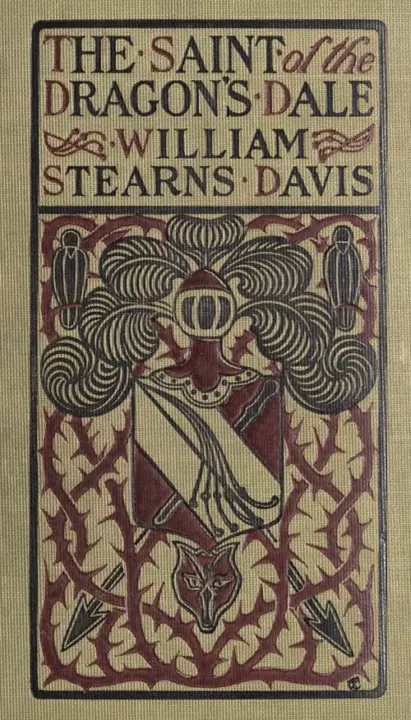
William Stearns Davis
William Stearns Davis
BEHIND THE BOOK
This eBook is for the use of anyone anywhere in the United States and most other parts of the world at no cost and with almost no restrictions whatsoever. You may copy it, give it away or re-use it under the terms of the Project Gutenberg License included with this eBook or online at www.gutenberg.org. If you are not located in the United States, you will have to check the laws of the country where you are located before using this eBook. Read the source licence.
The original source file, including credits and licence, is retained by this library. Request an original-format copy at no charge. Please include the book title and Project Gutenberg identifier #46455.
KEEP YOUR CURIOSITY GOING
Cécile Tormay

Moritz Busch
John L. Ransom
Frances Wright
Cécile Tormay

Mabel Potter Daggett