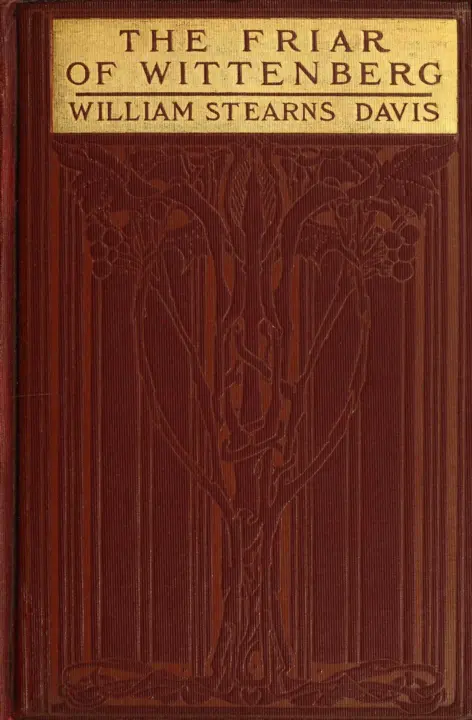
The friar of Wittenberg
William Stearns Davis
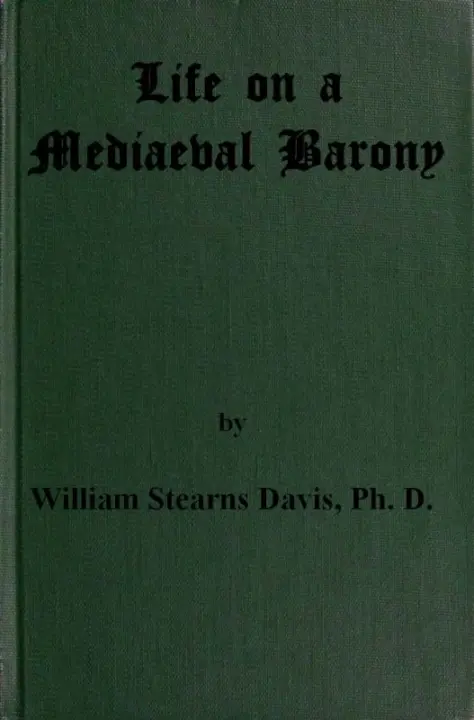
THE CLASSIC COLLECTION · 1922
"Life on a Mediaeval Barony" by William Stearns Davis is a historical account written in the early 20th century. The book explores the details of life in a typical feudal community during the thirteenth century, focusing on the barony of St. Aliquis and its various inhabitants. Through vivid descriptions, it brings to life the socio-political dynamics, customs, and daily activities that characterized medieval life, from the nobility down to the peasants. The opening of this work introduces the reader to the barony of St. Aliquis during the late reign of King Philip Augustus. The narrative sets the context by detailing the geographical and historical background of the region, emphasizing the peace around A.D. 1220, and framing the kingdom's socio-political structure, including the baronial hierarchy. It outlines the significance of the castle as a crucial institution in feudal society and introduces key figures such as Baron Conon, who serves as a representative of the noble class, and highlights the complex relationships between lords and their vassals amid the backdrop of medieval politics and culture.
Introduction adapted from the source catalogue; source summaries may be automatically generated.
Free to read · English · 120,463 words · No account needed
MAKE TIME FOR A GOOD BOOK
On by default. Untick to stop anonymous reading totals. Each page counts after 10 seconds in view. How this works.
Anonymous counting is on unless you have switched it off.
Camps, in feudal warfare, 243.
Canons, elect bishops, 377, 380.
nature of office, 385.
duties of, 386.
worldly and gross, 387.
Carpets of rushes, and "Saracen," 37.
Cartel of defiance, 229.
Carver, at feast, 127.
Castle, position of between rivers, 4.
built to resist Vikings, 5.
famous specimens of, 18.
siege of, 234 ff.
Castle, of St. Aliquis, original plan of, 16.
primitive tower of, 17;
disadvantages of early type, 18.
rebuilt on improved model, 19.
palisade before, 20.
barbican outer barrier, 21.
lists before bailey, 21.
bailey, gates and porters, 22.
walls and parapet, 23.
great difficulty of attacking, 24.
scene in the bailey, 26.
buildings in the bailey, 26, 27.
cookhouse in bailey, 28.
inner ward of, 28.
inner gate, 29.
main court yard of, 29.
donjon of, 30.
halls of, 30 ff.
prison under donjon, 33.
summit of great tower, 33.
watchman on tower, 34.
palais, main residential building, 34, 35.
furniture in hall and chambers, 36 ff.
Castle building, era of, 6.
Castle folk, one huge family, 46.
intimate relations between, 47, 48.
organization of, 48.
"Cat," siege engine, 237.
Cats, 84.
Cathedral, numerous uses of, 393.
express the best spirit of the age, 394.
erection a regional undertaking, 396.
initial stages of building, 397.
fraternity of builders, 398.
building a natural growth, 399.
use of arches, columns and buttresses, 400.
stately dimensions required, 401.
magnificent stained glass, 402.
every part a work of piety, 403.
Chambers, of baronial castle, 36.
Chansons de geste, 138 ff., 142.
Charity, 275 ff.
motives for, 276.
alms very customary, 277.
given by monasteries, 333.
Charter, communal, 352, 353.
Checkers, game of, 52.
Cheese, varieties of, 119.
Chess, in great acceptance, 54.
history of game, 55.
chessmen, 56.
Children, rearing of, 80 ff.
early education of, 82.
Christmas celebrations and plays, 294.
Church, endeavors to regulate marriages, 101, 102.
resists divorces, 102.
vast wealth of, 374 nt.
See Bishop, Abbey, Monastery, Canons, Priests, etc.
City, entrance to, 346.
crowded streets, 347.
lack of air and sanitation, 348.
population of, 347 nt.
great burghers of, 349.
burgher mansion, 349.
danger from fires, 350.
the civic donjons, 351.
communal charger, 352.
See Commune.
Cleanliness, personal, among upper classes, 42.
lack of, in woolen clothing, 89.
Clergy, legal privileges of, 159, 375.
see Bishop, Canons, Priests, Monks.
Clerk, see clergy, Church, etc.
Cloisters, of abbey, 317.
Clothing, of peasants, 264.
Coinage, confusion in, 366.
Commerce, see Shops, Industries, Fairs.
Commune, charter of, 352, 353.
privileges of inhabitants, 353.
clergy rail at Commune, 354.
communal insurrections, 354.
jurisdiction of bishop, 355.
rule by echevins and rich merchants, 355, 356.
Corvées, 258.
Courtesy, training in, 184.
Cowls, 320.
Clothing, male and female, 88 ff.
materials used, 89.
garments of noblemen, 90.
headdress for men, 91.
garments of noblewomen, 91.
use of silks and furs, 92.
rapid changes in fashions, 93.
dress of lower classes, 94.
headdress of women, 95.
conspicuous costumes to indicate evil characters, 98.
Cookery and foods, 113 ff.
implements in cookhouse, 114.
meat frequently boiled, 114.
game especially desired, 114, 115.
butcher's meat, 115.
poultry, 116.
fish, 117.
soups, 117.
meat pies, 117.
Cookhouse, in a castle, 28.
Cosmetics, use of by women, 97.
Cross bows, 190.
Crusades, on wane in XIII century, 3.
improve military architecture, 18.
Your reading position is saved on this browser. Take it to another device with a library code. Reading pages adapt to text, rather than matching a printed edition.
William Stearns Davis
William Stearns Davis
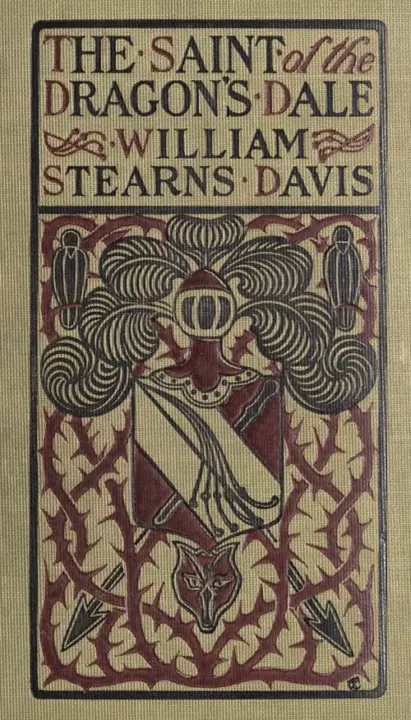
William Stearns Davis
William Stearns Davis
BEHIND THE BOOK
This eBook is for the use of anyone anywhere in the United States and most other parts of the world at no cost and with almost no restrictions whatsoever. You may copy it, give it away or re-use it under the terms of the Project Gutenberg License included with this eBook or online at www.gutenberg.org. If you are not located in the United States, you will have to check the laws of the country where you are located before using this eBook. Read the source licence.
The original source file, including credits and licence, is retained by this library. Request an original-format copy at no charge. Please include the book title and Project Gutenberg identifier #46455.
KEEP YOUR CURIOSITY GOING
Cécile Tormay

Moritz Busch
John L. Ransom
Frances Wright
Cécile Tormay

Mabel Potter Daggett