READ · DISCOVER · ENJOYClassic literature · Always free
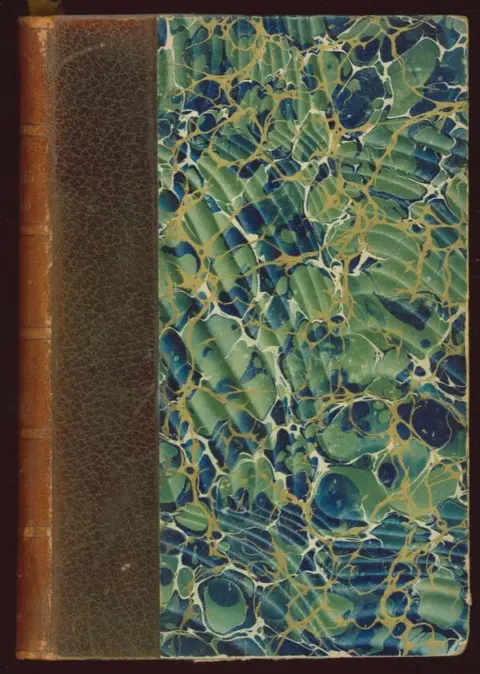
Les Misérables — digital edition cover

THE CLASSIC COLLECTION · 1862

Les Misérables

"Les Misérables" by Victor Hugo is a French epic historical novel published in 1862. Beginning in 1815 and culminating in the 1832 June Rebellion in Paris, it follows ex-convict Jean Valjean's struggle for redemption. The novel explores the nature of law and grace, examining themes of justice, poverty, and love through the lives of interconnected characters in nineteenth-century France. Considered one of the greatest novels of its century, it depicts society's most downtrodden members and their fight for dignity.

Introduction adapted from the source catalogue; source summaries may be automatically generated.

Start reading ↓

Free to read · English · 571,075 words · No account needed

MAKE TIME FOR A GOOD BOOK

Les Misérables

On by default. Untick to stop anonymous reading totals. Each page counts after 10 seconds in view. How this works.

Anonymous counting is on unless you have switched it off.

Les Misérables

“You are strong and healthy. Why do you not work?”

“It bores me.”

“What is your trade?”

“An idler.”

“Speak seriously. Can anything be done for you? What would you like to
be?”

“A thief.”

A pause ensued. The old man seemed absorbed in profound thought. He stood motionless, and did not relax his hold on Montparnasse.

Every moment the vigorous and agile young ruffian indulged in the twitchings of a wild beast caught in a snare. He gave a jerk, tried a crook of the knee, twisted his limbs desperately, and made efforts to escape.

The old man did not appear to notice it, and held both his arms with one hand, with the sovereign indifference of absolute force.

The old man’s reverie lasted for some time, then, looking steadily at Montparnasse, he addressed to him in a gentle voice, in the midst of the darkness where they stood, a solemn harangue, of which Gavroche did not lose a single syllable:—

“My child, you are entering, through indolence, on one of the most laborious of lives. Ah! You declare yourself to be an idler! prepare to toil. There is a certain formidable machine, have you seen it? It is the rolling-mill. You must be on your guard against it, it is crafty and ferocious; if it catches hold of the skirt of your coat, you will be drawn in bodily. That machine is laziness. Stop while there is yet time, and save yourself! Otherwise, it is all over with you; in a short time you will be among the gearing. Once entangled, hope for nothing more. Toil, lazybones! there is no more repose for you! The iron hand of implacable toil has seized you. You do not wish to earn your living, to have a task, to fulfil a duty! It bores you to be like other men? Well! You will be different. Labor is the law; he who rejects it will find ennui his torment. You do not wish to be a workingman, you will be a slave. Toil lets go of you on one side only to grasp you again on the other. You do not desire to be its friend, you shall be its negro slave. Ah! You would have none of the honest weariness of men, you shall have the sweat of the damned. Where others sing, you will rattle in your throat. You will see afar off, from below, other men at work; it will seem to you that they are resting. The laborer, the harvester, the sailor, the blacksmith, will appear to you in glory like the blessed spirits in paradise. What radiance surrounds the forge! To guide the plough, to bind the sheaves, is joy. The bark at liberty in the wind, what delight! Do you, lazy idler, delve, drag on, roll, march! Drag your halter. You are a beast of burden in the team of hell! Ah! To do nothing is your object. Well, not a week, not a day, not an hour shall you have free from oppression. You will be able to lift nothing without anguish. Every minute that passes will make your muscles crack. What is a feather to others will be a rock to you. The simplest things will become steep acclivities. Life will become monstrous all about you. To go, to come, to breathe, will be just so many terrible labors. Your lungs will produce on you the effect of weighing a hundred pounds. Whether you shall walk here rather than there, will become a problem that must be solved. Any one who wants to go out simply gives his door a push, and there he is in the open air. If you wish to go out, you will be obliged to pierce your wall. What does every one who wants to step into the street do? He goes downstairs; you will tear up your sheets, little by little you will make of them a rope, then you will climb out of your window, and you will suspend yourself by that thread over an abyss, and it will be night, amid storm, rain, and the hurricane, and if the rope is too short, but one way of descending will remain to you, to fall. To drop hap-hazard into the gulf, from an unknown height, on what? On what is beneath, on the unknown. Or you will crawl up a chimney-flue, at the risk of burning; or you will creep through a sewer-pipe, at the risk of drowning; I do not speak of the holes that you will be obliged to mask, of the stones which you will have to take up and replace twenty times a day, of the plaster that you will have to hide in your straw pallet. A lock presents itself; the bourgeois has in his pocket a key made by a locksmith. If you wish to pass out, you will be condemned to execute a terrible work of art; you will take a large sou, you will cut it in two plates; with what tools? You will have to invent them. That is your business. Then you will hollow out the interior of these plates, taking great care of the outside, and you will make on the edges a thread, so that they can be adjusted one upon the other like a box and its cover. The top and bottom thus screwed together, nothing will be suspected. To the overseers it will be only a sou; to you it will be a box. What will you put in this box? A small bit of steel. A watch-spring, in which you will have cut teeth, and which will form a saw. With this saw, as long as a pin, and concealed in a sou, you will cut the bolt of the lock, you will sever bolts, the padlock of your chain, and the bar at your window, and the fetter on your leg. This masterpiece finished, this prodigy accomplished, all these miracles of art, address, skill, and patience executed, what will be your recompense if it becomes known that you are the author? The dungeon. There is your future. What precipices are idleness and pleasure! Do you know that to do nothing is a melancholy resolution? To live in idleness on the property of society! to be useless, that is to say, pernicious! This leads straight to the depth of wretchedness. Woe to the man who desires to be a parasite! He will become vermin! Ah! So it does not please you to work? Ah! You have but one thought, to drink well, to eat well, to sleep well. You will drink water, you will eat black bread, you will sleep on a plank with a fetter whose cold touch you will feel on your flesh all night long, riveted to your limbs. You will break those fetters, you will flee. That is well. You will crawl on your belly through the brushwood, and you will eat grass like the beasts of the forest. And you will be recaptured. And then you will pass years in a dungeon, riveted to a wall, groping for your jug that you may drink, gnawing at a horrible loaf of darkness which dogs would not touch, eating beans that the worms have eaten before you. You will be a wood-louse in a cellar. Ah! Have pity on yourself, you miserable young child, who were sucking at nurse less than twenty years ago, and who have, no doubt, a mother still alive! I conjure you, listen to me, I entreat you. You desire fine black cloth, varnished shoes, to have your hair curled and sweet-smelling oils on your locks, to please low women, to be handsome. You will be shaven clean, and you will wear a red blouse and wooden shoes. You want rings on your fingers, you will have an iron necklet on your neck. If you glance at a woman, you will receive a blow. And you will enter there at the age of twenty. And you will come out at fifty! You will enter young, rosy, fresh, with brilliant eyes, and all your white teeth, and your handsome, youthful hair; you will come out broken, bent, wrinkled, toothless, horrible, with white locks! Ah! my poor child, you are on the wrong road; idleness is counselling you badly; the hardest of all work is thieving. Believe me, do not undertake that painful profession of an idle man. It is not comfortable to become a rascal. It is less disagreeable to be an honest man. Now go, and ponder on what I have said to you. By the way, what did you want of me? My purse? Here it is.”

Your reading position is saved on this browser. Take it to another device with a library code. Reading pages adapt to text, rather than matching a printed edition.

More from this author

BEHIND THE WORDS

About Victor Hugo

Victor Hugo (1802–1885). A French novelist, poet and dramatist whose work links individual lives with political upheaval and questions of justice. Explore Oration on Voltaire, Napoleon the Little, The Man Who Laughs: A Romance of English History and other works in this collection. These books span essays & ideas, history, classic fiction.

Explore this author’s books →

THE READERS’ VERDICT

How did this story stay with you?

Not rated yet
Your rating for Les Misérables

Be the first to share your verdict.

One rating per browser, which you can change or remove. A necessary browser identifier remembers your vote. How ratings work

A GOOD STORY DESERVES COMPANY

Pass this book along.

A great read is even better when it’s shared.

SEND A LITTLE INSPIRATION

Share this book

BEHIND THE BOOK

Edition & source details.

Title
Les Misérables
Author
Victor Hugo
Original work publication
1862
Digital edition publisher
Project Gutenberg
Gutenberg release date
2008-06-22
Language
English
Source edition imprint
Not stated in source catalogue
Source identifier
Project Gutenberg #135
Contributors
Isabel Florence Hapgood (trl)

Public-domain source & licence

This eBook is for the use of anyone anywhere in the United States and most other parts of the world at no cost and with almost no restrictions whatsoever. You may copy it, give it away or re-use it under the terms of the Project Gutenberg License included with this eBook or online at www.gutenberg.org. If you are not located in the United States, you will have to check the laws of the country where you are located before using this eBook. Read the source licence.

Full source licence and obtaining an original copy

The original source file, including credits and licence, is retained by this library. Request an original-format copy at no charge. Please include the book title and Project Gutenberg identifier #135.

the full Project Gutenberg License must appear
prominently whenever any copy of a Project Gutenberg work (any work
on which the phrase “Project Gutenberg” appears, or with which the
phrase “Project Gutenberg” is associated) is accessed, displayed,
performed, viewed, copied or distributed:

This eBook is for the use of anyone anywhere in the United States and most
other parts of the world at no cost and with almost no restrictions
whatsoever. You may copy it, give it away or re-use it under the terms
of the Project Gutenberg™ License included with this eBook or online
at www.gutenberg.org. If you
are not located in the United States, you will have to check the laws
of the country where you are located before using this eBook.

1.E.2. If an individual Project Gutenberg electronic work is
derived from texts not protected by U.S. copyright law (does not
contain a notice indicating that it is posted with permission of the
copyright holder), the work can be copied and distributed to anyone in
the United States without paying any fees or charges. If you are
redistributing or providing access to a work with the phrase “Project
Gutenberg” associated with or appearing on the work, you must comply
either with the requirements of paragraphs 1.E.1 through 1.E.7 or
obtain permission for the use of the work and the Project Gutenberg
trademark as set forth in paragraphs 1.E.8 or 1.E.9.

1.E.3. If an individual Project Gutenberg electronic work is posted
with the permission of the copyright holder, your use and distribution
must comply with both paragraphs 1.E.1 through 1.E.7 and any
additional terms imposed by the copyright holder. Additional terms
will be linked to the Project Gutenberg License for all works
posted with the permission of the copyright holder found at the
beginning of this work.

1.E.4. Do not unlink or detach or remove the full Project Gutenberg
License terms from this work, or any files containing a part of this
work or any other work associated with Project Gutenberg.

1.E.5. Do not copy, display, perform, distribute or redistribute this
electronic work, or any part of this electronic work, without
prominently displaying the sentence set forth in paragraph 1.E.1 with
active links or immediate access to the full terms of the Project
Gutenberg License.

1.E.6. You may convert to and distribute this work in any binary,
compressed, marked up, nonproprietary or proprietary form, including
any word processing or hypertext form. However, if you provide access
to or distribute copies of a Project Gutenberg work in a format
other than “Plain Vanilla ASCII” or other format used in the official
version posted on the official Project Gutenberg website
(www.gutenberg.org), you must, at no additional cost, fee or expense
to the user, provide a copy, a means of exporting a copy, or a means
of obtaining a copy upon request, of the work in its original “Plain
Vanilla ASCII” or other form. Any alternate format must include the
full Project Gutenberg License as specified in paragraph 1.E.1.

1.E.7. Do not charge a fee for access to, viewing, displaying,
performing, copying or distributing any Project Gutenberg works
unless you comply with paragraph 1.E.8 or 1.E.9.

1.E.8. You may charge a reasonable fee for copies of or providing
access to or distributing Project Gutenberg electronic works
provided that:

• You pay a royalty fee of 20% of the gross profits you derive from
the use of Project Gutenberg works calculated using the method
you already use to calculate your applicable taxes. The fee is owed
to the owner of the Project Gutenberg trademark, but he has
agreed to donate royalties under this paragraph to the Project
Gutenberg Literary Archive Foundation. Royalty payments must be paid
within 60 days following each date on which you prepare (or are
legally required to prepare) your periodic tax returns. Royalty
payments should be clearly marked as such and sent to the Project
Gutenberg Literary Archive Foundation at the address specified in
Section 4, “Information about donations to the Project Gutenberg
Literary Archive Foundation.”

• You provide a full refund of any money paid by a user who notifies
you in writing (or by e-mail) within 30 days of receipt that s/he
does not agree to the terms of the full Project Gutenberg™
License. You must require such a user to return or destroy all
copies of the works possessed in a physical medium and discontinue
all use of and all access to other copies of Project Gutenberg™
works.

• You provide, in accordance with paragraph 1.F.3, a full refund of
any money paid for a work or a replacement copy, if a defect in the
electronic work is discovered and reported to you within 90 days of
receipt of the work.

• You comply with all other terms of this agreement for free
distribution of Project Gutenberg™ works.


1.E.9. If you wish to charge a fee or distribute a Project
Gutenberg™ electronic work or group of works on different terms than
are set forth in this agreement, you must obtain permission in writing
from the Project Gutenberg Literary Archive Foundation, the manager of
the Project Gutenberg™ trademark. Contact the Foundation as set
forth in Section 3 below.

1.F.

1.F.1. Project Gutenberg volunteers and employees expend considerable
effort to identify, do copyright research on, transcribe and proofread
works not protected by U.S. copyright law in creating the Project
Gutenberg™ collection. Despite these efforts, Project Gutenberg™
electronic works, and the medium on which they may be stored, may
contain “Defects,” such as, but not limited to, incomplete, inaccurate
or corrupt data, transcription errors, a copyright or other
intellectual property infringement, a defective or damaged disk or
other medium, a computer virus, or computer codes that damage or
cannot be read by your equipment.

1.F.2. LIMITED WARRANTY, DISCLAIMER OF DAMAGES - Except for the “Right
of Replacement or Refund” described in paragraph 1.F.3, the Project
Gutenberg Literary Archive Foundation, the owner of the Project
Gutenberg™ trademark, and any other party distributing a Project
Gutenberg™ electronic work under this agreement, disclaim all
liability to you for damages, costs and expenses, including legal
fees. YOU AGREE THAT YOU HAVE NO REMEDIES FOR NEGLIGENCE, STRICT
LIABILITY, BREACH OF WARRANTY OR BREACH OF CONTRACT EXCEPT THOSE
PROVIDED IN PARAGRAPH 1.F.3. YOU AGREE THAT THE FOUNDATION, THE
TRADEMARK OWNER, AND ANY DISTRIBUTOR UNDER THIS AGREEMENT WILL NOT BE
LIABLE TO YOU FOR ACTUAL, DIRECT, INDIRECT, CONSEQUENTIAL, PUNITIVE OR
INCIDENTAL DAMAGES EVEN IF YOU GIVE NOTICE OF THE POSSIBILITY OF SUCH
DAMAGE.

1.F.3. LIMITED RIGHT OF REPLACEMENT OR REFUND - If you discover a
defect in this electronic work within 90 days of receiving it, you can
receive a refund of the money (if any) you paid for it by sending a
written explanation to the person you received the work from. If you
received the work on a physical medium, you must return the medium
with your written explanation. The person or entity that provided you
with the defective work may elect to provide a replacement copy in
lieu of a refund. If you received the work electronically, the person
or entity providing it to you may choose to give you a second
opportunity to receive the work electronically in lieu of a refund. If
the second copy is also defective, you may demand a refund in writing
without further opportunities to fix the problem.

1.F.4. Except for the limited right of replacement or refund set forth
in paragraph 1.F.3, this work is provided to you ‘AS-IS’, WITH NO
OTHER WARRANTIES OF ANY KIND, EXPRESS OR IMPLIED, INCLUDING BUT NOT
LIMITED TO WARRANTIES OF MERCHANTABILITY OR FITNESS FOR ANY PURPOSE.

1.F.5. Some states do not allow disclaimers of certain implied
warranties or the exclusion or limitation of certain types of
damages. If any disclaimer or limitation set forth in this agreement
violates the law of the state applicable to this agreement, the
agreement shall be interpreted to make the maximum disclaimer or
limitation permitted by the applicable state law. The invalidity or
unenforceability of any provision of this agreement shall not void the
remaining provisions.

1.F.6. INDEMNITY - You agree to indemnify and hold the Foundation, the
trademark owner, any agent or employee of the Foundation, anyone
providing copies of Project Gutenberg™ electronic works in
accordance with this agreement, and any volunteers associated with the
production, promotion and distribution of Project Gutenberg™
electronic works, harmless from all liability, costs and expenses,
including legal fees, that arise directly or indirectly from any of
the following which you do or cause to occur: (a) distribution of this
or any Project Gutenberg work, (b) alteration, modification, or
additions or deletions to any Project Gutenberg work, and (c) any
Defect you cause.

Section 2. Information about the Mission of Project Gutenberg

Project Gutenberg is synonymous with the free distribution of
electronic works in formats readable by the widest variety of
computers including obsolete, old, middle-aged and new computers. It
exists because of the efforts of hundreds of volunteers and donations
from people in all walks of life.

Volunteers and financial support to provide volunteers with the
assistance they need are critical to reaching Project Gutenberg’s
goals and ensuring that the Project Gutenberg collection will
remain freely available for generations to come. In 2001, the Project
Gutenberg Literary Archive Foundation was created to provide a secure
and permanent future for Project Gutenberg and future
generations. To learn more about the Project Gutenberg Literary
Archive Foundation and how your efforts and donations can help, see
Sections 3 and 4 and the Foundation information page at www.gutenberg.org.

Section 3. Information about the Project Gutenberg Literary Archive Foundation

The Project Gutenberg Literary Archive Foundation is a non-profit
501(c)(3) educational corporation organized under the laws of the
state of Mississippi and granted tax exempt status by the Internal
Revenue Service. The Foundation’s EIN or federal tax identification
number is 64-6221541. Contributions to the Project Gutenberg Literary
Archive Foundation are tax deductible to the full extent permitted by
U.S. federal laws and your state’s laws.

The Foundation’s business office is located at 41 Watchung Plaza #516,
Montclair NJ 07042, USA, +1 (862) 621-9288. Email contact links and up
to date contact information can be found at the Foundation’s website
and official page at www.gutenberg.org/contact

Section 4. Information about Donations to the Project Gutenberg
Literary Archive Foundation

Project Gutenberg™ depends upon and cannot survive without widespread
public support and donations to carry out its mission of
increasing the number of public domain and licensed works that can be
freely distributed in machine-readable form accessible by the widest
array of equipment including outdated equipment. Many small donations
($1 to $5,000) are particularly important to maintaining tax exempt
status with the IRS.

The Foundation is committed to complying with the laws regulating
charities and charitable donations in all 50 states of the United
States. Compliance requirements are not uniform and it takes a
considerable effort, much paperwork and many fees to meet and keep up
with these requirements. We do not solicit donations in locations
where we have not received written confirmation of compliance. To SEND
DONATIONS or determine the status of compliance for any particular state
visit www.gutenberg.org/donate.

While we cannot and do not solicit contributions from states where we
have not met the solicitation requirements, we know of no prohibition
against accepting unsolicited donations from donors in such states who
approach us with offers to donate.

International donations are gratefully accepted, but we cannot make
any statements concerning tax treatment of donations received from
outside the United States. U.S. laws alone swamp our small staff.

Please check the Project Gutenberg web pages for current donation
methods and addresses. Donations are accepted in a number of other
ways including checks, online payments and credit card donations. To
donate, please visit: www.gutenberg.org/donate.

Section 5. General Information About Project Gutenberg electronic works

Professor Michael S. Hart was the originator of the Project
Gutenberg concept of a library of electronic works that could be
freely shared with anyone. For forty years, he produced and
distributed Project Gutenberg eBooks with only a loose network of
volunteer support.

Project Gutenberg eBooks are often created from several printed
editions, all of which are confirmed as not protected by copyright in
the U.S. unless a copyright notice is included. Thus, we do not
necessarily keep eBooks in compliance with any particular paper
edition.

Most people start at our website which has the main PG search
facility: www.gutenberg.org.

This website includes information about Project Gutenberg,
including how to make donations to the Project Gutenberg Literary
Archive Foundation, how to help produce our new eBooks, and how to
subscribe to our email newsletter to hear about new eBooks.


KEEP YOUR CURIOSITY GOING

Your next chapter awaits.