READ · DISCOVER · ENJOYClassic literature · Always free
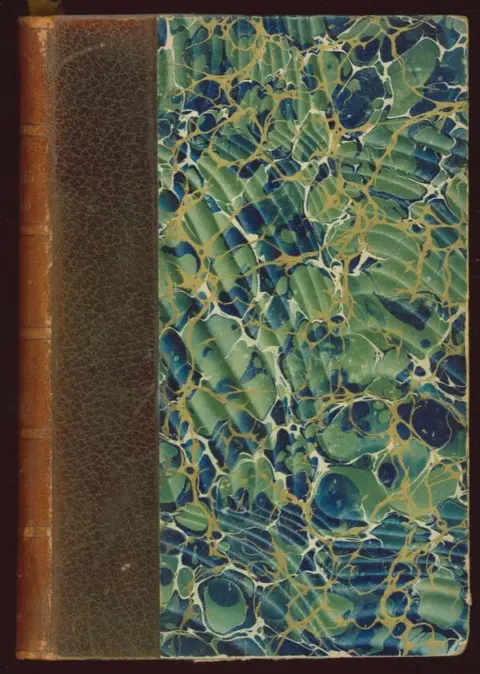
Les Misérables — digital edition cover

THE CLASSIC COLLECTION · 1862

Les Misérables

"Les Misérables" by Victor Hugo is a French epic historical novel published in 1862. Beginning in 1815 and culminating in the 1832 June Rebellion in Paris, it follows ex-convict Jean Valjean's struggle for redemption. The novel explores the nature of law and grace, examining themes of justice, poverty, and love through the lives of interconnected characters in nineteenth-century France. Considered one of the greatest novels of its century, it depicts society's most downtrodden members and their fight for dignity.

Introduction adapted from the source catalogue; source summaries may be automatically generated.

Start reading ↓

Free to read · English · 571,075 words · No account needed

MAKE TIME FOR A GOOD BOOK

Les Misérables

On by default. Untick to stop anonymous reading totals. Each page counts after 10 seconds in view. How this works.

Anonymous counting is on unless you have switched it off.

Les Misérables

One of the conversations among the young men, at which Marius was
present and in which he sometimes joined, was a veritable shock to his
mind.

This took place in the back room of the Café Musain. Nearly all the Friends of the A B C had convened that evening. The argand lamp was solemnly lighted. They talked of one thing and another, without passion and with noise. With the exception of Enjolras and Marius, who held their peace, all were haranguing rather at hap-hazard. Conversations between comrades sometimes are subject to these peaceable tumults. It was a game and an uproar as much as a conversation. They tossed words to each other and caught them up in turn. They were chattering in all quarters.

No woman was admitted to this back room, except Louison, the dish-washer of the café, who passed through it from time to time, to go to her washing in the “lavatory.”

Grantaire, thoroughly drunk, was deafening the corner of which he had taken possession, reasoning and contradicting at the top of his lungs, and shouting:—

“I am thirsty. Mortals, I am dreaming: that the tun of Heidelberg has an attack of apoplexy, and that I am one of the dozen leeches which will be applied to it. I want a drink. I desire to forget life. Life is a hideous invention of I know not whom. It lasts no time at all, and is worth nothing. One breaks one’s neck in living. Life is a theatre set in which there are but few practicable entrances. Happiness is an antique reliquary painted on one side only. Ecclesiastes says: ‘All is vanity.’ I agree with that good man, who never existed, perhaps. Zero not wishing to go stark naked, clothed himself in vanity. O vanity! The patching up of everything with big words! a kitchen is a laboratory, a dancer is a professor, an acrobat is a gymnast, a boxer is a pugilist, an apothecary is a chemist, a wigmaker is an artist, a hodman is an architect, a jockey is a sportsman, a wood-louse is a pterigybranche. Vanity has a right and a wrong side; the right side is stupid, it is the negro with his glass beads; the wrong side is foolish, it is the philosopher with his rags. I weep over the one and I laugh over the other. What are called honors and dignities, and even dignity and honor, are generally of pinchbeck. Kings make playthings of human pride. Caligula made a horse a consul; Charles II. made a knight of a sirloin. Wrap yourself up now, then, between Consul Incitatus and Baronet Roastbeef. As for the intrinsic value of people, it is no longer respectable in the least. Listen to the panegyric which neighbor makes of neighbor. White on white is ferocious; if the lily could speak, what a setting down it would give the dove! A bigoted woman prating of a devout woman is more venomous than the asp and the cobra. It is a shame that I am ignorant, otherwise I would quote to you a mass of things; but I know nothing. For instance, I have always been witty; when I was a pupil of Gros, instead of daubing wretched little pictures, I passed my time in pilfering apples; rapin24 is the masculine of rapine. So much for myself; as for the rest of you, you are worth no more than I am. I scoff at your perfections, excellencies, and qualities. Every good quality tends towards a defect; economy borders on avarice, the generous man is next door to the prodigal, the brave man rubs elbows with the braggart; he who says very pious says a trifle bigoted; there are just as many vices in virtue as there are holes in Diogenes’ cloak. Whom do you admire, the slain or the slayer, Cæsar or Brutus? Generally men are in favor of the slayer. Long live Brutus, he has slain! There lies the virtue. Virtue, granted, but madness also. There are queer spots on those great men. The Brutus who killed Cæsar was in love with the statue of a little boy. This statue was from the hand of the Greek sculptor Strongylion, who also carved that figure of an Amazon known as the Beautiful Leg, Eucnemos, which Nero carried with him in his travels. This Strongylion left but two statues which placed Nero and Brutus in accord. Brutus was in love with the one, Nero with the other. All history is nothing but wearisome repetition. One century is the plagiarist of the other. The battle of Marengo copies the battle of Pydna; the Tolbiac of Clovis and the Austerlitz of Napoleon are as like each other as two drops of water. I don’t attach much importance to victory. Nothing is so stupid as to conquer; true glory lies in convincing. But try to prove something! If you are content with success, what mediocrity, and with conquering, what wretchedness! Alas, vanity and cowardice everywhere. Everything obeys success, even grammar. Si volet usus, says Horace. Therefore I disdain the human race. Shall we descend to the party at all? Do you wish me to begin admiring the peoples? What people, if you please? Shall it be Greece? The Athenians, those Parisians of days gone by, slew Phocion, as we might say Coligny, and fawned upon tyrants to such an extent that Anacephorus said of Pisistratus: “His urine attracts the bees.” The most prominent man in Greece for fifty years was that grammarian Philetas, who was so small and so thin that he was obliged to load his shoes with lead in order not to be blown away by the wind. There stood on the great square in Corinth a statue carved by Silanion and catalogued by Pliny; this statue represented Episthates. What did Episthates do? He invented a trip. That sums up Greece and glory. Let us pass on to others. Shall I admire England? Shall I admire France? France? Why? Because of Paris? I have just told you my opinion of Athens. England? Why? Because of London? I hate Carthage. And then, London, the metropolis of luxury, is the headquarters of wretchedness. There are a hundred deaths a year of hunger in the parish of Charing-Cross alone. Such is Albion. I add, as the climax, that I have seen an Englishwoman dancing in a wreath of roses and blue spectacles. A fig then for England! If I do not admire John Bull, shall I admire Brother Jonathan? I have but little taste for that slave-holding brother. Take away Time is money, what remains of England? Take away Cotton is king, what remains of America? Germany is the lymph, Italy is the bile. Shall we go into ecstasies over Russia? Voltaire admired it. He also admired China. I admit that Russia has its beauties, among others, a stout despotism; but I pity the despots. Their health is delicate. A decapitated Alexis, a poignarded Peter, a strangled Paul, another Paul crushed flat with kicks, divers Ivans strangled, with their throats cut, numerous Nicholases and Basils poisoned, all this indicates that the palace of the Emperors of Russia is in a condition of flagrant insalubrity. All civilized peoples offer this detail to the admiration of the thinker; war; now, war, civilized war, exhausts and sums up all the forms of ruffianism, from the brigandage of the Trabuceros in the gorges of Mont Jaxa to the marauding of the Comanche Indians in the Doubtful Pass. ‘Bah!’ you will say to me, ‘but Europe is certainly better than Asia?’ I admit that Asia is a farce; but I do not precisely see what you find to laugh at in the Grand Lama, you peoples of the west, who have mingled with your fashions and your elegances all the complicated filth of majesty, from the dirty chemise of Queen Isabella to the chamber-chair of the Dauphin. Gentlemen of the human race, I tell you, not a bit of it! It is at Brussels that the most beer is consumed, at Stockholm the most brandy, at Madrid the most chocolate, at Amsterdam the most gin, at London the most wine, at Constantinople the most coffee, at Paris the most absinthe; there are all the useful notions. Paris carries the day, in short. In Paris, even the rag-pickers are sybarites; Diogenes would have loved to be a rag-picker of the Place Maubert better than to be a philosopher at the Piræus. Learn this in addition; the wineshops of the rag-pickers are called bibines; the most celebrated are the Saucepan and The Slaughter-House. Hence, tea-gardens, goguettes, caboulots, bouibuis, mastroquets, bastringues, manezingues, bibines of the rag-pickers, caravanseries of the caliphs, I certify to you, I am a voluptuary, I eat at Richard’s at forty sous a head, I must have Persian carpets to roll naked Cleopatra in! Where is Cleopatra? Ah! So it is you, Louison. Good day.”

Your reading position is saved on this browser. Take it to another device with a library code. Reading pages adapt to text, rather than matching a printed edition.

More from this author

BEHIND THE WORDS

About Victor Hugo

Victor Hugo (1802–1885). A French novelist, poet and dramatist whose work links individual lives with political upheaval and questions of justice. Explore Oration on Voltaire, Napoleon the Little, The Man Who Laughs: A Romance of English History and other works in this collection. These books span essays & ideas, history, classic fiction.

Explore this author’s books →

THE READERS’ VERDICT

How did this story stay with you?

Not rated yet
Your rating for Les Misérables

Be the first to share your verdict.

One rating per browser, which you can change or remove. A necessary browser identifier remembers your vote. How ratings work

A GOOD STORY DESERVES COMPANY

Pass this book along.

A great read is even better when it’s shared.

SEND A LITTLE INSPIRATION

Share this book

BEHIND THE BOOK

Edition & source details.

Title
Les Misérables
Author
Victor Hugo
Original work publication
1862
Digital edition publisher
Project Gutenberg
Gutenberg release date
2008-06-22
Language
English
Source edition imprint
Not stated in source catalogue
Source identifier
Project Gutenberg #135
Contributors
Isabel Florence Hapgood (trl)

Public-domain source & licence

This eBook is for the use of anyone anywhere in the United States and most other parts of the world at no cost and with almost no restrictions whatsoever. You may copy it, give it away or re-use it under the terms of the Project Gutenberg License included with this eBook or online at www.gutenberg.org. If you are not located in the United States, you will have to check the laws of the country where you are located before using this eBook. Read the source licence.

Full source licence and obtaining an original copy

The original source file, including credits and licence, is retained by this library. Request an original-format copy at no charge. Please include the book title and Project Gutenberg identifier #135.

the full Project Gutenberg License must appear
prominently whenever any copy of a Project Gutenberg work (any work
on which the phrase “Project Gutenberg” appears, or with which the
phrase “Project Gutenberg” is associated) is accessed, displayed,
performed, viewed, copied or distributed:

This eBook is for the use of anyone anywhere in the United States and most
other parts of the world at no cost and with almost no restrictions
whatsoever. You may copy it, give it away or re-use it under the terms
of the Project Gutenberg™ License included with this eBook or online
at www.gutenberg.org. If you
are not located in the United States, you will have to check the laws
of the country where you are located before using this eBook.

1.E.2. If an individual Project Gutenberg electronic work is
derived from texts not protected by U.S. copyright law (does not
contain a notice indicating that it is posted with permission of the
copyright holder), the work can be copied and distributed to anyone in
the United States without paying any fees or charges. If you are
redistributing or providing access to a work with the phrase “Project
Gutenberg” associated with or appearing on the work, you must comply
either with the requirements of paragraphs 1.E.1 through 1.E.7 or
obtain permission for the use of the work and the Project Gutenberg
trademark as set forth in paragraphs 1.E.8 or 1.E.9.

1.E.3. If an individual Project Gutenberg electronic work is posted
with the permission of the copyright holder, your use and distribution
must comply with both paragraphs 1.E.1 through 1.E.7 and any
additional terms imposed by the copyright holder. Additional terms
will be linked to the Project Gutenberg License for all works
posted with the permission of the copyright holder found at the
beginning of this work.

1.E.4. Do not unlink or detach or remove the full Project Gutenberg
License terms from this work, or any files containing a part of this
work or any other work associated with Project Gutenberg.

1.E.5. Do not copy, display, perform, distribute or redistribute this
electronic work, or any part of this electronic work, without
prominently displaying the sentence set forth in paragraph 1.E.1 with
active links or immediate access to the full terms of the Project
Gutenberg License.

1.E.6. You may convert to and distribute this work in any binary,
compressed, marked up, nonproprietary or proprietary form, including
any word processing or hypertext form. However, if you provide access
to or distribute copies of a Project Gutenberg work in a format
other than “Plain Vanilla ASCII” or other format used in the official
version posted on the official Project Gutenberg website
(www.gutenberg.org), you must, at no additional cost, fee or expense
to the user, provide a copy, a means of exporting a copy, or a means
of obtaining a copy upon request, of the work in its original “Plain
Vanilla ASCII” or other form. Any alternate format must include the
full Project Gutenberg License as specified in paragraph 1.E.1.

1.E.7. Do not charge a fee for access to, viewing, displaying,
performing, copying or distributing any Project Gutenberg works
unless you comply with paragraph 1.E.8 or 1.E.9.

1.E.8. You may charge a reasonable fee for copies of or providing
access to or distributing Project Gutenberg electronic works
provided that:

• You pay a royalty fee of 20% of the gross profits you derive from
the use of Project Gutenberg works calculated using the method
you already use to calculate your applicable taxes. The fee is owed
to the owner of the Project Gutenberg trademark, but he has
agreed to donate royalties under this paragraph to the Project
Gutenberg Literary Archive Foundation. Royalty payments must be paid
within 60 days following each date on which you prepare (or are
legally required to prepare) your periodic tax returns. Royalty
payments should be clearly marked as such and sent to the Project
Gutenberg Literary Archive Foundation at the address specified in
Section 4, “Information about donations to the Project Gutenberg
Literary Archive Foundation.”

• You provide a full refund of any money paid by a user who notifies
you in writing (or by e-mail) within 30 days of receipt that s/he
does not agree to the terms of the full Project Gutenberg™
License. You must require such a user to return or destroy all
copies of the works possessed in a physical medium and discontinue
all use of and all access to other copies of Project Gutenberg™
works.

• You provide, in accordance with paragraph 1.F.3, a full refund of
any money paid for a work or a replacement copy, if a defect in the
electronic work is discovered and reported to you within 90 days of
receipt of the work.

• You comply with all other terms of this agreement for free
distribution of Project Gutenberg™ works.


1.E.9. If you wish to charge a fee or distribute a Project
Gutenberg™ electronic work or group of works on different terms than
are set forth in this agreement, you must obtain permission in writing
from the Project Gutenberg Literary Archive Foundation, the manager of
the Project Gutenberg™ trademark. Contact the Foundation as set
forth in Section 3 below.

1.F.

1.F.1. Project Gutenberg volunteers and employees expend considerable
effort to identify, do copyright research on, transcribe and proofread
works not protected by U.S. copyright law in creating the Project
Gutenberg™ collection. Despite these efforts, Project Gutenberg™
electronic works, and the medium on which they may be stored, may
contain “Defects,” such as, but not limited to, incomplete, inaccurate
or corrupt data, transcription errors, a copyright or other
intellectual property infringement, a defective or damaged disk or
other medium, a computer virus, or computer codes that damage or
cannot be read by your equipment.

1.F.2. LIMITED WARRANTY, DISCLAIMER OF DAMAGES - Except for the “Right
of Replacement or Refund” described in paragraph 1.F.3, the Project
Gutenberg Literary Archive Foundation, the owner of the Project
Gutenberg™ trademark, and any other party distributing a Project
Gutenberg™ electronic work under this agreement, disclaim all
liability to you for damages, costs and expenses, including legal
fees. YOU AGREE THAT YOU HAVE NO REMEDIES FOR NEGLIGENCE, STRICT
LIABILITY, BREACH OF WARRANTY OR BREACH OF CONTRACT EXCEPT THOSE
PROVIDED IN PARAGRAPH 1.F.3. YOU AGREE THAT THE FOUNDATION, THE
TRADEMARK OWNER, AND ANY DISTRIBUTOR UNDER THIS AGREEMENT WILL NOT BE
LIABLE TO YOU FOR ACTUAL, DIRECT, INDIRECT, CONSEQUENTIAL, PUNITIVE OR
INCIDENTAL DAMAGES EVEN IF YOU GIVE NOTICE OF THE POSSIBILITY OF SUCH
DAMAGE.

1.F.3. LIMITED RIGHT OF REPLACEMENT OR REFUND - If you discover a
defect in this electronic work within 90 days of receiving it, you can
receive a refund of the money (if any) you paid for it by sending a
written explanation to the person you received the work from. If you
received the work on a physical medium, you must return the medium
with your written explanation. The person or entity that provided you
with the defective work may elect to provide a replacement copy in
lieu of a refund. If you received the work electronically, the person
or entity providing it to you may choose to give you a second
opportunity to receive the work electronically in lieu of a refund. If
the second copy is also defective, you may demand a refund in writing
without further opportunities to fix the problem.

1.F.4. Except for the limited right of replacement or refund set forth
in paragraph 1.F.3, this work is provided to you ‘AS-IS’, WITH NO
OTHER WARRANTIES OF ANY KIND, EXPRESS OR IMPLIED, INCLUDING BUT NOT
LIMITED TO WARRANTIES OF MERCHANTABILITY OR FITNESS FOR ANY PURPOSE.

1.F.5. Some states do not allow disclaimers of certain implied
warranties or the exclusion or limitation of certain types of
damages. If any disclaimer or limitation set forth in this agreement
violates the law of the state applicable to this agreement, the
agreement shall be interpreted to make the maximum disclaimer or
limitation permitted by the applicable state law. The invalidity or
unenforceability of any provision of this agreement shall not void the
remaining provisions.

1.F.6. INDEMNITY - You agree to indemnify and hold the Foundation, the
trademark owner, any agent or employee of the Foundation, anyone
providing copies of Project Gutenberg™ electronic works in
accordance with this agreement, and any volunteers associated with the
production, promotion and distribution of Project Gutenberg™
electronic works, harmless from all liability, costs and expenses,
including legal fees, that arise directly or indirectly from any of
the following which you do or cause to occur: (a) distribution of this
or any Project Gutenberg work, (b) alteration, modification, or
additions or deletions to any Project Gutenberg work, and (c) any
Defect you cause.

Section 2. Information about the Mission of Project Gutenberg

Project Gutenberg is synonymous with the free distribution of
electronic works in formats readable by the widest variety of
computers including obsolete, old, middle-aged and new computers. It
exists because of the efforts of hundreds of volunteers and donations
from people in all walks of life.

Volunteers and financial support to provide volunteers with the
assistance they need are critical to reaching Project Gutenberg’s
goals and ensuring that the Project Gutenberg collection will
remain freely available for generations to come. In 2001, the Project
Gutenberg Literary Archive Foundation was created to provide a secure
and permanent future for Project Gutenberg and future
generations. To learn more about the Project Gutenberg Literary
Archive Foundation and how your efforts and donations can help, see
Sections 3 and 4 and the Foundation information page at www.gutenberg.org.

Section 3. Information about the Project Gutenberg Literary Archive Foundation

The Project Gutenberg Literary Archive Foundation is a non-profit
501(c)(3) educational corporation organized under the laws of the
state of Mississippi and granted tax exempt status by the Internal
Revenue Service. The Foundation’s EIN or federal tax identification
number is 64-6221541. Contributions to the Project Gutenberg Literary
Archive Foundation are tax deductible to the full extent permitted by
U.S. federal laws and your state’s laws.

The Foundation’s business office is located at 41 Watchung Plaza #516,
Montclair NJ 07042, USA, +1 (862) 621-9288. Email contact links and up
to date contact information can be found at the Foundation’s website
and official page at www.gutenberg.org/contact

Section 4. Information about Donations to the Project Gutenberg
Literary Archive Foundation

Project Gutenberg™ depends upon and cannot survive without widespread
public support and donations to carry out its mission of
increasing the number of public domain and licensed works that can be
freely distributed in machine-readable form accessible by the widest
array of equipment including outdated equipment. Many small donations
($1 to $5,000) are particularly important to maintaining tax exempt
status with the IRS.

The Foundation is committed to complying with the laws regulating
charities and charitable donations in all 50 states of the United
States. Compliance requirements are not uniform and it takes a
considerable effort, much paperwork and many fees to meet and keep up
with these requirements. We do not solicit donations in locations
where we have not received written confirmation of compliance. To SEND
DONATIONS or determine the status of compliance for any particular state
visit www.gutenberg.org/donate.

While we cannot and do not solicit contributions from states where we
have not met the solicitation requirements, we know of no prohibition
against accepting unsolicited donations from donors in such states who
approach us with offers to donate.

International donations are gratefully accepted, but we cannot make
any statements concerning tax treatment of donations received from
outside the United States. U.S. laws alone swamp our small staff.

Please check the Project Gutenberg web pages for current donation
methods and addresses. Donations are accepted in a number of other
ways including checks, online payments and credit card donations. To
donate, please visit: www.gutenberg.org/donate.

Section 5. General Information About Project Gutenberg electronic works

Professor Michael S. Hart was the originator of the Project
Gutenberg concept of a library of electronic works that could be
freely shared with anyone. For forty years, he produced and
distributed Project Gutenberg eBooks with only a loose network of
volunteer support.

Project Gutenberg eBooks are often created from several printed
editions, all of which are confirmed as not protected by copyright in
the U.S. unless a copyright notice is included. Thus, we do not
necessarily keep eBooks in compliance with any particular paper
edition.

Most people start at our website which has the main PG search
facility: www.gutenberg.org.

This website includes information about Project Gutenberg,
including how to make donations to the Project Gutenberg Literary
Archive Foundation, how to help produce our new eBooks, and how to
subscribe to our email newsletter to hear about new eBooks.


KEEP YOUR CURIOSITY GOING

Your next chapter awaits.