THE CLASSIC COLLECTION✦Frank Merriwell’s dangerCLASSIC FREE BOOKS
Frank Merriwell’s danger
Burt L. Standish
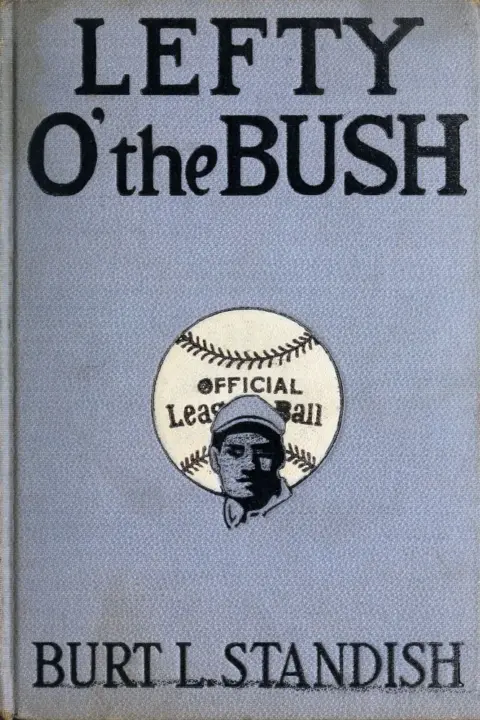
THE CLASSIC COLLECTION · 1914
"Lefty o' the Bush" by Burt L. Standish is a sports novel written in the early 20th century. It centers around the intense rivalry in minor league baseball, particularly between the teams of Bancroft and Kingsbridge. The story highlights the fast-paced emotions and stakes that accompany a small-town baseball season, focusing on the character of Tom Locke, a rookie pitcher whose performance has a significant impact on the local fans and rivalries. At the start of the book, we are introduced to the eager anticipation surrounding the opening game of the Northern League season in Kingsbridge, a mill town filled with passionate baseball fans. The opening chapter sets the stage with the Bancroft "Bullies" manager Mike Riley observing the tensions between the two teams, particularly toward Locke, the unknown pitcher for Kingsbridge. The community’s hopes are pinned on Locke, who initially struggles under the pressure and jeering from the crowd, leading to doubts about his abilities. However, as the narrative unfolds, Locke gradually finds his footing on the mound, causing a shift in the crowd's perception and foreshadowing his potential to become a local hero amid the fierce rivalry.
Introduction adapted from the source catalogue; source summaries may be automatically generated.
Free to read · English · 57,469 words · No account needed
MAKE TIME FOR A GOOD BOOK
On by default. Untick to stop anonymous reading totals. Each page counts after 10 seconds in view. How this works.
Anonymous counting is on unless you have switched it off.
Shortly after Sunday morning breakfast, Hutch had a private talk in his room with one of the two bell hops of the hotel, following which he complacently strolled down to the veranda, where, lounging in a comfortable chair, he presently saw Tom Locke come forth and depart on his way to church. When the pitcher had vanished, the man rose and returned to his room.
In less than fifteen minutes there came a light, nervous tap on the door, and, at Hutchinson’s invitation to enter, the bell boy, looking a trifle pale, glided in.
“Well, did you get the pass-key?” questioned the manager.
“Yes, sir,” answered the boy; “I slipped it off the hook when the clerk wasn’t looking, but if I’m caught I’ll be in a peck of trouble. I wouldn’t do this, only――”
“Only you need the tenner I offered. Here it is.”
He passed over a ten-dollar bill, which the boy took with a hand that
was a trifle unsteady.
“Now, go ahead down the corridor, and open the door when nobody’s looking, but don’t act so sneaky that you’ll be suspected if some guest should see you,” ordered Hutchinson. “Leave the door ajar a bit. The chambermaid for this floor is working at the front of the house, isn’t she?”
“Yep; she was in Number Eleven when I come up. If I’m caught――”
“Quit that, and get a move on. When I come out, I’ll close the door. You can lock it afterward. Stir yourself now.”
A few minutes later, stepping almost as lightly as a cat, Hutchinson left his own room, and moved down the corridor until, at the far end, he saw the door of Number Twenty-two, which was Tom Locke’s room, standing the least bit ajar. In a moment he had passed inside, closed the door quietly, and shot the safety bolt.
The room had not been made up, but it was the maid’s rule to take care of the front of the house first, and Hutch was not particularly fearful of interruption. If she should come, she would find the door bolted, and, unless she had seen him go out, doubtless she would think Locke still there.
Hutchinson wasted no time. Testing the desk, he found it locked, whereupon he produced a huge bunch of keys, muttering:
“If one of these won’t do it, I’ll have to break it open. I’m going into it now, anyhow.”
Your reading position is saved on this browser. Take it to another device with a library code. Reading pages adapt to text, rather than matching a printed edition.
Burt L. Standish
Burt L. Standish
Burt L. Standish
Burt L. Standish
BEHIND THE BOOK
This eBook is for the use of anyone anywhere in the United States and most other parts of the world at no cost and with almost no restrictions whatsoever. You may copy it, give it away or re-use it under the terms of the Project Gutenberg License included with this eBook or online at www.gutenberg.org. If you are not located in the United States, you will have to check the laws of the country where you are located before using this eBook. Read the source licence.
The original source file, including credits and licence, is retained by this library. Request an original-format copy at no charge. Please include the book title and Project Gutenberg identifier #72013.
KEEP YOUR CURIOSITY GOING
Coulson Kernahan

Maurice Baring
Frances Wright
Cécile Tormay

Frederic Jesup Stimson

W. H. P. (William Henry Pope) Jarvis