THE CLASSIC COLLECTION✦Frank Merriwell’s dangerCLASSIC FREE BOOKS
Frank Merriwell’s danger
Burt L. Standish
THE CLASSIC COLLECTION · 1914
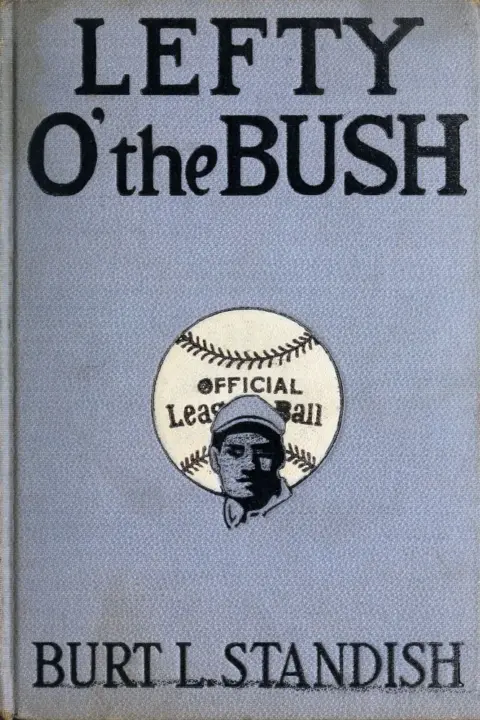
"Lefty o' the Bush" by Burt L. Standish is a sports novel written in the early 20th century. It centers around the intense rivalry in minor league baseball, particularly between the teams of Bancroft and Kingsbridge. The story highlights the fast-paced emotions and stakes that accompany a small-town baseball season, focusing on the character of Tom Locke, a rookie pitcher whose performance has a significant impact on the local fans and rivalries. At the start of the book, we are introduced to the eager anticipation surrounding the opening game of the Northern League season in Kingsbridge, a mill town filled with passionate baseball fans. The opening chapter sets the stage with the Bancroft "Bullies" manager Mike Riley observing the tensions between the two teams, particularly toward Locke, the unknown pitcher for Kingsbridge. The community’s hopes are pinned on Locke, who initially struggles under the pressure and jeering from the crowd, leading to doubts about his abilities. However, as the narrative unfolds, Locke gradually finds his footing on the mound, causing a shift in the crowd's perception and foreshadowing his potential to become a local hero amid the fierce rivalry.
Introduction adapted from the source catalogue; source summaries may be automatically generated.
Free to read · English · 57,469 words · No account needed
MAKE TIME FOR A GOOD BOOK
On by default. Untick to stop anonymous reading totals. Each page counts after 10 seconds in view. How this works.
Anonymous counting is on unless you have switched it off.
He thanked her for the words, and secured his hat and book as they walked slowly toward the log. Tommy was again blowing away at his harmonica, Jimmy was sulking, and the others fell to amusing themselves with a game of hide and seek. Janet sat on the log, and Locke seated himself near her.
“What were you reading?” she asked curiously.
He gave her the book, and she glanced at it. It was a well-thumbed volume of “The Merchant of Venice.”
“My favorite when I read Shakespeare,” he said. “I don’t know why, but I have read it over and over. At the moment when I heard you calling, I was reading Bassanio’s raptures on finding Portia’s portrait in the leaden casket.”
Leaning forward a bit and looking steadily at her, he quoted:
“‘Here are sever’d lips,
Parted with sugar breath: so sweet a bar
Should sunder such sweet friends. Here in her hairs
The painter plays the spider and hath woven
A golden mesh to entrap the hearts of men.’”
His voice was low and soft, yet full and deep. Again her eyes drooped before his. One shapely white hand toyed with a loose bit of bark.
“You quote well,” she said, compelling herself to speak calmly, almost carelessly. “You should be a teacher of elocution.”
“The task would be agreeable indeed,” he returned, “if I could choose
my pupil.”
“You speak in the singular.”
“Which,” he declared instantly, “is not at all singular, the situation considered. Had I my choice, I’d not seek a pupil beyond this little glade.”
“Oh, if you were to pick one of my Sunday-school class, I’m afraid you would not find the task particularly agreeable. Teaching elocution to Tommy or Jimmy or any of the others would be thankless work.”
He smiled. “I’d not care to seek so far, yet I know it is presumptuous for me to fancy that I could teach you.”
She flashed him a smile that went to his head like wine and made him long to imprison the dainty hand that was still toying with the bit of loose bark. There was a brief silence, broken only by the echoing cries of the romping children.
“Tommy, Tommy!” she cried suddenly, “play ‘Marching Through Georgia.’ Just listen, Mr. Locke; Tommy plays very well for a little fellow. Don’t you think so?”
“To tell the truth, I don’t, but, if you say so, I’ll swear he plays
divinely.”
“You have a habit of speaking the truth always?”
“It is my intention to follow the practice when possible.”
“Do you think a lie is ever excusable?”
Your reading position is saved on this browser. Take it to another device with a library code. Reading pages adapt to text, rather than matching a printed edition.
Burt L. Standish
Burt L. Standish

Burt L. Standish

Burt L. Standish
BEHIND THE BOOK
This eBook is for the use of anyone anywhere in the United States and most other parts of the world at no cost and with almost no restrictions whatsoever. You may copy it, give it away or re-use it under the terms of the Project Gutenberg License included with this eBook or online at www.gutenberg.org. If you are not located in the United States, you will have to check the laws of the country where you are located before using this eBook. Read the source licence.
The original source file, including credits and licence, is retained by this library. Request an original-format copy at no charge. Please include the book title and Project Gutenberg identifier #72013.
KEEP YOUR CURIOSITY GOING
Coulson Kernahan

Maurice Baring
Frances Wright
Cécile Tormay

Frederic Jesup Stimson

W. H. P. (William Henry Pope) Jarvis