THE CLASSIC COLLECTION✦All Aboard: A Story for GirlsCLASSIC FREE BOOKS
All Aboard: A Story for Girls
Fannie E. (Fannie Ellsworth) Newberry
THE CLASSIC COLLECTION · 1899
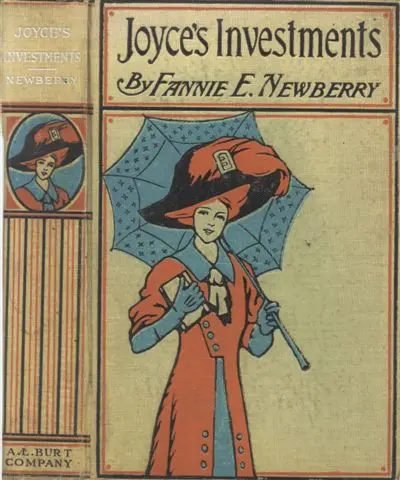
"Joyce's Investments: A Story for Girls" by Fannie E. Newberry is a novel written in the late 19th century. The story centers around Joyce Lavillotte, a young woman who inherits a significant fortune from her father and is determined to use her wealth for the betterment of a struggling community tied to her family's factory, the Early Glass Works. Against the backdrop of a patriarchal society, Joyce defies expectations, aiming not only to manage the factory but also to create a model town that addresses the needs of its inhabitants. At the start of the book, we are introduced to Joyce as she discusses her ambitious plans with her lawyer, Mr. Barrington, who is skeptical of her intentions. Joyce's passion shines through as she expresses her desire to build a better community, with schools and housing that foster comfort and cooperation among the workers. Her revolutionary ideas about co-operation and community transformation capture the reader's attention, hinting at the challenges she will face in her pursuit of social reform and her interactions with the residents of Littleton. This opening sets the stage for Joyce's journey in balancing her newfound power and responsibility as a young heiress seeking to make a meaningful impact.
Introduction adapted from the source catalogue; source summaries may be automatically generated.
Free to read · English · 75,602 words · No account needed
MAKE TIME FOR A GOOD BOOK
On by default. Untick to stop anonymous reading totals. Each page counts after 10 seconds in view. How this works.
Anonymous counting is on unless you have switched it off.
"I beg your pardon. You are right, as usual. Come in to ma mere."
Joyce followed the sweet-faced young woman, still carrying the little child who was so like her, and thus entered the large and pleasant living-room of the old house. In the embrasure of one broad window, seeming to focus all the light which streamed in freely through the thin, parted curtains, sat a woman in a gown of soft white wool, made with artistic simplicity. Her face had the same soft cream tint as her gown, and the hair, turned back in loose waves from her broad forehead, was of a purplish black, occasionally streaked with gray. All the features were clean-cut and delicate, but the expression in the large black eyes was that vague, appealing one which too surely indicates the utter loss of sight.
Evidently the woman, still exceptionally beautiful in her maturity, was
hopelessly blind.
Joyce quickly set down the little one, and advanced on winged feet.
"Ma mere," she said in a voice almost of adoration, as she dropped to her knees beside the woman's chair, "Ma mere, I have come back."
"Dear one! Ma petite!" exclaimed the other in liquid southern accents, reaching out a delicate, trembling hand, which the girl caught and kissed devotedly. "We have longed for you. But we knew you would come! Let me see your face, child."
Joyce turned it upward and remained very still while the other lightly touched brow, eyes, lips, and chin, in a swift, assured fashion.
"Ah, you are truly the same little Joyce. There is the breadth between the eyes like an innocent child's, the straight, firm little nose like a Greek outline, the full curved lips--do you still pout when angry, cherie?--and that square, decided turn to the chin, more apparent than ever. You have grown, Joyce; you are a woman now."
"Yes, mother, but still a baby to you, and I want always to keep the old name for you, no matter how I grow. Ma mere, you have grown younger, and are more beautiful than ever."
"No flattery, mignonne! It is not good for me. Sit down here and tell us all there is to tell. You are very lonely, now?"
"I am alone--yes."
Joyce drew a chair close beside the other and sat down, while the older
women smiled slightly.
"Yes, there is a difference. They tell me you are very rich."
"Too rich, dear mother; it frightens me!"
"Money is a great power, my child."
"And a terrible responsibility, as you have always taught me, ma mere."
Your reading position is saved on this browser. Take it to another device with a library code. Reading pages adapt to text, rather than matching a printed edition.
Fannie E. (Fannie Ellsworth) Newberry
BEHIND THE BOOK
This eBook is for the use of anyone anywhere in the United States and most other parts of the world at no cost and with almost no restrictions whatsoever. You may copy it, give it away or re-use it under the terms of the Project Gutenberg License included with this eBook or online at www.gutenberg.org. If you are not located in the United States, you will have to check the laws of the country where you are located before using this eBook. Read the source licence.
The original source file, including credits and licence, is retained by this library. Request an original-format copy at no charge. Please include the book title and Project Gutenberg identifier #21857.
KEEP YOUR CURIOSITY GOING
Coulson Kernahan

Maurice Baring
Frances Wright
Cécile Tormay

Frederic Jesup Stimson

W. H. P. (William Henry Pope) Jarvis