THE CLASSIC COLLECTION✦All Aboard: A Story for GirlsCLASSIC FREE BOOKS
All Aboard: A Story for Girls
Fannie E. (Fannie Ellsworth) Newberry
THE CLASSIC COLLECTION · 1899
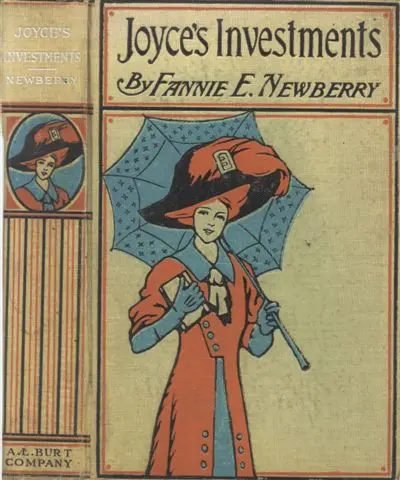
"Joyce's Investments: A Story for Girls" by Fannie E. Newberry is a novel written in the late 19th century. The story centers around Joyce Lavillotte, a young woman who inherits a significant fortune from her father and is determined to use her wealth for the betterment of a struggling community tied to her family's factory, the Early Glass Works. Against the backdrop of a patriarchal society, Joyce defies expectations, aiming not only to manage the factory but also to create a model town that addresses the needs of its inhabitants. At the start of the book, we are introduced to Joyce as she discusses her ambitious plans with her lawyer, Mr. Barrington, who is skeptical of her intentions. Joyce's passion shines through as she expresses her desire to build a better community, with schools and housing that foster comfort and cooperation among the workers. Her revolutionary ideas about co-operation and community transformation capture the reader's attention, hinting at the challenges she will face in her pursuit of social reform and her interactions with the residents of Littleton. This opening sets the stage for Joyce's journey in balancing her newfound power and responsibility as a young heiress seeking to make a meaningful impact.
Introduction adapted from the source catalogue; source summaries may be automatically generated.
Free to read · English · 75,602 words · No account needed
MAKE TIME FOR A GOOD BOOK
On by default. Untick to stop anonymous reading totals. Each page counts after 10 seconds in view. How this works.
Anonymous counting is on unless you have switched it off.
Joyce, laughing to herself, tripped across the ground occupied by the works, and, after a hurried glance along the first row of cottages, selected one at random and making straight for it, knocked with some trepidation, but no delay. She heard herself announced inside by a childish voice in descriptive fashion--"Say, ma, it's a girl in swell clothes--hurry!" and began to question if she were too well dressed, even in her plain black garb, for her part. Certainly there was an air about her not common to the traveling agency people, but whether it were entirely due to her garments may be doubted.
After considerable scurrying about inside, plainly distinguished through the thin planking, the door was gingerly opened a few inches and a touzled head appeared in the slit.
"Good-morning, 'm," spoke the head with an inquiring accent, which plainly meant, "And what do you want?"
Joyce partly ignored the woman and her brusquerie, for the pretty curly pate of a baby clinging to her skirts, and her ready smile was for him, as she said,
"What a bright-eyed baby! May I come in for a minute and talk to you?"
The mother thawed to that, and the door fell wide apart. "Why, yes, come in, come in! I'm washing to-day, but there's no great hurry's I knows on. Sit there, won't ye? It's more comfor'ble."
Quite willing to be "more comfor'ble," if at no one's expense, Joyce sank into the old cane rocker, still beaming upon the baby, who shyly courted her from amid the damp folds of his mother's skirts.
"He's pretty smart for 'leven months," affirmed the latter, lifting him to her knee, and dropping into the wooden chair opposite with a sense of utter relaxation that struck the caller as being the next thing to unconscious grace, even in that lank, slatternly figure. "He can go clear 'round the room by takin' hold o' things. I guess you like babies, 'm?"
"I like some babies--and yours is a beauty; large, too. I had thought
him much older."
"Yes, he's as big as I care to lug--that's certain! Dorey, go and stir down the clo'es in the boilin' suds, and be quick about it, too! Don't ye know better'n to stand starin' at folks like a sick cat?" This, to a little girl, presumably the herald of Joyce's approach, who had been peeping in through the crack of a rear door.
Joyce, dreading a storm, asked politely,
"You have two children, have you?"
Your reading position is saved on this browser. Take it to another device with a library code. Reading pages adapt to text, rather than matching a printed edition.
Fannie E. (Fannie Ellsworth) Newberry
BEHIND THE BOOK
This eBook is for the use of anyone anywhere in the United States and most other parts of the world at no cost and with almost no restrictions whatsoever. You may copy it, give it away or re-use it under the terms of the Project Gutenberg License included with this eBook or online at www.gutenberg.org. If you are not located in the United States, you will have to check the laws of the country where you are located before using this eBook. Read the source licence.
The original source file, including credits and licence, is retained by this library. Request an original-format copy at no charge. Please include the book title and Project Gutenberg identifier #21857.
KEEP YOUR CURIOSITY GOING
Coulson Kernahan

Maurice Baring
Frances Wright
Cécile Tormay

Frederic Jesup Stimson

W. H. P. (William Henry Pope) Jarvis