THE CLASSIC COLLECTION✦All Aboard: A Story for GirlsCLASSIC FREE BOOKS
All Aboard: A Story for Girls
Fannie E. (Fannie Ellsworth) Newberry
THE CLASSIC COLLECTION · 1899
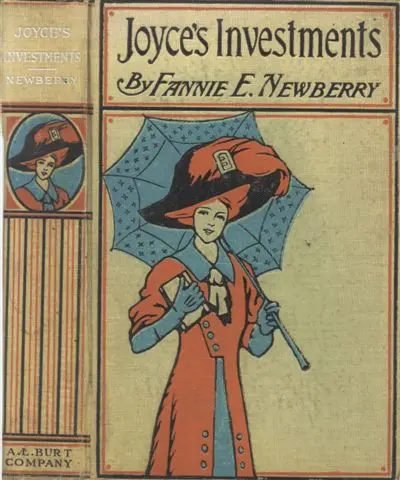
"Joyce's Investments: A Story for Girls" by Fannie E. Newberry is a novel written in the late 19th century. The story centers around Joyce Lavillotte, a young woman who inherits a significant fortune from her father and is determined to use her wealth for the betterment of a struggling community tied to her family's factory, the Early Glass Works. Against the backdrop of a patriarchal society, Joyce defies expectations, aiming not only to manage the factory but also to create a model town that addresses the needs of its inhabitants. At the start of the book, we are introduced to Joyce as she discusses her ambitious plans with her lawyer, Mr. Barrington, who is skeptical of her intentions. Joyce's passion shines through as she expresses her desire to build a better community, with schools and housing that foster comfort and cooperation among the workers. Her revolutionary ideas about co-operation and community transformation capture the reader's attention, hinting at the challenges she will face in her pursuit of social reform and her interactions with the residents of Littleton. This opening sets the stage for Joyce's journey in balancing her newfound power and responsibility as a young heiress seeking to make a meaningful impact.
Introduction adapted from the source catalogue; source summaries may be automatically generated.
Free to read · English · 75,602 words · No account needed
MAKE TIME FOR A GOOD BOOK
On by default. Untick to stop anonymous reading totals. Each page counts after 10 seconds in view. How this works.
Anonymous counting is on unless you have switched it off.
"I was sent," she returned. "It's my business--to nurse those who are not rich. It makes a different profession of it, where one must often be house-keeper and cook, as well as attendant on the sick, you see."
"Yes, indeed. You're good at keeping house, I reckon. It must have looked a mountain to you to get order out of the mess here."
"I've seen worse places. Now, it's about five o'clock and I'll give you some breakfast, and dress your arms. Then, if you feel comfortable, I'll take a nap myself."
"To be sure. And are you going to stay all day?" wistfully.
"Of course, and to-morrow too, perhaps."
She folded her work in deft fashion, putting thimble and thread away in a bag which, in time, became something of a marvel to Gus, who declared a man never wanted anything but she'd find it in that bag; then went about preparing breakfast, and soon Gus was sipping what seemed like nectar to the poor fellow, who was used to decoctions that might have a name, but neither looked nor tasted like any known drink.
"Well, that is coffee!" he cried gratefully. "Say, Mrs.----"
"Keep," she interposed quietly.
"Mrs. Keep, I don't like to be prying, but--but, you understand, I'm poor? I can't pay much, and you're way up in your business, I see. Perhaps----"
She smiled in motherly fashion.
"Don't bother your head about that. I am paid, and well paid. You are simply to take things as they come, and hurry to get well. I'm glad to see you can eat."
"Eat? It would be a queer man that couldn't with such a breakfast before him! I guess some fairy must have blessed my cradle when I was born. I never knew, before, I was heir to good luck. Well, there might be worse things than burned hands. Now do me up in fresh rags, Mother Keep, and you shall have as long a nap as you like. I won't even sneeze if you say not."
Mother Keep stayed a week, and left Gus well on the way to a perfect cure, with no scars remaining as a record of his awkwardness. She often talked with the lad, finding it easy to probe him. He talked ardently of his one love, the study of architecture, showing her many plans, and explaining how he saved every penny to spend it in lessons at the Institute, and in materials for this absorbing work. One of these plans--that of a small church, simple in design, yet with real elegance of outline and convenience of arrangement, impressed her greatly.
Your reading position is saved on this browser. Take it to another device with a library code. Reading pages adapt to text, rather than matching a printed edition.
Fannie E. (Fannie Ellsworth) Newberry
BEHIND THE BOOK
This eBook is for the use of anyone anywhere in the United States and most other parts of the world at no cost and with almost no restrictions whatsoever. You may copy it, give it away or re-use it under the terms of the Project Gutenberg License included with this eBook or online at www.gutenberg.org. If you are not located in the United States, you will have to check the laws of the country where you are located before using this eBook. Read the source licence.
The original source file, including credits and licence, is retained by this library. Request an original-format copy at no charge. Please include the book title and Project Gutenberg identifier #21857.
KEEP YOUR CURIOSITY GOING
Coulson Kernahan

Maurice Baring
Frances Wright
Cécile Tormay

Frederic Jesup Stimson

W. H. P. (William Henry Pope) Jarvis