THE CLASSIC COLLECTION✦All Aboard: A Story for GirlsCLASSIC FREE BOOKS
All Aboard: A Story for Girls
Fannie E. (Fannie Ellsworth) Newberry
THE CLASSIC COLLECTION · 1899
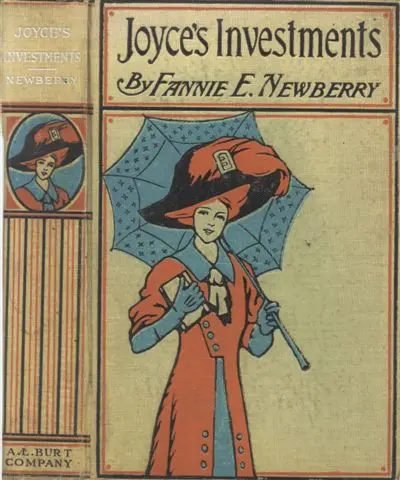
"Joyce's Investments: A Story for Girls" by Fannie E. Newberry is a novel written in the late 19th century. The story centers around Joyce Lavillotte, a young woman who inherits a significant fortune from her father and is determined to use her wealth for the betterment of a struggling community tied to her family's factory, the Early Glass Works. Against the backdrop of a patriarchal society, Joyce defies expectations, aiming not only to manage the factory but also to create a model town that addresses the needs of its inhabitants. At the start of the book, we are introduced to Joyce as she discusses her ambitious plans with her lawyer, Mr. Barrington, who is skeptical of her intentions. Joyce's passion shines through as she expresses her desire to build a better community, with schools and housing that foster comfort and cooperation among the workers. Her revolutionary ideas about co-operation and community transformation capture the reader's attention, hinting at the challenges she will face in her pursuit of social reform and her interactions with the residents of Littleton. This opening sets the stage for Joyce's journey in balancing her newfound power and responsibility as a young heiress seeking to make a meaningful impact.
Introduction adapted from the source catalogue; source summaries may be automatically generated.
Free to read · English · 75,602 words · No account needed
MAKE TIME FOR A GOOD BOOK
On by default. Untick to stop anonymous reading totals. Each page counts after 10 seconds in view. How this works.
Anonymous counting is on unless you have switched it off.
"Most certainly, if I may. There will be a constant need of your advice, I know. And now, Mr. Barrington, shall we settle the matter of salary, or do you prefer to make a separate charge for each occasion?"
His smile was rather grim as he arose and took down a bundle of papers and documents, slipped them rapidly from hand to hand, then laid them in order before him.
"I think the salary might be best for you," he answered.
"So do I," blithely, "for I shall probably bore you to death!"
This matter having been satisfactorily adjusted, the lawyer, with a rather ironical air, observed,
"If I am not trenching upon forbidden ground, might I ask a few more questions concerning this scheme of yours?"
"As many as you like, sir."
"Thank you. I take it for granted you will retain Mr. Dalton as
manager?"
"Yes."
"And most of the employees as at present?"
"All, for aught I know."
"And you speak of building up a town--just what does that mean to your
own mind?"
"I'll try to tell you. You know at present there are only the buildings for the Works, the branch track and engine sheds, and the few rows of uncomfortable cottages for the families of the men. There is no school, no church, no library, no meeting-place of any kind, except the grocery store and saloon; and those bare, staring rows of mean houses, just alike, are not homes in any sense of the word. I want to add all such comforts--no, I call them necessities--and more."
"More? As what, for instance?"
"Well,"--she drew a long breath and settled back in her chair with a nestling movement that made the hard man of business feel a certain fatherly yearning towards her, and at last said slowly, "I can't quite explain to you how I have been led to it, but this thought has become very plain to me--that every real need of humanity must (if this world be the work of a perfect Being) have its certain fulfilment. Most people think the fulfilment should only be looked for in another and better world. I think it might, and ought, to come often in this, and that we alone are to blame that it does not."
"Wait! Let me more fully understand. You think every need--what kind of
needs?"
"All kinds. Needs of body, mind, and soul."
"You think they can be fully gratified here?"
"I think they might be. I believe there is no reason, except our own ignorance, stupidity, prejudice, and greed, that keeps them from being gratified here and now."
"But child--that would be Heaven!"
Your reading position is saved on this browser. Take it to another device with a library code. Reading pages adapt to text, rather than matching a printed edition.
Fannie E. (Fannie Ellsworth) Newberry
BEHIND THE BOOK
This eBook is for the use of anyone anywhere in the United States and most other parts of the world at no cost and with almost no restrictions whatsoever. You may copy it, give it away or re-use it under the terms of the Project Gutenberg License included with this eBook or online at www.gutenberg.org. If you are not located in the United States, you will have to check the laws of the country where you are located before using this eBook. Read the source licence.
The original source file, including credits and licence, is retained by this library. Request an original-format copy at no charge. Please include the book title and Project Gutenberg identifier #21857.
KEEP YOUR CURIOSITY GOING
Coulson Kernahan

Maurice Baring
Frances Wright
Cécile Tormay

Frederic Jesup Stimson

W. H. P. (William Henry Pope) Jarvis