THE CLASSIC COLLECTION✦All Aboard: A Story for GirlsCLASSIC FREE BOOKS
All Aboard: A Story for Girls
Fannie E. (Fannie Ellsworth) Newberry
THE CLASSIC COLLECTION · 1899
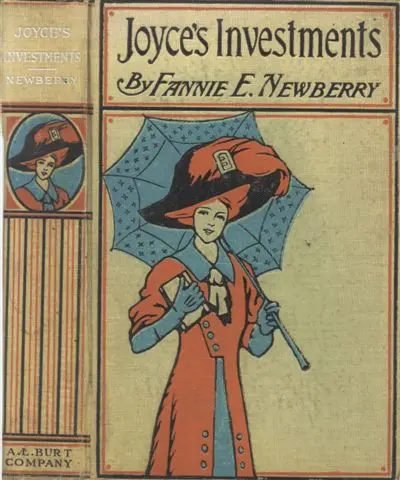
"Joyce's Investments: A Story for Girls" by Fannie E. Newberry is a novel written in the late 19th century. The story centers around Joyce Lavillotte, a young woman who inherits a significant fortune from her father and is determined to use her wealth for the betterment of a struggling community tied to her family's factory, the Early Glass Works. Against the backdrop of a patriarchal society, Joyce defies expectations, aiming not only to manage the factory but also to create a model town that addresses the needs of its inhabitants. At the start of the book, we are introduced to Joyce as she discusses her ambitious plans with her lawyer, Mr. Barrington, who is skeptical of her intentions. Joyce's passion shines through as she expresses her desire to build a better community, with schools and housing that foster comfort and cooperation among the workers. Her revolutionary ideas about co-operation and community transformation capture the reader's attention, hinting at the challenges she will face in her pursuit of social reform and her interactions with the residents of Littleton. This opening sets the stage for Joyce's journey in balancing her newfound power and responsibility as a young heiress seeking to make a meaningful impact.
Introduction adapted from the source catalogue; source summaries may be automatically generated.
Free to read · English · 75,602 words · No account needed
MAKE TIME FOR A GOOD BOOK
On by default. Untick to stop anonymous reading totals. Each page counts after 10 seconds in view. How this works.
Anonymous counting is on unless you have switched it off.
"Well, just this. First, it did seem queer that a handsome young lady just livin' on in our town, and no blood relation to nobody, should take such an int'rust in Lucy and me, to say nothin' of other folks. Ev'ry time 't you'd come, or send other folks to me, I kept askin' inside o' me, 'Now, what does that mean? What is it to her, anyhow?' Then, kinder sudden like, it come to me once that ev'ry single one o' the good things what's been the makin' o' Littleton begun to come along just about when you fetched up there. And when I'd figured on that a while, and remembered how you and the boss here was allays consultin' together, and how you seemed to feel jest 's if you'd got stock in us, somehow, it come to me all of a heap."
"What came to you?" asked Joyce, her brilliant eyes flashing a laughing glance towards her seat-mate.
"Why, that they mightn't be any young Early after all, and that 'twas jest possible--mind, I don't say as I've got all the twists and turns of it--but that you might, somehow or other, stand fer him. You couldn't be him, bein' a girl, of course, but stand fer him. Don't they have proxers, or sponsors, or some such things in law, Mr. Dalton?"
That gentleman laughed heartily, and Joyce joined in with a merry peal. Even Lucy and Nate helped the chorus, though somewhat perfunctorily, not knowing just what they were laughing at.
"How is it, Miss Lavillotte, are you standing sponsor for any one?" queried Dalton, as soon as he could get his voice.
"I hope not!" she laughed in return.
"Well," put in Nate, looking from one to the other, "it seems funny to you, I see; but if I ain't much mistooken I've heered the boss, here, talk about young Early more'n once. So they must be something to it, of course."
"There!" said Joyce. "You are convicted, Mr. Dalton. Can you set
yourself right?"
"I can, if I may."
"Well, do by all means, then."
"Well, Nate, I began by first being deceived myself; then, being fairly launched in deception, I went on cheating others. There never was a young Early! No man is living by that name, that we know."
Nate looked dazed, and Lucy craned forward anxiously. "Who does own the Works, then?" she cried. "Can't we go on living in our pretty houses, and having the nice new ways? Who built the school, and the church, and the Social-house?"
Your reading position is saved on this browser. Take it to another device with a library code. Reading pages adapt to text, rather than matching a printed edition.
Fannie E. (Fannie Ellsworth) Newberry
BEHIND THE BOOK
This eBook is for the use of anyone anywhere in the United States and most other parts of the world at no cost and with almost no restrictions whatsoever. You may copy it, give it away or re-use it under the terms of the Project Gutenberg License included with this eBook or online at www.gutenberg.org. If you are not located in the United States, you will have to check the laws of the country where you are located before using this eBook. Read the source licence.
The original source file, including credits and licence, is retained by this library. Request an original-format copy at no charge. Please include the book title and Project Gutenberg identifier #21857.
KEEP YOUR CURIOSITY GOING
Coulson Kernahan

Maurice Baring
Frances Wright
Cécile Tormay

Frederic Jesup Stimson

W. H. P. (William Henry Pope) Jarvis