THE CLASSIC COLLECTION✦All Aboard: A Story for GirlsCLASSIC FREE BOOKS
All Aboard: A Story for Girls
Fannie E. (Fannie Ellsworth) Newberry
THE CLASSIC COLLECTION · 1899
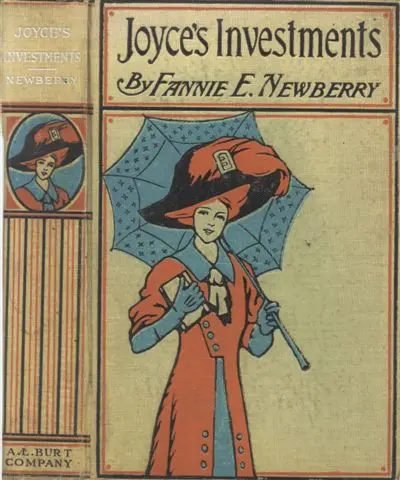
"Joyce's Investments: A Story for Girls" by Fannie E. Newberry is a novel written in the late 19th century. The story centers around Joyce Lavillotte, a young woman who inherits a significant fortune from her father and is determined to use her wealth for the betterment of a struggling community tied to her family's factory, the Early Glass Works. Against the backdrop of a patriarchal society, Joyce defies expectations, aiming not only to manage the factory but also to create a model town that addresses the needs of its inhabitants. At the start of the book, we are introduced to Joyce as she discusses her ambitious plans with her lawyer, Mr. Barrington, who is skeptical of her intentions. Joyce's passion shines through as she expresses her desire to build a better community, with schools and housing that foster comfort and cooperation among the workers. Her revolutionary ideas about co-operation and community transformation capture the reader's attention, hinting at the challenges she will face in her pursuit of social reform and her interactions with the residents of Littleton. This opening sets the stage for Joyce's journey in balancing her newfound power and responsibility as a young heiress seeking to make a meaningful impact.
Introduction adapted from the source catalogue; source summaries may be automatically generated.
Free to read · English · 75,602 words · No account needed
MAKE TIME FOR A GOOD BOOK
On by default. Untick to stop anonymous reading totals. Each page counts after 10 seconds in view. How this works.
Anonymous counting is on unless you have switched it off.
"Well, I know you are to be trusted. Put them in some safe place, under lock and key, and wait till I give you the word. Good-night."
He went out the back way, though the crowd was mostly dispersed now, and, as he gained the street, glanced over toward the park. At its other end a light still gleamed in an upper window of the pretty house, and he hoped it was Joyce's window, for he was in that romantic stage, never fully explained by the psychologists, where every inanimate thing becomes interesting just in proportion to the nearness of its connection with one person--oftentimes a very ordinary young person to outsiders.
It was decidedly out of his way, but he plunged into the park shadows, and hastened through it, then stood in the narrow street which separated its broad end from Joyce's confines, and gazed up at the light.
His devotion ought to have been rewarded--perhaps it was.
Presently the glow fell off into a glimmer, but, as he was turning away, another sprang into brightness below. This he knew to be the library, and it gave him an idea which he was quick to act upon. He took a sprinter's pace for home, and, as soon as he arrived there, made straight for the telephone, where he called up Miss Lavillotte. In a moment her gentle "Hello!" came softly to his ears, and his face took on the look of a satisfied idiot, or possibly an inspired poet seeking for a rhyme; the eyes upturned and the mouth open.
"Do you know who is talking?" he asked.
"Yes; Mr. Dalton."
"You are right!" as if she had mastered an intricate problem. "And I would not have disturbed you, but I have great news for you."
"Indeed?"
"Yes. Murfree died an hour or two ago, and has left papers that tell the whole story, and exonerate Lozcoski."
"How glad I am!"
"I knew you would be. There are other things, too. When can I see you?"
"Let me see. I have news, too. Lucy has broken down at last, and begged me, all tears and softness, to take her to see poor Nate. We are going in the morning at 8.15. But that would be too early for you?"
"Not at all. And you and Lucy can't go alone to the jail. If you will
allow me----"
"How if I command you?" merrily.
"Then I can do nothing but obey."
"Well, then, I do. We'll take the same train, won't we--that 8.15?"
"Yes, of course."
"Good-night, then."
"Good-night--till morning."
He distinguished a funny little sound, like a suppressed giggle, and in a clear, final tone came a last "Good-night, my friend!"
Your reading position is saved on this browser. Take it to another device with a library code. Reading pages adapt to text, rather than matching a printed edition.
Fannie E. (Fannie Ellsworth) Newberry
BEHIND THE BOOK
This eBook is for the use of anyone anywhere in the United States and most other parts of the world at no cost and with almost no restrictions whatsoever. You may copy it, give it away or re-use it under the terms of the Project Gutenberg License included with this eBook or online at www.gutenberg.org. If you are not located in the United States, you will have to check the laws of the country where you are located before using this eBook. Read the source licence.
The original source file, including credits and licence, is retained by this library. Request an original-format copy at no charge. Please include the book title and Project Gutenberg identifier #21857.
KEEP YOUR CURIOSITY GOING
Coulson Kernahan

Maurice Baring
Frances Wright
Cécile Tormay

Frederic Jesup Stimson

W. H. P. (William Henry Pope) Jarvis