THE CLASSIC COLLECTION✦All Aboard: A Story for GirlsCLASSIC FREE BOOKS
All Aboard: A Story for Girls
Fannie E. (Fannie Ellsworth) Newberry
THE CLASSIC COLLECTION · 1899
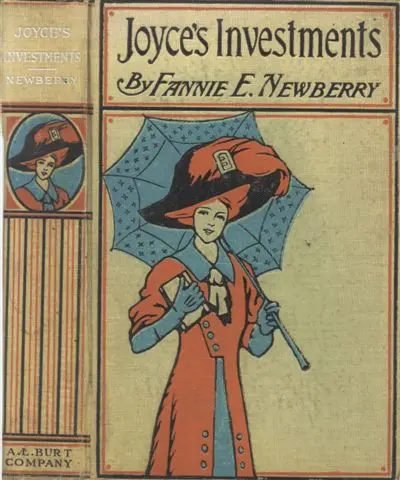
"Joyce's Investments: A Story for Girls" by Fannie E. Newberry is a novel written in the late 19th century. The story centers around Joyce Lavillotte, a young woman who inherits a significant fortune from her father and is determined to use her wealth for the betterment of a struggling community tied to her family's factory, the Early Glass Works. Against the backdrop of a patriarchal society, Joyce defies expectations, aiming not only to manage the factory but also to create a model town that addresses the needs of its inhabitants. At the start of the book, we are introduced to Joyce as she discusses her ambitious plans with her lawyer, Mr. Barrington, who is skeptical of her intentions. Joyce's passion shines through as she expresses her desire to build a better community, with schools and housing that foster comfort and cooperation among the workers. Her revolutionary ideas about co-operation and community transformation capture the reader's attention, hinting at the challenges she will face in her pursuit of social reform and her interactions with the residents of Littleton. This opening sets the stage for Joyce's journey in balancing her newfound power and responsibility as a young heiress seeking to make a meaningful impact.
Introduction adapted from the source catalogue; source summaries may be automatically generated.
Free to read · English · 75,602 words · No account needed
MAKE TIME FOR A GOOD BOOK
On by default. Untick to stop anonymous reading totals. Each page counts after 10 seconds in view. How this works.
Anonymous counting is on unless you have switched it off.
"Yes, I am he; please walk in. You'll have to excuse the litter here. I've been too busy to let them clean it up. Here's a chair, Miss--and here, ma'am"--calmly overturning two close beside the desk, that were heaped with papers.
Having thus seated his guests, the man stood in an inquiring attitude, surreptitiously glancing at Joyce who seemed to him almost superhumanly beautiful in that dusty place, for her pink flush and shy eyes only accentuated her charms. She found it necessary to explain the intrusion at once, but was so nervous over just the right form of self-introduction required that she rather lost her head, and stammered out,
"I--I thought I'd like to see the works and--and you"--then stopped, feeling how awkward was this beginning.
A smile flitted over his grave countenance.
"I am before you," he said, bowing somewhat elaborately. "If looking at me can do anybody any good----"
She checked him with a somewhat imperious gesture.
"I am Joyce Lavillotte," she said, growing cool again, "and I would like to look the place over."
The sentence died into silence before an ejaculation so amazed and long-drawn it made Joyce's eyes open wide. The man looked ready to burst into laughter, yet full of respect, too. At length he broke out,
"I beg your pardon! I am so surprised. I supposed you were a man. It's your name, probably, that deceived me--and then I never thought of a girl--a young lady--caring to examine into things, and asking for statistics, and so on. Then your handwriting--it was so bold. And your methods of expression--well, I have been completely fooled!"
He stopped the voluble flow of words, which Joyce felt instinctively to be unlike himself, and gazed at her again in a forgetfulness somewhat embarrassing. Joyce was trying to think of something to say when he broke out once more, "Yes, I supposed of course you were a man, and not so very young, either. I had pictured you the moral image of your father"--he stopped an instant, then asked with a sort of regretful note in his voice--"he was your father?"
"Yes," said Joyce coldly. "Only I bear my mother's name for certain
private reasons."
"Yes. I had thought Lavillotte was merely a middle name. We have always spoken of--of you--as young Early, here. But excuse me! I am very glad to see you, Miss Lavillotte. You wish to go over the works, you say?"
"Yes, if perfectly convenient. And I want, if possible, to go inside one or two of the houses, if I may. Could it be managed, Mr. Dalton?"
"Assuredly. Just let me announce you, and they'll be honored----"
Your reading position is saved on this browser. Take it to another device with a library code. Reading pages adapt to text, rather than matching a printed edition.
Fannie E. (Fannie Ellsworth) Newberry
BEHIND THE BOOK
This eBook is for the use of anyone anywhere in the United States and most other parts of the world at no cost and with almost no restrictions whatsoever. You may copy it, give it away or re-use it under the terms of the Project Gutenberg License included with this eBook or online at www.gutenberg.org. If you are not located in the United States, you will have to check the laws of the country where you are located before using this eBook. Read the source licence.
The original source file, including credits and licence, is retained by this library. Request an original-format copy at no charge. Please include the book title and Project Gutenberg identifier #21857.
KEEP YOUR CURIOSITY GOING
Coulson Kernahan

Maurice Baring
Frances Wright
Cécile Tormay

Frederic Jesup Stimson

W. H. P. (William Henry Pope) Jarvis