THE CLASSIC COLLECTION✦My diaries, being a personal narrative of events 1888-1914, Part 2 (1900-1914)CLASSIC FREE BOOKS
My diaries, being a personal narrative of events 1888-1914, Part 2 (1900-1914)
Wilfrid Scawen Blunt
THE CLASSIC COLLECTION · 1902
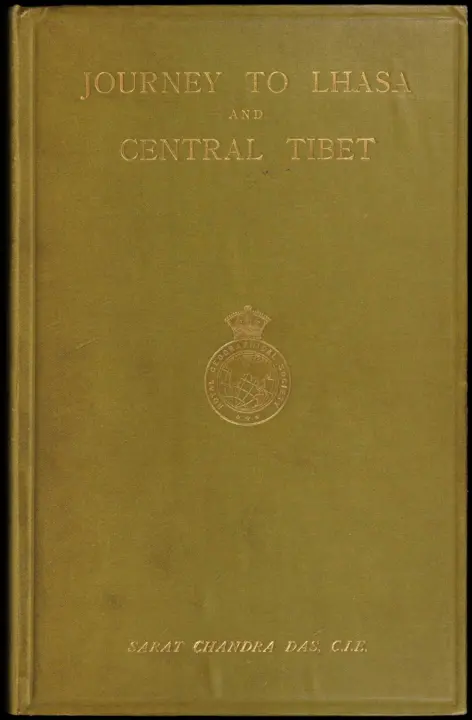
"Journey to Lhasa and Central Tibet" by Sarat Chandra Das is a travelogue published in 1902. The book chronicles Das's second expedition to Tibet in 1881, undertaken under British colonial orders. Das ventures into the forbidden Tibetan capital and central regions, documenting his observations as both explorer and covert agent. Contemporary reviews praised it as the most authentic account of Tibet available, highlighting Das's courage and keen insight into this mysterious land.
Introduction adapted from the source catalogue; source summaries may be automatically generated.
Free to read · English · 110,516 words · No account needed
MAKE TIME FOR A GOOD BOOK
On by default. Untick to stop anonymous reading totals. Each page counts after 10 seconds in view. How this works.
Anonymous counting is on unless you have switched it off.
[13] On the Lepchas, see Dr. A. Campbell, Jour. Anth. Inst., i. 128, et seq. Dr. Campbell has also written several valuable papers on the Limboos in the Jour. Asiat. Soc. of Bengal for 1855 and other years, and in the Jour. Anth. Inst., vol. i.; also papers on the Murnis and Haius of Nepaul and Sikkim, in the same collection, I believe; but they are not accessible to me. Dr. Hooker, op. cit., i. 127–136, says of the Lepchas: “They, or at least some of their tribes, call themselves Rong and Arratt, and their country Dijong. Polyandry is unknown among them, and polygamy rare. Marriage is by purchase. The dead are burnt or buried. Omens are sought in the entrails of fowls (p. 135). They have no religion, though acknowledging the existence of good and bad spirits.”—(W. R.)
[14] Perhaps Nya-dug-shing (nya, “fish;” dug, “poison;” shing, “tree”). Dr. Hooker (op. cit., i. 168) mentions as growing in Sikkim, aconite and convallaria yielding the bikh poison.—(W. R.)
[15] Dr. Hooker (op. cit., i. 138) says that in their funeral ceremonies “the Bijooa of the Lepchas is employed; but the Limboo has also priests of his own, called ‘Phedangbos,’ who belong to rather a higher order than the Bijooas.” Dr. Hooker’s description of the Bijua and of the Lepchas’ religious beliefs prove them conclusively to profess nearly the same religion as the Bonbo of Tibet.—(W. R.)
[16] Cf. Hooker, op. cit., i. 205.—(W. R.)
[17] The Tibetan word lagog is usually translated garlic. I have always heard onion called by its Chinese name tsung. Wild onions are very common in Northern Tibet, at elevations of 15,000 feet and upwards.—(W. R.)
[18] Chang is made from half fermented barley, and is the national drink of Tibet. On its preparation, see Jaeschke, ‘Tib.-Engl. Dictionary,’ s.v. chang, and infra 34, note 1.—(W. R.)
[19] On the salt trade viâ the Rathong valley, see Hooker, op. cit., i.
340, 350.
[20] Hooker’s Ringbee.
[21] Tsos (pron. tso) means “dye” in Tibetan. The dye here referred to is probably the yellow one prepared from the symplocos. See Hooker, op. cit., ii. 41, and J.R.A.S., 1891, 218.—(W. R.)
[22] Parmi seems to be Tibetan bar, “middle;” mi, “man.”—(W. R.)
[23] Cf. Hooker, op. cit., i. 137, 138. Speaking of their burial ceremonies, he says, “They mourn, burn, and bury their dead, raising a mound over the corpse, erecting a headstone, and surrounding the grave with a little paling of sticks; they then scatter eggs and pebbles over the ground.”—(W. R.)
Your reading position is saved on this browser. Take it to another device with a library code. Reading pages adapt to text, rather than matching a printed edition.
BEHIND THE BOOK
This eBook is for the use of anyone anywhere in the United States and most other parts of the world at no cost and with almost no restrictions whatsoever. You may copy it, give it away or re-use it under the terms of the Project Gutenberg License included with this eBook or online at www.gutenberg.org. If you are not located in the United States, you will have to check the laws of the country where you are located before using this eBook. Read the source licence.
The original source file, including credits and licence, is retained by this library. Request an original-format copy at no charge. Please include the book title and Project Gutenberg identifier #68898.
KEEP YOUR CURIOSITY GOING
Wilfrid Scawen Blunt
Wilfrid Scawen Blunt

E. W. (Edgar Watson) Howe
Francis Greenleaf Allinson & Anne C. E. (Anne Crosby Emery) Allinson
Cyrenus Cole

John Martineau