THE CLASSIC COLLECTION✦My diaries, being a personal narrative of events 1888-1914, Part 2 (1900-1914)CLASSIC FREE BOOKS
My diaries, being a personal narrative of events 1888-1914, Part 2 (1900-1914)
Wilfrid Scawen Blunt
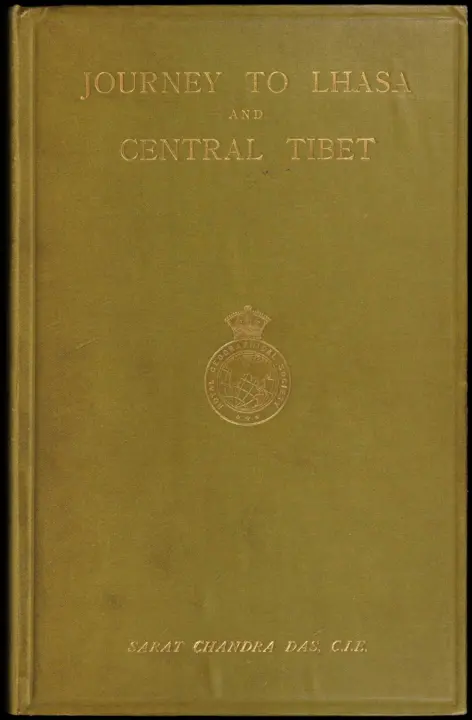
THE CLASSIC COLLECTION · 1902
"Journey to Lhasa and Central Tibet" by Sarat Chandra Das is a travelogue published in 1902. The book chronicles Das's second expedition to Tibet in 1881, undertaken under British colonial orders. Das ventures into the forbidden Tibetan capital and central regions, documenting his observations as both explorer and covert agent. Contemporary reviews praised it as the most authentic account of Tibet available, highlighting Das's courage and keen insight into this mysterious land.
Introduction adapted from the source catalogue; source summaries may be automatically generated.
Free to read · English · 110,516 words · No account needed
MAKE TIME FOR A GOOD BOOK
On by default. Untick to stop anonymous reading totals. Each page counts after 10 seconds in view. How this works.
Anonymous counting is on unless you have switched it off.
On November 30, 1882, I said farewell to Tashilhunpo, and, accompanied by Phurchung and Gopon, my recent guide to Samye, I started for Sakya, from which place I proposed returning to Darjiling by way of Khamba djong and the Kongra lamo pass.
The country was now bare, the brown rocks, the gravelly soil, and the distant snow-covered mountains, added additional bleakness to the scene. We reached the village of Nartang the same evening, and were kindly received by some old friends of Phurchung.
A little before daylight the next morning we set out, following the great high-road which leads to Upper Tibet, instead of taking the direct road which leads there by the Lang la, but which is infested by highwaymen.
At the little hamlet of Chagri [405] we stopped to make some tea, and had to pay three annas for a little water, as the people have to bring all they use from a very considerable distance.
The wind was blowing violently when we resumed our journey, and the dust was so thick that we had to stop at Ge-chung, a little village to the west of the Singma la.
At daybreak we set out again, and after crossing the Re chu (here called Shab chu), along whose banks are numerous hamlets, we came to Lhimpotse, near which is a large lamasery built on a rocky eminence. [406]
We stopped for the night at Samdong, just beyond which village is a long wooden bridge. We got accommodation in the house of a rich villager, the younger of the two husbands (and they not brothers) of the woman of the house. The other husband was the headman, or Sa-yong, and when he appeared, he obligingly sold us very good chang, mutton, onions, and other vegetables.
December 3.—After drinking a cup of steaming chang [407] we set out, and following the course of the Shab chu, came to where the Tsarong chu empties into it, when we took up the course of this stream and followed it to its source.
Several miles above the village of Sikya, where cultivation practically ceases, we came to the large Dokpa village of Jig-kyong, where we stopped for the night. In all the villages small-pox was raging, and where the people were free from it, they showed great apprehension about letting us in, lest we should introduce the dreaded disease among them.
The next day (December 4) we crossed the Shong la, [408] which, though quite high, was of easy ascent, and traversed the Tao valley. After taking lunch at the Kham-yol we came to the Aton la, from whose summit Sakya is visible, with all its red-walled buildings and gilded spires, [409] bearing in a north-westerly direction.
Your reading position is saved on this browser. Take it to another device with a library code. Reading pages adapt to text, rather than matching a printed edition.
BEHIND THE BOOK
This eBook is for the use of anyone anywhere in the United States and most other parts of the world at no cost and with almost no restrictions whatsoever. You may copy it, give it away or re-use it under the terms of the Project Gutenberg License included with this eBook or online at www.gutenberg.org. If you are not located in the United States, you will have to check the laws of the country where you are located before using this eBook. Read the source licence.
The original source file, including credits and licence, is retained by this library. Request an original-format copy at no charge. Please include the book title and Project Gutenberg identifier #68898.
KEEP YOUR CURIOSITY GOING
Wilfrid Scawen Blunt
Wilfrid Scawen Blunt

E. W. (Edgar Watson) Howe
Francis Greenleaf Allinson & Anne C. E. (Anne Crosby Emery) Allinson
Cyrenus Cole

John Martineau