THE CLASSIC COLLECTION✦An outlaw’s diary: the CommuneCLASSIC FREE BOOKS
An outlaw’s diary: the Commune
Cécile Tormay
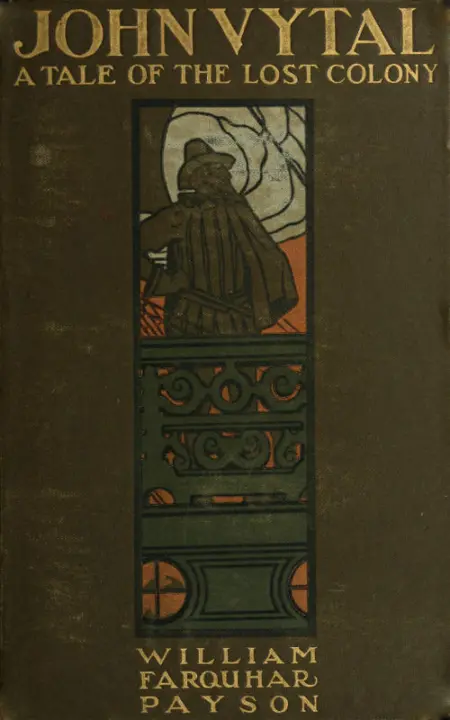
THE CLASSIC COLLECTION · 1901
"John Vytal: A Tale of the Lost Colony" by William Farquhar Payson is a historical novel written in the early 20th century. The story explores the romantic and mysterious history of the Roanoke colony, focusing on the life and adventures of its main character, John Vytal. The narrative sets itself against the backdrop of 16th-century Virginia's tumultuous colonial endeavors, marked by adventure, enigma, and human connection. The opening of the tale introduces readers to a richly defined world of Elizabethan England, where the lively poet Christopher Marlowe and the formidable soldier Hugh Rouse encounter many colorful characters. The initial scenes depict the aftermath of a bear-baiting event where Vytal's heroic intervention creates ripples across the social fabric, drawing attention to his valor. As the story unfolds, Vytal prepares for his voyage to Virginia, mingling with both commoners and nobility, and hints of his future endeavors stir excitement. Through vibrant dialogues and intricate character interactions, the beginning offers a glimpse into the dynamics of human relationships in a historical context while setting the stage for a tale that intertwines fate, struggle, and the pursuit of personal destiny.
Introduction adapted from the source catalogue; source summaries may be automatically generated.
Free to read · English · 87,054 words · No account needed
MAKE TIME FOR A GOOD BOOK
On by default. Untick to stop anonymous reading totals. Each page counts after 10 seconds in view. How this works.
Anonymous counting is on unless you have switched it off.
“The darkness matters not,” averred Prat. “See, I have brought a lanthorn.” And, so saying, he lighted the sheltered candle with flint and steel. Handing the lanthorn to Gyll, who, like a will-o’-the-wisp, led the way into the forest, he then lent assistance to Rouse in supporting the stranger. For several minutes they followed the trail without speaking; but soon their ragged charge broke the silence. He spoke as though to himself, in a voice suggestive of vague reminiscence. Presently his words became more audible, the broken phrases more coherent. “A year,” he said—“a year in hell!” And then, in a clear, low tone, “There were fifteen men of us, just fifteen men, all damned save one.”
“My God!” ejaculated Rouse, halting suddenly; and Roger, coming likewise to a stand-still, stood surveying the youthful, bearded face, with mouth agape in mute amazement.
Vytal turned, but, fearing to break the spell of memory, said nothing. And Gyll Croyden, who had half caught the meaning of the words, returned to the group with her lanthorn. Holding the light high, so that its dim rays fell athwart the stranger’s face, she, too, gazed into the boyish blue eyes with wonder and impatience. As the features were thus illuminated, Vytal’s expression changed. In a voice that surprised its hearers by an unaccustomed vagueness of tone, which matched in uncertainty the youth’s own accents, he demanded, slowly, “Your name, sir; first, your name.”
The blue eyes met Vytal’s look squarely, but, blending with their candor, a peculiar, veiled expression suggested to the keen observer an incongruous amusement.
“Ralph Contempt.”
“Ralph Contempt!” echoed Roger, in an undertone. “It hath the sound of a
stage conceit.”
The stranger turned to him, smiling feebly. “You speak as though I had christened myself. Believe me, it is a miracle that I remember the name at all.” His phrases became wandering again, and he passed a hand across his forehead. “Fifteen men,” he laughed aloud. “Fifteen to guard the possessions of their gracious queen. Fifteen soldiers … very brave, I assure you … fifteen in the middle of hell … but so brave, mark you, that a horde of rampant devils, with firebrands and a myriad whistling arrows, hesitated, really hesitated, in very fear before them. A thousand red demons … and, oh, what a song the weapons sang! It laughs in my ears even now.” He smiled with a look that only intensified the horror of his words by its genuine gayety. “Fourteen men damned, dead and damned … worse yet, one man alive to be played with … oh, ’twas a merry game in hell! A game of pall-mall, a new kind of badminton … painted devils, you know, and then the toy, the ball, the shuttlecock, the hobby-horse, call it what you will—that crawling thing in the centre, scorched and sore … behold, my masters, the toy!” He drew himself up to his full height and looked from one to another, laughing. With the exception of Vytal, the listeners could not but avert their glance—Hugh Rouse touching his brow significantly; Prat, with a grave nod, concurring in the verdict. Gyll Croyden turned away with tears in her eyes, and retraced her steps on the homeward trail. It was not until she had forgetfully left them in darkness, her light but a dim spark among the trees, that the others followed her. Vytal walked on alone in deep thought, the unfortunate bringing up the rear with lagging step between Prat and Rouse, who maintained a gloomy silence. Occasionally the youth would laugh, and, seeming to recall some incident of a terrible combat and captivity, would travesty the same with the inconsistency of dementia.
Your reading position is saved on this browser. Take it to another device with a library code. Reading pages adapt to text, rather than matching a printed edition.
BEHIND THE BOOK
This eBook is for the use of anyone anywhere in the United States and most other parts of the world at no cost and with almost no restrictions whatsoever. You may copy it, give it away or re-use it under the terms of the Project Gutenberg License included with this eBook or online at www.gutenberg.org. If you are not located in the United States, you will have to check the laws of the country where you are located before using this eBook. Read the source licence.
The original source file, including credits and licence, is retained by this library. Request an original-format copy at no charge. Please include the book title and Project Gutenberg identifier #58403.
KEEP YOUR CURIOSITY GOING
Cécile Tormay

Moritz Busch
Coulson Kernahan
John L. Ransom

Maurice Baring
Frances Wright