THE CLASSIC COLLECTION✦An outlaw’s diary: the CommuneCLASSIC FREE BOOKS
An outlaw’s diary: the Commune
Cécile Tormay
THE CLASSIC COLLECTION · 1901
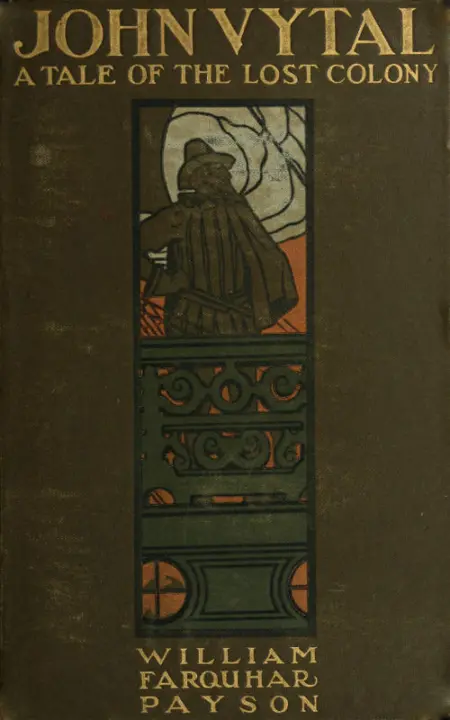
"John Vytal: A Tale of the Lost Colony" by William Farquhar Payson is a historical novel written in the early 20th century. The story explores the romantic and mysterious history of the Roanoke colony, focusing on the life and adventures of its main character, John Vytal. The narrative sets itself against the backdrop of 16th-century Virginia's tumultuous colonial endeavors, marked by adventure, enigma, and human connection. The opening of the tale introduces readers to a richly defined world of Elizabethan England, where the lively poet Christopher Marlowe and the formidable soldier Hugh Rouse encounter many colorful characters. The initial scenes depict the aftermath of a bear-baiting event where Vytal's heroic intervention creates ripples across the social fabric, drawing attention to his valor. As the story unfolds, Vytal prepares for his voyage to Virginia, mingling with both commoners and nobility, and hints of his future endeavors stir excitement. Through vibrant dialogues and intricate character interactions, the beginning offers a glimpse into the dynamics of human relationships in a historical context while setting the stage for a tale that intertwines fate, struggle, and the pursuit of personal destiny.
Introduction adapted from the source catalogue; source summaries may be automatically generated.
Free to read · English · 87,054 words · No account needed
MAKE TIME FOR A GOOD BOOK
On by default. Untick to stop anonymous reading totals. Each page counts after 10 seconds in view. How this works.
Anonymous counting is on unless you have switched it off.
“And a king,” added Gyll Croyden, stroking the bear’s nose with delicate fingers. She was looking down at King Lud, for somehow her laughing eyes persisted in avoiding the face of Vytal. Yet they were by no means bashful.
Rouse looked down at Prat. “Vagabond,” he muttered, under his heavy mustache, “Bubble-wit!”
But Roger only turned on the big soldier a glance of mimic scorn and commiseration, mumbling some retort, in which “Ox” and “Blunderbuss” were alone intelligible.
These courtesies were quickly interrupted by Vytal, who spoke a word or two in low tones to Prat. Immediately that worthy was transformed. His hand came forward from the flute to his sword-hilt. The merriment died out of his face, while a look almost stern and forbidding, yet, curiously enough, not at all incongruous, crossed his stubby features.
The Indians, one by one, withdrew to their canoes and vanished into the deepening darkness. The three soldiers and Gyll Croyden, turning their backs to the water, started homeward. But suddenly they heard a light, grating sound behind them on the shore, and a voice, calling to them in pure English, caused them to turn about again with extreme surprise.
A man, wearing a rusty steel corselet and bonnet, a sword, and shabby leathern breeches, was dragging a canoe onto the beach. Having drawn the prow with an evident effort to security among the weeds and tall grasses that lined the glade, he came staggering forward to the amazed on-lookers, and crying aloud, “At last! at last!” fell apparently lifeless at their feet.
Quickly, with a woman’s eternal instinct, Gyll Croyden ran to the water, took off her neckerchief, wetted it, and returned to the prone figure with ready aid. Drawing off his heavy headgear, she then bathed the man’s temples, and bidding Prat bring the helmet to her, filled with water, presently dashed the cooling liquid in her patient’s face. “Poor boy!” she exclaimed, for the face, despite its full beard and long mustache, was very young.
Perhaps half an hour elapsed before signs of returning consciousness rewarded her efforts. Then, slowly, a pair of blue eyes opened and looked into hers, after which, painfully, the forlorn soldier stood upon his feet.
A volley of questions rose to the lips of Gyll and Roger; but Vytal, who had stood watching the mysterious stranger in silence, disappointed their curiosity.
“It grows dark,” he said, addressing the youth. “An you, sir, can walk, we had best hasten to the town.”
The other, seeming to have regained his strength with surprising suddenness, declared, “If it be not too far, I can accompany you with little aid.”
Your reading position is saved on this browser. Take it to another device with a library code. Reading pages adapt to text, rather than matching a printed edition.
BEHIND THE BOOK
This eBook is for the use of anyone anywhere in the United States and most other parts of the world at no cost and with almost no restrictions whatsoever. You may copy it, give it away or re-use it under the terms of the Project Gutenberg License included with this eBook or online at www.gutenberg.org. If you are not located in the United States, you will have to check the laws of the country where you are located before using this eBook. Read the source licence.
The original source file, including credits and licence, is retained by this library. Request an original-format copy at no charge. Please include the book title and Project Gutenberg identifier #58403.
KEEP YOUR CURIOSITY GOING
Cécile Tormay

Moritz Busch
Coulson Kernahan
John L. Ransom

Maurice Baring
Frances Wright