THE CLASSIC COLLECTION✦An outlaw’s diary: the CommuneCLASSIC FREE BOOKS
An outlaw’s diary: the Commune
Cécile Tormay
THE CLASSIC COLLECTION · 1901
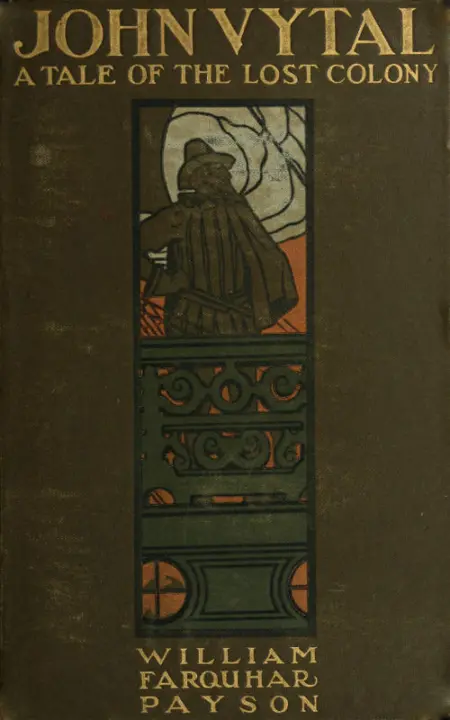
"John Vytal: A Tale of the Lost Colony" by William Farquhar Payson is a historical novel written in the early 20th century. The story explores the romantic and mysterious history of the Roanoke colony, focusing on the life and adventures of its main character, John Vytal. The narrative sets itself against the backdrop of 16th-century Virginia's tumultuous colonial endeavors, marked by adventure, enigma, and human connection. The opening of the tale introduces readers to a richly defined world of Elizabethan England, where the lively poet Christopher Marlowe and the formidable soldier Hugh Rouse encounter many colorful characters. The initial scenes depict the aftermath of a bear-baiting event where Vytal's heroic intervention creates ripples across the social fabric, drawing attention to his valor. As the story unfolds, Vytal prepares for his voyage to Virginia, mingling with both commoners and nobility, and hints of his future endeavors stir excitement. Through vibrant dialogues and intricate character interactions, the beginning offers a glimpse into the dynamics of human relationships in a historical context while setting the stage for a tale that intertwines fate, struggle, and the pursuit of personal destiny.
Introduction adapted from the source catalogue; source summaries may be automatically generated.
Free to read · English · 87,054 words · No account needed
MAKE TIME FOR A GOOD BOOK
On by default. Untick to stop anonymous reading totals. Each page counts after 10 seconds in view. How this works.
Anonymous counting is on unless you have switched it off.
It was late in the evening when the little party arrived at its destination. A sentry, guarding the main entrance of the palisade, which by now had been completed, peered through a chink in the upright logs. Vytal, from without, uttered the watch-word, for the sentry’s ears alone. Instantly they were admitted, the guardian of the town’s security glancing curiously at the unknown figure of Ralph Contempt.
“In the morning,” whispered Prat, “you shall hear all.” And turning to Vytal, he asked: “Whither, captain, shall we conduct the man? To a pallet in the fortress near our own?”
“Nay, he will perhaps fare better with me;” then, to the subject of their discussion, “I trust, Master Contempt, you will accept the hospitality of myself and one other for a day or two at least.”
The youth bowed courteously. “I thank you,” he said, and, with that laugh which seemed to deride Fate itself, or, perhaps more subtly, the listeners, he added, “’Tis desirable to be a guest now and then, instead of a plaything.”
He went with Vytal to the secluded house beyond the enclosure. In the main room they found Marlowe sitting at a table, his arms thrown out over the rough pine top, his head resting on them in an attitude of sleep. A candle, sadly in need of snuffers, flickered across a page of manuscript that lay crumpled in his hands.
On hearing Vytal enter, the poet awoke slowly; but, seeing the face behind his friend, as it came within the candle-light, he rose from his chair with an exclamation of surprise.
“The sole survivor,” announced Vytal, “of our fifteen men.”
“What!”
“But a plaything,” added Ralph, with a deprecatory wave of his hand. “A mere babery for naked red-boys.”
Marlowe took up the candle and held it nearer the speaker’s face. Then, with less surprise and more commiseration, “Forgive me,” he said, “for my unmannerly welcome, but for the moment your features seemed familiar to me, as though I had seen them in a dream.”
The new-comer returned his gaze with a dazed expression. “I am a dream.”
The poet glanced at Vytal meaningly. “He needs rest; let him sleep on my bed. I will make a couch of grasses for myself.”
When finally they heard the regular breathing of their guest, who lay comfortably on Marlowe’s bed, Vytal told of the meeting on the shore and of Ralph Contempt’s broken narrative.
“Poor devil!” mused the poet. “He whose bones we found scattered here was far more fortunate.”
“I thought I knew this man’s face,” said Vytal. “’Tis strange that you, too, should have imagined a recognition.”
Your reading position is saved on this browser. Take it to another device with a library code. Reading pages adapt to text, rather than matching a printed edition.
BEHIND THE BOOK
This eBook is for the use of anyone anywhere in the United States and most other parts of the world at no cost and with almost no restrictions whatsoever. You may copy it, give it away or re-use it under the terms of the Project Gutenberg License included with this eBook or online at www.gutenberg.org. If you are not located in the United States, you will have to check the laws of the country where you are located before using this eBook. Read the source licence.
The original source file, including credits and licence, is retained by this library. Request an original-format copy at no charge. Please include the book title and Project Gutenberg identifier #58403.
KEEP YOUR CURIOSITY GOING
Cécile Tormay

Moritz Busch
Coulson Kernahan
John L. Ransom

Maurice Baring
Frances Wright