THE CLASSIC COLLECTION✦Dr. SevierCLASSIC FREE BOOKS
Dr. Sevier
George Washington Cable
THE CLASSIC COLLECTION · 1894
"John March, Southerner" by George W. Cable is a historical novel written in the late 19th century. Set in the post-Civil War South, the story follows young John March, the son of Judge Powhatan March, as he navigates a world forever changed by war and the complexities of societal change. The narrative is deeply embedded in Southern culture and addresses themes of class, race, and the shifting identities in a society grappling with its past. The opening portion introduces the town of Suez in Dixie, illustrating its charm juxtaposed with the scars of war. We meet Judge March and his son, John, embarking on a journey through their small town, which serves as a backdrop for their relationship dynamics. The Judge is seen as a gentle yet influential figure, embodying the traditions of the South, while the young John, a curious and imaginative boy, is portrayed as both innocent and observant amid the tensions surrounding him. The scene sets the stage for John's coming-of-age story as he encounters various characters who embody the conflicting ideals of freedom and social responsibility in the New South.
Introduction adapted from the source catalogue; source summaries may be automatically generated.
Free to read · English · 129,243 words · No account needed
MAKE TIME FOR A GOOD BOOK
On by default. Untick to stop anonymous reading totals. Each page counts after 10 seconds in view. How this works.
Anonymous counting is on unless you have switched it off.
"Don't look so gruesome." She laughed.
John walked stiffly, frowned, and tried to twist the down on his upper lip. When only fenced and gardened dwellings were about them she spoke again.
"John, I'm unhappy."
"You, Miss Fannie?"
"Yes. As I passed you, you were standing right where you fell five years ago. For three days I've been thinking how deep in debt to you I've been ever since, and--how I've disappointed you."
The youth made no answer. He felt as if he would give ten years of his life to kneel at her feet with his face in her hands and whisper, "Pay me a little love." She laid her arm on her cottage gate, turned her face away, and added,
"And now you're disappointing me."
"I've got a right to know how, Miss Fannie, haven't I?"
Fannie's averted face sank lower. Suddenly she looked fondly up to him and nodded. "Come, sit on the steps a minute"--she smiled--"and I'll pick you a rose."
She skipped away. As she was returning her father came out.
"Why, howdy, Johnnie--Fan, I reckon I'll go to the office."
"You promised me you wouldn't!"
"Well, I'm better since I took some quinine. How's y' father, Johnnie?"
"Sir? Oh, she's not very well. She craves acids, and--Oh!--Father? he's very--I ain't seen him in a right smart while, sir. He's been sort o' puny for----"
"Sorry," said the General, and was gone.
Fannie held the rose.
"Thank you," said John, looking from it to the kindness in her eye. But she caressed the flower and shook her head.
"It's got thorns," she said, significantly, as she sat down on a step.
"Yes, I understand. I'll take it so."
"I don't know. I'm afraid you'll not want it when"--she laid it to her lips--"when I tell you how you've disappointed me."
"Yes, I will. For--oh! Miss Fannie----"
"What, John?"
"You needn't tell me at all. I know it already. And I'm going to change it. You shan't be disappointed. I've learned an awful lot in these last three days--and these last three hours. I've done my last sentimentalizing. I--I'm sure I have. I'll be too good for it, or else too bad for it! I'll always love you, Miss Fannie, even when you're not--Miss Fannie any more; but I'll never come using round you and bothering you with my--feelings." He jerked out his handkerchief, but wiped only his cap--with slow care.
"As to that, John, I shouldn't blame you if you should hate me."
Your reading position is saved on this browser. Take it to another device with a library code. Reading pages adapt to text, rather than matching a printed edition.
George Washington Cable
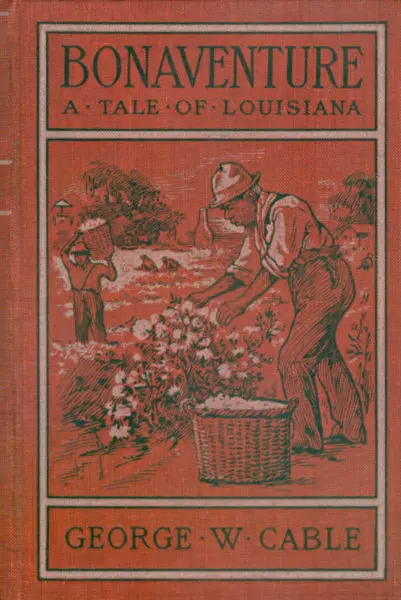
George Washington Cable
George Washington Cable
George Washington Cable
BEHIND THE BOOK
This eBook is for the use of anyone anywhere in the United States and most other parts of the world at no cost and with almost no restrictions whatsoever. You may copy it, give it away or re-use it under the terms of the Project Gutenberg License included with this eBook or online at www.gutenberg.org. If you are not located in the United States, you will have to check the laws of the country where you are located before using this eBook. Read the source licence.
The original source file, including credits and licence, is retained by this library. Request an original-format copy at no charge. Please include the book title and Project Gutenberg identifier #31470.
KEEP YOUR CURIOSITY GOING
Cécile Tormay

Moritz Busch
Coulson Kernahan
John L. Ransom

Maurice Baring
Frances Wright