THE CLASSIC COLLECTION✦Dr. SevierCLASSIC FREE BOOKS
Dr. Sevier
George Washington Cable
THE CLASSIC COLLECTION · 1894
"John March, Southerner" by George W. Cable is a historical novel written in the late 19th century. Set in the post-Civil War South, the story follows young John March, the son of Judge Powhatan March, as he navigates a world forever changed by war and the complexities of societal change. The narrative is deeply embedded in Southern culture and addresses themes of class, race, and the shifting identities in a society grappling with its past. The opening portion introduces the town of Suez in Dixie, illustrating its charm juxtaposed with the scars of war. We meet Judge March and his son, John, embarking on a journey through their small town, which serves as a backdrop for their relationship dynamics. The Judge is seen as a gentle yet influential figure, embodying the traditions of the South, while the young John, a curious and imaginative boy, is portrayed as both innocent and observant amid the tensions surrounding him. The scene sets the stage for John's coming-of-age story as he encounters various characters who embody the conflicting ideals of freedom and social responsibility in the New South.
Introduction adapted from the source catalogue; source summaries may be automatically generated.
Free to read · English · 129,243 words · No account needed
MAKE TIME FOR A GOOD BOOK
On by default. Untick to stop anonymous reading totals. Each page counts after 10 seconds in view. How this works.
Anonymous counting is on unless you have switched it off.
About that same hour the next day John stepped off the train at Suez and turned to let Fannie down; but a pair of uplifted arms came between the two, and Launcelot Halliday, with the back of his velvet coat close to the young man's face, said, "I'll take care of my daughter, John; you can look after any business of your own that may need you."
"Why, Pop!" exclaimed Fannie. The color flushed up to her brows. John gazed at him in haughty silence.
"Come on, Johanna," said the old General, heartily. "Good-by, John. When can I see you in your office?"
"Whenever I'm there, and not too busy!" replied March as he strode away.
"We'll go to the old house for to-night, Johanna," said Fannie, and did not speak again until she began to draw off her gloves in her father's parlor. Her face was white, her dark eyes wide; but her voice was slow and kind.
"Yes, Johanna, go along to my room. I'll be there directly." She shut the door and folded her gloves, smiling like a swordsman rolling up his sleeves.
"Pop, I've owed you a-many an explanation that I've never paid. You never owed me one in your life till now; but"--her eyes flashed--"you owe it this time to the roots of your hair."
"Fan, that's a mighty poor beginning for the explanation I expect from
you."
His tone was one of forbearance, but before he could finish she was as red as a flower. "I belong to my husband! When I've anything to explain I'll explain to him."
"Fannie Halliday----"
"Ravenel, if you please, sir."
He smiled severely. "Have a chair, Mrs. Ravenel. Fan, you're married to a man who never asks an explanation."
The two gazed upon each other in silence. His accustomed belief in her and her ardent love for him were already stealing back into their hearts. Nevertheless----
"O, sir!" she exclaimed, "tell me something I don't know! Yes! But I'm married to a man who waits for things to explain themselves."
"Or till they're past all explanation, Fan."
"Yes, sir; yes! But more! I'm married to a man who knows that nothing can explain conduct but conduct. That's the kind of explanation you still owe me, Pop, till you pay it to John March."
"Well, then," he replied with new warmth, "I'll owe it a long time. If he ever again shows his carelessness of conventional----"
Fannie laid a pale hand on her father's arm. "It wasn't his. He showed carefulness enough; I overruled it. It was his duty to come, Pop; and I had let him neglect duty for me long enough."
Your reading position is saved on this browser. Take it to another device with a library code. Reading pages adapt to text, rather than matching a printed edition.
George Washington Cable
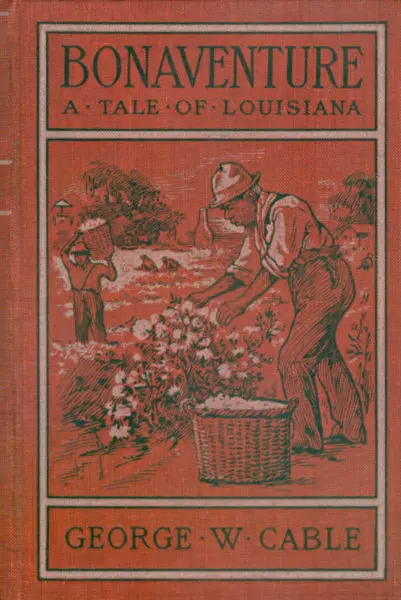
George Washington Cable
George Washington Cable
George Washington Cable
BEHIND THE BOOK
This eBook is for the use of anyone anywhere in the United States and most other parts of the world at no cost and with almost no restrictions whatsoever. You may copy it, give it away or re-use it under the terms of the Project Gutenberg License included with this eBook or online at www.gutenberg.org. If you are not located in the United States, you will have to check the laws of the country where you are located before using this eBook. Read the source licence.
The original source file, including credits and licence, is retained by this library. Request an original-format copy at no charge. Please include the book title and Project Gutenberg identifier #31470.
KEEP YOUR CURIOSITY GOING
Cécile Tormay

Moritz Busch
Coulson Kernahan
John L. Ransom

Maurice Baring
Frances Wright