THE CLASSIC COLLECTION✦The haunts of menCLASSIC FREE BOOKS
The haunts of men
Robert W. (Robert William) Chambers
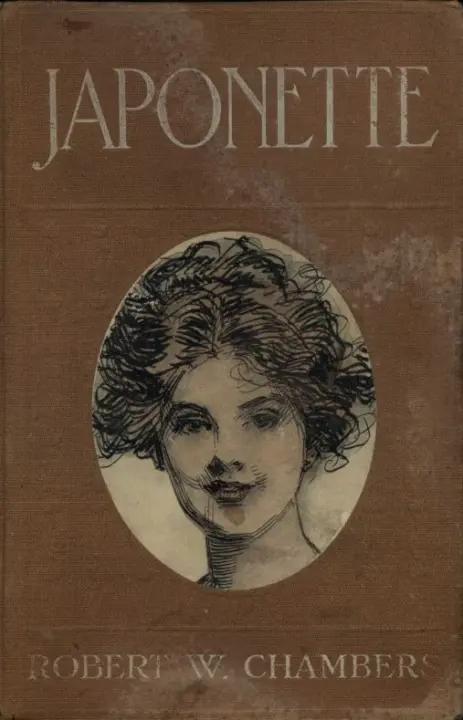
THE CLASSIC COLLECTION · 1912
"Japonette" by Robert W. Chambers is a novel written in the early 20th century. The story centers around James Edgerton, a young man returning to New York after a financial disaster that has wiped out his family's legacy. As he navigates his new reality, he unexpectedly encounters two orphaned nieces of a family acquaintance, Diana and Silvette Tennant, who have rented his apartment without his knowledge. Their interaction sets the stage for a rich exploration of relationships, identity, and the complexities of social status. At the start of the book, Edgerton arrives back in New York after losing everything in his late uncle's firm. Upon returning to his apartment, he finds it occupied by the Tennant sisters, who believed they were merely renting a space for the summer. This initial surprise leads to comedic misunderstandings and a need for collaboration as they each navigate their precarious financial situations. The characters’ dialogues reveal their personalities, creating a light-hearted yet contemplative atmosphere, hinting at deeper themes of resilience and familial connections that may unfold as their lives become intertwined.
Introduction adapted from the source catalogue; source summaries may be automatically generated.
Free to read · English · 59,465 words · No account needed
MAKE TIME FOR A GOOD BOOK
On by default. Untick to stop anonymous reading totals. Each page counts after 10 seconds in view. How this works.
Anonymous counting is on unless you have switched it off.
In the dining room everything was grossly overdone except the cookery--the sort of thing most calculated to annoy and bore the very man most accustomed to it in town; profusion akin to the plethora which offends; effort impossible to disguise which stirs even in the most good-natured and generous an unwilling contempt.
Edgerton let his eyes rest for a moment, outside the silver and crystal-set circle of light, on gold, heavy carving, gilded tapestry and picture, and withdrew his gaze gravely. Men servants swarmed, bothering him; the scent of greenhouse blossoms, forced before their time; the heavy magnificence out of place--all slightly disgusted him, though much of it was about what he had expected of such people.
Little Miss Rivett, on his left, dissected her terrapin with the healthy attention of youth and hunger; and presently he turned to look at her with amused but wholly amiable curiosity.
He saw a small, plump, dainty maid, with exceedingly clear and bright brown eyes, and a softly brilliant complexion, looking back at him with unconcealed interest.
There was a moment's silence, then they both smiled.
"Do you think you'll like us?" she asked saucily; "or do you hate us
already?"
"Not the slightest doubt of my liking you, Miss Rivett; but how about
your liking us?"
"Your cousins are most bewitching and bewildering.... You seem to be
nice--are you?"
"Very," he said, laughing. "I'm glad you gave me an opportunity of
saying so, because otherwise it might not have been perfectly clear to
you."
"I am rather fastidious," she said. "How well do you dance?"
"My grace in that praiseworthy pastime is ursine."
"Really?"
"Unbearably."
"You are very British, aren't you?"
"Do you refer to my little play upon words?"
"No, generally; that was merely a touch of local color. Naturally, also, you fishshootridetohoundsandplaypolo; do you?"
"Also gawf, dear lady."
"Perfectly symmetrical and indistinguishable from others of your kind. I thought so. Crocky, too?"
"Certainly, crocky," he admitted; "also no bank account. You may call
me m'lud with impunity."
"Perhaps you're not entirely qualified. How do you stand on the heiress
question, Mr. Edgerton?"
"I can't qualify there."
"Then you're a sham. Besides, you're neither clever nor gallant. I
am an heiress."
"Then I qualify at once as a fortune hunter," he said, laughing, "and I'll cable for my solicitors."
"What are you saying?" asked Mrs. Rivett in her gentle, uncertain
voice.
"Mother, Mr. Edgerton and I are going to be friends. Perhaps he isn't
sure of it, but I am. Tell him what happens when I am sure of
anything."
"Dear, perhaps Mr. Edgerton doesn't quite understand your manner of
saying things."
Your reading position is saved on this browser. Take it to another device with a library code. Reading pages adapt to text, rather than matching a printed edition.
Robert W. (Robert William) Chambers
Robert W. (Robert William) Chambers

Robert W. (Robert William) Chambers
Robert W. (Robert William) Chambers
BEHIND THE BOOK
This eBook is for the use of anyone anywhere in the United States and most other parts of the world at no cost and with almost no restrictions whatsoever. You may copy it, give it away or re-use it under the terms of the Project Gutenberg License included with this eBook or online at www.gutenberg.org. If you are not located in the United States, you will have to check the laws of the country where you are located before using this eBook. Read the source licence.
The original source file, including credits and licence, is retained by this library. Request an original-format copy at no charge. Please include the book title and Project Gutenberg identifier #52842.
KEEP YOUR CURIOSITY GOING
Coulson Kernahan

Maurice Baring
Frances Wright
Cécile Tormay

Frederic Jesup Stimson

W. H. P. (William Henry Pope) Jarvis