THE CLASSIC COLLECTION✦The haunts of menCLASSIC FREE BOOKS
The haunts of men
Robert W. (Robert William) Chambers
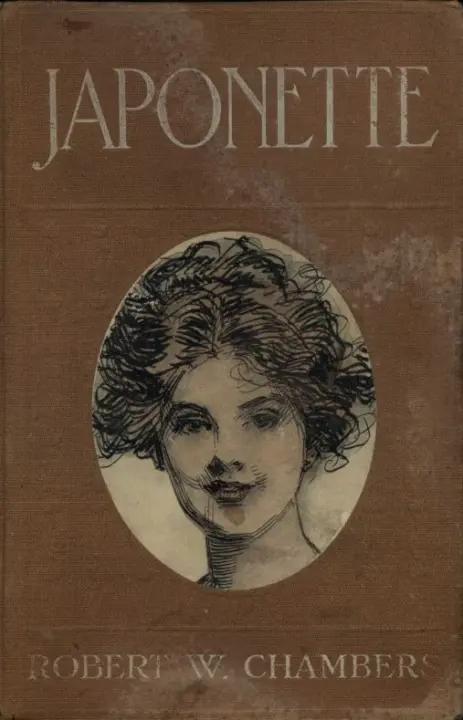
THE CLASSIC COLLECTION · 1912
"Japonette" by Robert W. Chambers is a novel written in the early 20th century. The story centers around James Edgerton, a young man returning to New York after a financial disaster that has wiped out his family's legacy. As he navigates his new reality, he unexpectedly encounters two orphaned nieces of a family acquaintance, Diana and Silvette Tennant, who have rented his apartment without his knowledge. Their interaction sets the stage for a rich exploration of relationships, identity, and the complexities of social status. At the start of the book, Edgerton arrives back in New York after losing everything in his late uncle's firm. Upon returning to his apartment, he finds it occupied by the Tennant sisters, who believed they were merely renting a space for the summer. This initial surprise leads to comedic misunderstandings and a need for collaboration as they each navigate their precarious financial situations. The characters’ dialogues reveal their personalities, creating a light-hearted yet contemplative atmosphere, hinting at deeper themes of resilience and familial connections that may unfold as their lives become intertwined.
Introduction adapted from the source catalogue; source summaries may be automatically generated.
Free to read · English · 59,465 words · No account needed
MAKE TIME FOR A GOOD BOOK
On by default. Untick to stop anonymous reading totals. Each page counts after 10 seconds in view. How this works.
Anonymous counting is on unless you have switched it off.
"It is nice of you to ask us," he said gently. "You have made everything very easy and comfortable for us. My cousins will be down in a few moments; they asked me to come first."
The little gray woman looked up into his pleasant, well-cut face as though confused; he smiled down at her, still retaining her hand.
"My husband has told me who you are," she said. "I didn't expect you to be just like this.... You and your cousins are our very welcome and honored guests.... Our guests," she repeated almost tremulously, "and none more welcome under our roof."
"It is gracious and kind of you to say so," he said, touched by the simplicity and the mild, faded face upturned.
Then Mr. Rivett came forward, cautiously treading the velvet, his two burned-brown eyes fixed behind the big concave eyeglasses.
"It's wet weather," he said, shaking hands. "I hope your quarters are
comfortable."
"Most luxurious, thank you--with a beautiful outlook."
Mrs. Rivett's gentle voice sounded at his elbow presenting him to her daughter and son, and after that to several others who, for the moment, he made no effort to distinguish one from another except that he recognized Colonel Curmew in superb form and obtrusive pearl studs decorating a fluted shirt front.
A moment later Silvette and Diana entered, slender and youthful, with all the softly flushed charm of eighteen and the winning composure of a wider experience than eighteen years can ever lend.
Colonel Curmew presently outflanked Silvette, forcing her skillfully into a momentary retreat toward the recess of a window, where he blockaded her and curled his mustache with satisfaction and shot his cuffs, and prepared to drive in her outer pickets.
Diana remained in quiet conversation with Mrs. Rivett, the latter shy, wistful, and ill at ease by turns; the former sweet and deferential, yet all the while composedly taking the measure of the others in the room, and of the room itself, vaguely aware in her apparently smiling preoccupation that she was winning a perplexed and timid heart.
Cocktails were served--unusual ones that had a scent like the original Ricky, that is, the aromatic odor of wild blossoms.
The little gray woman barely tasted hers, with that same inborn instinct, perhaps, that impelled those old-time hostesses in the days when viands and wines sometimes proved fatal.
Then Edgerton relieved her of her scarcely touched glass; took Diana's, too, which was still half full. Mrs. Rivett rose and gave him her arm, to his surprise; Mr. Rivett took in Diana, his son Silvette. The name of Edgerton had counted heavily.
Your reading position is saved on this browser. Take it to another device with a library code. Reading pages adapt to text, rather than matching a printed edition.
Robert W. (Robert William) Chambers
Robert W. (Robert William) Chambers

Robert W. (Robert William) Chambers
Robert W. (Robert William) Chambers
BEHIND THE BOOK
This eBook is for the use of anyone anywhere in the United States and most other parts of the world at no cost and with almost no restrictions whatsoever. You may copy it, give it away or re-use it under the terms of the Project Gutenberg License included with this eBook or online at www.gutenberg.org. If you are not located in the United States, you will have to check the laws of the country where you are located before using this eBook. Read the source licence.
The original source file, including credits and licence, is retained by this library. Request an original-format copy at no charge. Please include the book title and Project Gutenberg identifier #52842.
KEEP YOUR CURIOSITY GOING
Coulson Kernahan

Maurice Baring
Frances Wright
Cécile Tormay

Frederic Jesup Stimson

W. H. P. (William Henry Pope) Jarvis