THE CLASSIC COLLECTION✦The haunts of menCLASSIC FREE BOOKS
The haunts of men
Robert W. (Robert William) Chambers
THE CLASSIC COLLECTION · 1912
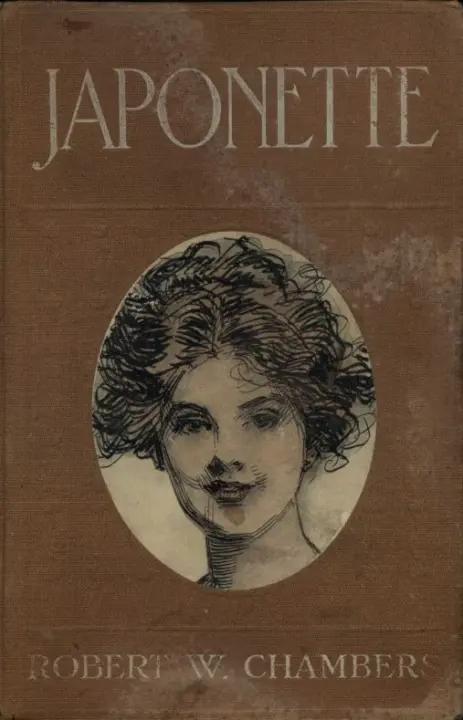
"Japonette" by Robert W. Chambers is a novel written in the early 20th century. The story centers around James Edgerton, a young man returning to New York after a financial disaster that has wiped out his family's legacy. As he navigates his new reality, he unexpectedly encounters two orphaned nieces of a family acquaintance, Diana and Silvette Tennant, who have rented his apartment without his knowledge. Their interaction sets the stage for a rich exploration of relationships, identity, and the complexities of social status. At the start of the book, Edgerton arrives back in New York after losing everything in his late uncle's firm. Upon returning to his apartment, he finds it occupied by the Tennant sisters, who believed they were merely renting a space for the summer. This initial surprise leads to comedic misunderstandings and a need for collaboration as they each navigate their precarious financial situations. The characters’ dialogues reveal their personalities, creating a light-hearted yet contemplative atmosphere, hinting at deeper themes of resilience and familial connections that may unfold as their lives become intertwined.
Introduction adapted from the source catalogue; source summaries may be automatically generated.
Free to read · English · 59,465 words · No account needed
MAKE TIME FOR A GOOD BOOK
On by default. Untick to stop anonymous reading totals. Each page counts after 10 seconds in view. How this works.
Anonymous counting is on unless you have switched it off.
"That's just it; he does understand! He is going to turn out exceedingly nice, mother; watch him!"
"Christine! Please be a little less personal and abrupt."
They turned, smiling, toward the other end of the table where much laughter sounded. Evidently Diana and Silvette were becoming very popular, and, somehow, it occurred to Edgerton that perhaps this great room had not often resounded with mirth.
But the chatter and laughter were incessant now; so were the servants' ministrations, and Edgerton was glad enough to give his arm to the faded little woman beside him and take her to her great, gilded chair in the drawing-room, and follow the men to another room, where blue smoke from cigars presently floated to the ceiling.
Jack Rivett, rather too plump and smooth, moved into a chair beside Edgerton; and the latter, who had prejudged him from his appearance, was slightly surprised to find the youth widely read, widely traveled, with a mind and even a wit entirely his own, and an original but sometimes callow comment for any subject brought up.
In a desultory conversation it presently transpired that young Rivett was a candidate for the Patroon's Club.
"You're a member, I believe; are you not?" he asked Edgerton.
"I have resigned."
"Oh! I thought that was the one club from which nobody ever resigned. I beg your pardon, Edgerton!" he added, turning red; "don't think me a cad."
"No offense," smiled Edgerton; "I resigned because I couldn't afford it. It's a good club; hope you make it soon."
"I hope I do.... But we're rather recent additions--if we are additions--to New York. You never can tell what New Yorkers will do to people like us," he added laughingly.
"New York is practically composed of recent residents," said Edgerton,
smiling.
"They're the most pitiless to newcomers. I wouldn't be very much afraid if we had only your sort to encounter. If you old residents like a man, he gets his hat check ultimately, and passes in; but it lies with the sidewalk speculators now. The seats of the mighty are in their hands."
Edgerton was much amused.
"Not entirely," he said; "even we older residents are asked about now
and then."
"Into which of the three circles--Smart, Knickerbocker, or Old
Testament?"
Edgerton was laughing so frankly that Rivett senior turned his convex glasses on him; and, deciding that the laughter was genuine and not included in services, went on with his business conversation with a Mr. Snaith--a large, soft-skinned gentleman deeply immersed in oil and cotton.
Colonel Curmew came over briskly, expelling smoke.
"What are you youngsters playing this evening? Auction or Chinese
Kahn?"
Your reading position is saved on this browser. Take it to another device with a library code. Reading pages adapt to text, rather than matching a printed edition.
Robert W. (Robert William) Chambers
Robert W. (Robert William) Chambers

Robert W. (Robert William) Chambers
Robert W. (Robert William) Chambers
BEHIND THE BOOK
This eBook is for the use of anyone anywhere in the United States and most other parts of the world at no cost and with almost no restrictions whatsoever. You may copy it, give it away or re-use it under the terms of the Project Gutenberg License included with this eBook or online at www.gutenberg.org. If you are not located in the United States, you will have to check the laws of the country where you are located before using this eBook. Read the source licence.
The original source file, including credits and licence, is retained by this library. Request an original-format copy at no charge. Please include the book title and Project Gutenberg identifier #52842.
KEEP YOUR CURIOSITY GOING
Coulson Kernahan

Maurice Baring
Frances Wright
Cécile Tormay

Frederic Jesup Stimson

W. H. P. (William Henry Pope) Jarvis