Letters to a Friend, Written to Mrs. Ezra S. Carr, 1866-1879
John Muir
THE CLASSIC COLLECTION · 1913
"Irritability: A Physiological Analysis of the General Effect of Stimuli" by Max Verworn is a scientific publication written in the early 20th century. The text appears to focus on the concept of irritability as it pertains to living substances, exploring how different stimuli can affect physiological reactions and the laws governing these responses. The author discusses the historical perspectives on irritability and aims to unite experiments conducted over decades to form a systematic understanding of this fundamental physiological concept. The opening of the work introduces the reader to the historical context surrounding the study of irritability, outlining significant thinkers such as Francis Glisson and Albrecht von Haller, and their contributions to the understanding of living substances' responses to stimuli. Verworn sets the stage for a comprehensive exploration by discussing the philosophical and scientific evolutions that have shaped the field. He emphasizes the importance of studying irritability as a gateway to better understanding life's processes. The author also signals his intention to methodically investigate the effects of stimulation across various biological systems, laying a foundation for the detailed analysis that will follow in the subsequent chapters.
Introduction adapted from the source catalogue; source summaries may be automatically generated.
Free to read · English · 85,158 words · No account needed
MAKE TIME FOR A GOOD BOOK
On by default. Untick to stop anonymous reading totals. Each page counts after 10 seconds in view. How this works.
Anonymous counting is on unless you have switched it off.
[152] Hermann: “Untersuchungen über den Stoffwechsel der Muskeln ausgehend vom Gaswechsel derselben.” Berlin 1867.
[153] Joteyko: “La fatigue et la respiration élémentaire du
muscle.” Paris 1896.
[154] Julius Vészi: “Zur Frage des Alles oder Nichts Gesetzes beim Strychninfrosch.” Zeitschr. fur allgem. Physiologie Bd. XII, 1911.
The knowledge that fatigue represents a prolonged refractory period resulting from relative deficiency of oxygen has enabled me with the aid of my coworkers to demonstrate the existence of fatigue and produce the typical symptoms experimentally for a living tissue, which up to then was considered indefatigable: I refer to the medullated nerve. After having found that the condition necessary for the production of fatigue in the nervous centers is a deficiency of oxygen, I arrived at the conclusion that fatigue could only be obtained in the medullated nerve when subjected to a deficiency of oxygen. Up to that time, however, no consumption of oxygen was known for the nerve. It was, therefore, necessary to first ascertain if the nerve possessed an oxydative metabolism. At my request, H. von Baeyer investigated these questions. After many vain attempts to obtain absolutely pure nitrogen, we finally succeeded in finding a method by which it is possible to gain nitrogen gas, which is, one might almost say, in a mathematical sense absolutely pure. It was then possible for H. von Baeyer[155] to asphyxiate the nerve and subsequently to bring about complete restoration by the introduction of oxygen. It was shown that the nerve requires merely a minute quantity of oxygen and only completely asphyxiates when the last trace of oxygen is removed, and further that recovery takes place within a fraction of a minute if the oxygen is again supplied. These experiments which have been carried further by Fröhlich[156] were afterwards confirmed in other laboratories,[157] and form the basis for proving the existence of fatigue of the medullated nerve. Shortly after, Fröhlich[158] was able to demonstrate symptoms of fatigue in the medullated nerve. He found that the refractory period of the nerve, which, as previously mentioned, Gotch and Burch fixed at about .005 second duration, was prolonged by oxygen deficiency to .1 second, so that stimuli following each other oftener than ten times per minute produced merely single initial contractions in the muscle concerned, that is, in a series of stimuli of which the intervals are less than .1 per second, only the first produces response, whereas the following occur in the refractory period, brought about by those preceding, and are, therefore, inoperative. The nerve is fatigued by the quick succession of stimuli. The normal nerve on the contrary invariably responds, as known, to an even more rapid succession of stimuli with a rhythmical excitation corresponding to the number of stimuli and which is manifest in the muscle by a tetanus. This again confirmed the identity of fatigue with the prolonged refractory period, conditioned by the relative want of oxygen. It likewise explained the conditions of the analogous behavior that Wedensky[159] had observed in the narcotized nerve, but had neither recognized as manifestation of the prolonged refractory period nor as fatigue. A further advance was made by the investigations of Thörner. He placed two nerves of the same frog in a double chamber under completely identical conditions with the exception that one remained in a state of rest, whilst to the other tetanic stimuli were applied. (Figure 35.) If this took place in nitrogen, the irritability of the stimulated nerve invariably sank with much greater velocity than that of the nonstimulated, whereas after an introduction of oxygen, even when the stimulation was continuous, both again recovered. In these experiments of Thörner[160] the action current and not the muscle contraction served as indicator. Here the fatigue of the medullated nerve brought about by the deficiency of oxygen during prolonged stimulation is demonstrated in the most obvious manner. (Figure 36.) Thörner[161] further succeeded by a continuous stimulation of the nerve in obtaining even in atmospheric air the indications of primary fatigue. The symptoms were exactly the same as those characterizing fatigue of the muscle; the extension of the course of excitation and, as a consequence of this, the appearance of a summation of excitation produced by tetanic currents and a reduction of irritability in response to single stimuli. The form of the curve, resulting from alteration of irritability in fatigue and recovery, likewise shows complete conformity with that of the muscle. (Figure 37.) Finally Thörner[162] proved that the nerve, when fatigued by continuous tetanic stimulation in nitrogen, could also partially recover in the latter if the stimulation was interrupted, whereas a complete recovery could not take place unless a supply of oxygen was introduced. (Figure 38.) This fact is in perfect accordance with the relations found by Verworn, Lipschütz, in fatigue of the nervous centers. It is the expression for the accumulation and removal of fatigue substances, the depressing effect of which Ranke[163] first established for the fatigued muscle. The fact that the nerve could also partially recover in an atmosphere of nitrogen would seem to likewise contain the proof that among the fatigue substances products in the form of gas must be present. It is probable that an escape of carbon dioxide has taken place.
Your reading position is saved on this browser. Take it to another device with a library code. Reading pages adapt to text, rather than matching a printed edition.
BEHIND THE BOOK
This eBook is for the use of anyone anywhere in the United States and most other parts of the world at no cost and with almost no restrictions whatsoever. You may copy it, give it away or re-use it under the terms of the Project Gutenberg License included with this eBook or online at www.gutenberg.org. If you are not located in the United States, you will have to check the laws of the country where you are located before using this eBook. Read the source licence.
The original source file, including credits and licence, is retained by this library. Request an original-format copy at no charge. Please include the book title and Project Gutenberg identifier #66767.
KEEP YOUR CURIOSITY GOING
John Muir
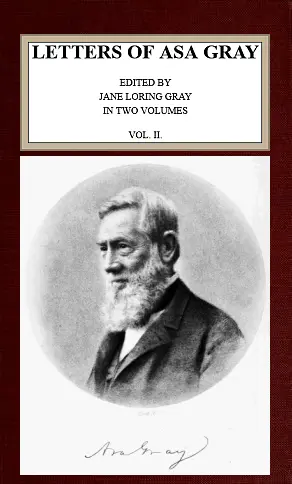
Asa Gray
Asa Gray
Florence Nightingale
Elizabeth Robins Pennell
Denison Olmsted