THE CLASSIC COLLECTION✦Hearts and the highwayCLASSIC FREE BOOKS
Hearts and the highway
Cyrus Townsend Brady
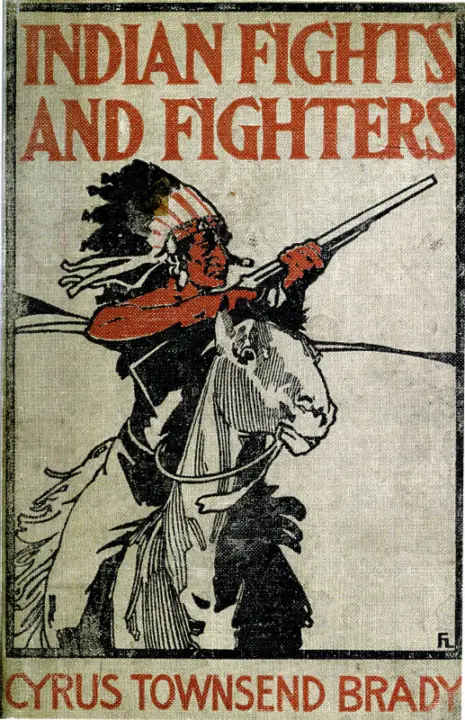
THE CLASSIC COLLECTION · 1904
"Indian Fights and Fighters: The Soldier and the Sioux" by Cyrus Townsend Brady is a historical account written in the early 20th century. This work focuses on the battles and conflicts experienced by American soldiers and Native American tribes, particularly highlighting the Sioux nation during the Indian Wars. The book aims to offer a fair representation of the events, exploring both the soldiers' experiences and the perspectives of the Native Americans involved. The opening of the book sets the stage for the tumultuous military history surrounding Fort Phil Kearney during its brief existence from 1866 to 1868. It describes the fort's constant state of siege by the Sioux, led by notable figures like Red Cloud, as American soldiers attempted to protect emigrants and maintain control of the territory. The narrative introduces the complex relationships between the U.S. Army and the Native American tribes, emphasizing the personal accounts of soldiers who faced fierce resistance while also shedding light on the motivations and strategies of the Native Americans defending their land.
Introduction adapted from the source catalogue; source summaries may be automatically generated.
Free to read · English · 131,206 words · No account needed
MAKE TIME FOR A GOOD BOOK
On by default. Untick to stop anonymous reading totals. Each page counts after 10 seconds in view. How this works.
Anonymous counting is on unless you have switched it off.
Sioux Indians dispute the advance of the white man, 5;
Harney-Sanborne treaty with, 7;
accept valuable gifts from Gen. Carrington, 8;
invest Fort Phil Kearney under Red Cloud, 40–42;
wild charge of 46–51
Slim Buttes, South Dakota, Gen. Crook and Capt. Mills at, 304–309
Sitting Bull, Unkpapa Indian chief, his character, 183, 184;
out-generals Custer, 279;
in the sun dance, 282 note;
strategy of, 286;
at big feast after the Custer fight, 290;
sends letter to Col. Otis, 321;
interview with Gen. Miles, 323, 324;
attacked by Lieut. Baldwin, 326;
escapes to British Columbia, 332;
surrenders to United States army, 332;
a moving spirit in ghost dance uprising, 332;
killed by Indian police, 332
Smith, Capt. Gray Horse Troop, killed with Custer, 257
Smith, Captain E. W., Eighteenth Infantry, sends Gen. Terry’s instructions to Gen. Custer, 220, 221
Smith, Major rescues Capt. Powell in wagon-corral fight, 56
Smyth, R. J., reminiscences of the Carrington Powder River Expedition,
59–71
Snow, Bugler, shot, 206
South Pass, 5
South Platte River, 59
Spencer breech-loading carbine, 10, 25, 41, 67, 76
Spencer rifle, 132, 140, 159
Spotted Tail, Brulé Sioux chief, 8
Springfield muzzle-loading muskets, 10, 61, 64;
breech-loading rifles, modification of, 45
Standing Elk, Brulé Sioux chief, 8
Standing Rock, 282
Standing Rock Agency, Rain-in-the-Face captured at, 213
Stanley, Gen., sent on expedition to the Black Hills, 210
Stillwell, John, scout, 90;
adventures of, to rescue Gen. Forsyth, 97–112;
volunteers to go to Fort Wallace, 121;
studied law and became a judge, 122 note;
death of, 122
Sturgis, Lieut., killed, 258, 259
Sullivant Hills, 13, 14, 19, 24, 25
Summit Springs, Col., Gen. Carr’s fight with Tall Bull at, 170–179; account of battle of, 173–179
Sun Dance, the, description of, 282 note
Tall Bull, Indian chief, Gen. Carr’s fight with at Summit Springs,
170–179;
killed, 172, 177
Ten Eyck, Capt., sent to Capt. Fetterman’s relief, 29;
returns with tidings of disaster, 31
Tenth Cavalry (negro regiment), sent to the rescue of Gen. Forsyth, 100
Terry, Major-Gen. Alfred H., takes command of Custer’s column, 216;
did Custer obey orders? 219–228;
text of his letter to Custer, 220, 221;
his report to the Secretary of War on his orders to Custer, 225 note;
relieves Maj. Reno, 257;
finds Custer’s body, 257;
goes to relief of Col. Benteen, 276;
a discussion on his orders to Gen. Custer, 359–397
Third Cavalry, 188, 190, 193, 198, 205, 342
Thomas, W. Kent, the personal story of Rain-in-the Face by, 279–292
Thompson, Capt., Seventh Cavalry, 157
Thompson, David D., editor Northwestern Christian Advocate, on the conduct of Major Reno, 398–400
Tongue River, a fork of the Yellowstone, 13, 20, 221, 265, 298, 319,
326, 336;
Gen. Crook’s march to, 187–190, 192
Towne, Phineas, Ex-Trooper, on the Rosebud fight, 203–208
Trudeau, scout, 90;
adventures of, to rescue Gen. Forsyth, 97–112
Tullock’s Creek, 221, 226
Twenty-second Infantry, 326, 336
Twenty-seventh Regular Infantry in the Mountain District, 9; detailed to protect wood-cutting party, 42
Twenty-third Infantry, attacked at Glendive, Montana, 321
Union Pacific Rail-Road, building of, 7;
military posts along, 184
Unkpapa Indians attack Capt. Powell’s corral, 48
Your reading position is saved on this browser. Take it to another device with a library code. Reading pages adapt to text, rather than matching a printed edition.
Cyrus Townsend Brady
Cyrus Townsend Brady
Cyrus Townsend Brady
Cyrus Townsend Brady
BEHIND THE BOOK
This eBook is for the use of anyone anywhere in the United States and most other parts of the world at no cost and with almost no restrictions whatsoever. You may copy it, give it away or re-use it under the terms of the Project Gutenberg License included with this eBook or online at www.gutenberg.org. If you are not located in the United States, you will have to check the laws of the country where you are located before using this eBook. Read the source licence.
The original source file, including credits and licence, is retained by this library. Request an original-format copy at no charge. Please include the book title and Project Gutenberg identifier #55275.
KEEP YOUR CURIOSITY GOING
Cécile Tormay

Moritz Busch
John L. Ransom
Frances Wright
Cécile Tormay

Mabel Potter Daggett