THE CLASSIC COLLECTION✦Hearts and the highwayCLASSIC FREE BOOKS
Hearts and the highway
Cyrus Townsend Brady
THE CLASSIC COLLECTION · 1904
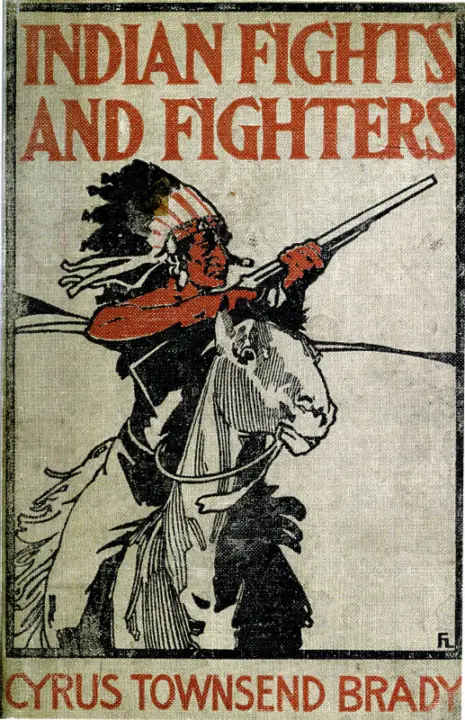
"Indian Fights and Fighters: The Soldier and the Sioux" by Cyrus Townsend Brady is a historical account written in the early 20th century. This work focuses on the battles and conflicts experienced by American soldiers and Native American tribes, particularly highlighting the Sioux nation during the Indian Wars. The book aims to offer a fair representation of the events, exploring both the soldiers' experiences and the perspectives of the Native Americans involved. The opening of the book sets the stage for the tumultuous military history surrounding Fort Phil Kearney during its brief existence from 1866 to 1868. It describes the fort's constant state of siege by the Sioux, led by notable figures like Red Cloud, as American soldiers attempted to protect emigrants and maintain control of the territory. The narrative introduces the complex relationships between the U.S. Army and the Native American tribes, emphasizing the personal accounts of soldiers who faced fierce resistance while also shedding light on the motivations and strategies of the Native Americans defending their land.
Introduction adapted from the source catalogue; source summaries may be automatically generated.
Free to read · English · 131,206 words · No account needed
MAKE TIME FOR A GOOD BOOK
On by default. Untick to stop anonymous reading totals. Each page counts after 10 seconds in view. How this works.
Anonymous counting is on unless you have switched it off.
California Joe, scout, 155
Camp Supply, Indian Territory, 150
Canadian River, Gen. Custer’s march on, 152
Carpenter, Captain Louis H., Tenth Cavalry, sent to rescue Gen.
Forsyth, 100;
the story of his “brunettes,” 123–135;
promotion of, 135
Carr, Major-Gen. Eugene A., ordered to Fort Wallace, 124; in fight on Beaver Creek, 131, 132; pursues Indians over the Platte River, 135; his account of the fight on Beaver Creek, 136–140; Carr and Tall Bull at Summit Springs, 170–179
Carrington, Gen. Henry B., in Central Montana, 5;
effects treaty with Indians at Fort Laramie, 8;
romantic expedition of, 9–13;
sketch of, 9;
repairs and garrisons Fort Reno, 12;
establishes camp on Big Piney Creek, 13;
in desperate fight at Lodge Trail Ridge, 20, 21;
inadequate force of, 23, 24;
carries out Gen. Sherman’s instructions, 24;
specific instructions to Capt. Fetterman, 26;
his stern resolution, 32–37;
used as a scapegoat, 37;
acquitted of all blame by a mixed commission, 38;
also by a military court and by Gen. Sherman, 38;
his views on Custer’s Little Big Horn campaign, 386–388
Carrington Powder River expedition, reminiscences of, 59–71
Central Montana, objective of Gen. Carrington’s expedition, 5
Chambers, Col., 188
Cheyenne Indians dispute advance of the white man, 5;
Harney-Sanborne treaty with, 7;
attack Capt. Powell’s corral, 48;
cruelty of, 73;
break away from Red Cloud Agency, 293;
Gen. Merritt heads them off, 294;
bravery of, 312, 313;
their winter stores destroyed, 316;
sufferings of, 316–318;
surrender and turn against Crazy Horse, 318;
savage ferocity of, 318
Civil War, soldiers of the, emigrate to the West, 6
Civilization, the demands of, 6;
the outpost of, 13–18
Clear Creek, Montana, 321
Cloud Peak, 13
Clybor, Jack, adopted by Indians and named “Comanche,” 96
Cody, William F. (Buffalo Bill), Gen. Carr’s guide at Summit Springs,
170, 173, 174;
scout for Gen. Merritt, 294, 295;
duel with Yellow Hair, 296, 297
Coffee Coolers, 282
Collins, W. R. E., letter of, in reference to Red Cloud’s losses in wagon-corral attack, 58
“Comanche,” Capt. Keogh’s horse, in Custer’s last fight, 256 note
Conestoga wagons, only method of transportation before railroad, 7
Conner, Gen., establishes Fort Reno, 60
Contest for Indian lands, 6
Cook, Adjutant, Seventh Cavalry, 158, 159;
killed with Custer, 258
Cook, Capt., 268, 270
Cooke, Gen., relieves Gen. Carrington of his command, 37
Corbin, scout, in Gen. Custer’s command, 152, 154, 155
Crawford, Lieut., 307
Crazy Horse, an Oglala chief, 184;
his village surprised and taken, 186, 187;
warns Gen. Crook, 189;
sketch of, 189 note;
begins attack, 193;
plans ambush for Crook, 194;
successful stand against Crook, 201, 202;
opposed to Maj. Reno, 241, 254;
attacks Custer, 256;
defeated by Gen. Crook at Slim Buttes, 310, 311;
refuses to succor Cheyennes, 317;
meets crushing defeat by Gen. Miles, 326–330;
surrenders, 330;
stabbed in guard-house, 333;
Captain Bourke’s description of, 333;
a born soldier, 334
Crazy Woman’s Fork, 61, 312
Criswell, Sergeant, bravery of, in fight with Indians, 242
Crittenden, Lieut., Custer’s brother-in-law, killed, 257
Your reading position is saved on this browser. Take it to another device with a library code. Reading pages adapt to text, rather than matching a printed edition.
Cyrus Townsend Brady
Cyrus Townsend Brady
Cyrus Townsend Brady
Cyrus Townsend Brady
BEHIND THE BOOK
This eBook is for the use of anyone anywhere in the United States and most other parts of the world at no cost and with almost no restrictions whatsoever. You may copy it, give it away or re-use it under the terms of the Project Gutenberg License included with this eBook or online at www.gutenberg.org. If you are not located in the United States, you will have to check the laws of the country where you are located before using this eBook. Read the source licence.
The original source file, including credits and licence, is retained by this library. Request an original-format copy at no charge. Please include the book title and Project Gutenberg identifier #55275.
KEEP YOUR CURIOSITY GOING
Cécile Tormay

Moritz Busch
John L. Ransom
Frances Wright
Cécile Tormay

Mabel Potter Daggett