
Through the Desert
Henryk Sienkiewicz

THE CLASSIC COLLECTION · 1899
"In Vain" by Henryk Sienkiewicz is a novel written in the late 19th century. The story revolves around the experiences of a young Jewish student named Yosef Shvarts as he navigates university life in Kieff, where ambition, friendships, love, and sacrifice intertwine in his quest for knowledge. Central to the narrative is the character of Helena, a widow with a tragic past, whose presence profoundly affects both Yosef and his friend Gustav. The opening of "In Vain" introduces Yosef as he arrives in Kieff, filled with excitement and idealism about the vast world of knowledge awaiting him at the university. He soon reconnects with his friend Gustav, who reveals the harsh realities of student life and the challenges they face, including poverty and emotional turmoil. As the narrative unfolds, existential themes emerge, particularly through Gustav's relationship with the widow, Helena. The complexity of their feelings lays the groundwork for future conflict and character development, foreshadowing the struggles of love and sacrifice that will unfold throughout the novel.
Introduction adapted from the source catalogue; source summaries may be automatically generated.
Free to read · English · 46,847 words · No account needed
MAKE TIME FOR A GOOD BOOK
On by default. Untick to stop anonymous reading totals. Each page counts after 10 seconds in view. How this works.
Anonymous counting is on unless you have switched it off.
"I had much difficulty in finding your lodgings. This gentleman" (Pelski indicated Augustinovich with one eye) "has a marvellous method of giving answers. Fortunately his room-mate came; he gave me an answer at last."
"I lived in the same house as they," added the countess.
"How did you become acquainted with them, cousin?"
"When father fell ill, Pan Shvarts watched him in his last hours; afterward he found Pani Visberg, and I am much indebted to him."
Augustinovich's closed eyelids opened a little, and the sneering expression vanished from his face.
"Is he a doctor?" asked Pelski.
"He will be a doctor soon."
Pelski meditated a moment.
"I was acquainted in Heidelberg with a professor and writer of the same name. From what family is this man?"
"Oh, I do not know, indeed," answered the countess, blushing deeply.
Augustinovich's eyes opened to their full width, and with an indescribable expression of malice he turned toward the countess.
"I thought," said he, "that you knew perfectly whence Pan Yosef came,
and what his family is."
Lula's confusion reached the highest degree.
"I--do not remember," groaned she.
"Do you not? Then I will remind you. Pan Yosef was born in Zvinogrodets, where his father in his day was a blacksmith."
Pelski looked at his cousin, and bending toward her said with
sympathy,--
"I am pained, cousin, at the fatality which forced you to live with people of a different sphere."
Lula sighed.
Oh, evil, evil was that sigh. Lula knew that among those people of a different sphere she had found aid, protection, and kindness; that for this reason they should be for her something more than that cousin of recent acquaintance. But she was ashamed to tell him this, and she remained silent, a little angry and a little grieved.
Meanwhile Pani Visberg invited her guests to tea. Lula ran for a while to her own chamber, and sitting on her bed covered her face with her hands. At that moment she was in Yosef's chamber mentally. "He is toiling there," thought she, "and here they speak of him as of some one strange to me. Why did that other say that he was the son of a blacksmith?"
It seemed to her as if they were wronging Yosef, but she felt offended at him, too, because he was the son of a blacksmith.
At tea she sat near her cousin, a little thoughtful, a little sad, turning unquiet glances toward Augustinovich, who from the moment of his malicious interference filled her with a certain fear.
"Indeed thou art not thyself, Lula," said Pani Visberg, placing her hand on the girl's heated forehead.
Your reading position is saved on this browser. Take it to another device with a library code. Reading pages adapt to text, rather than matching a printed edition.
Henryk Sienkiewicz

Henryk Sienkiewicz
Henryk Sienkiewicz
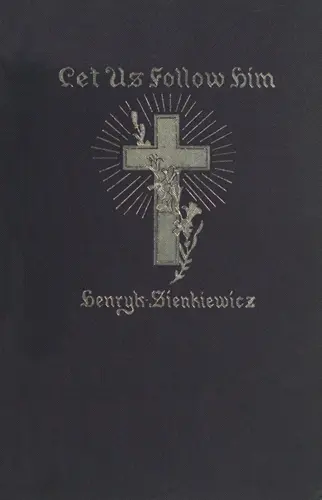
Henryk Sienkiewicz
BEHIND THE BOOK
This eBook is for the use of anyone anywhere in the United States and most other parts of the world at no cost and with almost no restrictions whatsoever. You may copy it, give it away or re-use it under the terms of the Project Gutenberg License included with this eBook or online at www.gutenberg.org. If you are not located in the United States, you will have to check the laws of the country where you are located before using this eBook. Read the source licence.
The original source file, including credits and licence, is retained by this library. Request an original-format copy at no charge. Please include the book title and Project Gutenberg identifier #46454.
KEEP YOUR CURIOSITY GOING
Coulson Kernahan

Maurice Baring
Frances Wright
Cécile Tormay

Frederic Jesup Stimson

W. H. P. (William Henry Pope) Jarvis