
Through the Desert
Henryk Sienkiewicz

THE CLASSIC COLLECTION · 1899
"In Vain" by Henryk Sienkiewicz is a novel written in the late 19th century. The story revolves around the experiences of a young Jewish student named Yosef Shvarts as he navigates university life in Kieff, where ambition, friendships, love, and sacrifice intertwine in his quest for knowledge. Central to the narrative is the character of Helena, a widow with a tragic past, whose presence profoundly affects both Yosef and his friend Gustav. The opening of "In Vain" introduces Yosef as he arrives in Kieff, filled with excitement and idealism about the vast world of knowledge awaiting him at the university. He soon reconnects with his friend Gustav, who reveals the harsh realities of student life and the challenges they face, including poverty and emotional turmoil. As the narrative unfolds, existential themes emerge, particularly through Gustav's relationship with the widow, Helena. The complexity of their feelings lays the groundwork for future conflict and character development, foreshadowing the struggles of love and sacrifice that will unfold throughout the novel.
Introduction adapted from the source catalogue; source summaries may be automatically generated.
Free to read · English · 46,847 words · No account needed
MAKE TIME FOR A GOOD BOOK
On by default. Untick to stop anonymous reading totals. Each page counts after 10 seconds in view. How this works.
Anonymous counting is on unless you have switched it off.
The countess was wounded by the thought that Yosef would not come.
"But do you not help him in that labor?" asked she.
"May my guardian angel keep me from such work."
"It must be very difficult."
"Like every new building."
"Why does he work so?"
"Duty."
"I believe that Pan Yosef builds everything on that foundation."
"This time it will be more difficult for him than ever before. But somebody is coming--that is your cousin. What a splendid man!"
Pan Pelski entered the drawing-room; soon after came Pani Visberg also.
After the greetings conversation began to circle about in the ocean of
commonplace.
Augustinovich took little part in it. He sat in an armchair, partly closed his eyes with an expression of indifference toward everything. He had the habit of closing his eyes while making observations, when nothing escaped his notice.
Count Pelski (we had forgotten to state that he had that title) sat near Lula, twirling in his fingers the string of his eyeglasses, and conversing with her vivaciously.
"Till I came to Kieff," said he, "I knew nothing of the misfortune which had met our whole family, but especially you, through the death of your esteemed father."
"Did you know my father?" asked Lula, with a sigh.
"No, cousin. I knew only that unfortunate quarrels and lawsuits separated our families for a number of years. I knew nothing of those quarrels, since I was young and always absent, and if I am to make a confession my present visit was undertaken only as an attempt at reconciliation."
"What was the degree of relationship between you and my father?"
"Reared abroad, I know little of our family relations in general; for example, I am indebted to a lucky chance for discovering not our relationship, of which I was aware, but other intimate bonds connecting our families from of old."
"Is it permitted to inquire about this circumstance?"
"With pleasure, cousin. Having taken on me, after the death of my father, the management of my property and family affairs, I looked into the papers and various documents touching my family. Well, in these documents I discovered that your family is not only related to the Pelskis, but has the same escutcheon."
"To a certain extent, then, we are to thank chance for our
acquaintance."
"I bless this chance, cousin."
Lula dropped her eyes, her small hand twisted the end of her scarf; after a while she raised her head.
"And for me it is equally pleasant," said she.
The shadow of a smile flew over Augustinovich's face.
Your reading position is saved on this browser. Take it to another device with a library code. Reading pages adapt to text, rather than matching a printed edition.
Henryk Sienkiewicz

Henryk Sienkiewicz
Henryk Sienkiewicz
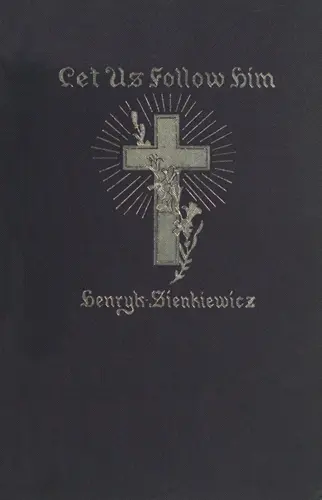
Henryk Sienkiewicz
BEHIND THE BOOK
This eBook is for the use of anyone anywhere in the United States and most other parts of the world at no cost and with almost no restrictions whatsoever. You may copy it, give it away or re-use it under the terms of the Project Gutenberg License included with this eBook or online at www.gutenberg.org. If you are not located in the United States, you will have to check the laws of the country where you are located before using this eBook. Read the source licence.
The original source file, including credits and licence, is retained by this library. Request an original-format copy at no charge. Please include the book title and Project Gutenberg identifier #46454.
KEEP YOUR CURIOSITY GOING
Coulson Kernahan

Maurice Baring
Frances Wright
Cécile Tormay

Frederic Jesup Stimson

W. H. P. (William Henry Pope) Jarvis