
Through the Desert
Henryk Sienkiewicz

THE CLASSIC COLLECTION · 1899
"In Vain" by Henryk Sienkiewicz is a novel written in the late 19th century. The story revolves around the experiences of a young Jewish student named Yosef Shvarts as he navigates university life in Kieff, where ambition, friendships, love, and sacrifice intertwine in his quest for knowledge. Central to the narrative is the character of Helena, a widow with a tragic past, whose presence profoundly affects both Yosef and his friend Gustav. The opening of "In Vain" introduces Yosef as he arrives in Kieff, filled with excitement and idealism about the vast world of knowledge awaiting him at the university. He soon reconnects with his friend Gustav, who reveals the harsh realities of student life and the challenges they face, including poverty and emotional turmoil. As the narrative unfolds, existential themes emerge, particularly through Gustav's relationship with the widow, Helena. The complexity of their feelings lays the groundwork for future conflict and character development, foreshadowing the struggles of love and sacrifice that will unfold throughout the novel.
Introduction adapted from the source catalogue; source summaries may be automatically generated.
Free to read · English · 46,847 words · No account needed
MAKE TIME FOR A GOOD BOOK
On by default. Untick to stop anonymous reading totals. Each page counts after 10 seconds in view. How this works.
Anonymous counting is on unless you have switched it off.
At his bed sat, without leaving it, Augustinovich and Helena; the latter seemed to forget the world at that bed. With Yosef's life life returned to Helena also. She was delighted to ecstasy with even the smallest proof of improvement.
At last Yosef regained consciousness.
Augustinovich was not present at that moment; the first person whom he
saw was Helena.
The sick man looked at her for a moment; on his forehead a certain working of thought became evident.
At last he recalled her to mind. He smiled. Evidently the smile was forced; still Helena threw herself on her knees with tears of delight.
But Augustinovich when he returned noticed that her presence disquieted the sick man and even tortured him. Yosef did not take his eyes from Helena for an instant; he followed every movement of hers.
With that inane gesticulation peculiar to old or to sick people he moved
his lips.
Augustinovich followed Yosef's eyes carefully. He had a foreboding of
evil.
Meanwhile, as usual, toward evening the fever increased; still the sick man fell asleep. Augustinovich strove to persuade Helena to go home for rest.
"I will not leave him for a moment," answered she, with what for her was
uncommon decision.
Augustinovich took his seat in the armchair in silence and meditated deeply; soon his head began to weigh on him, his lids became leaden, an invincible drowsiness seized him with increasing force, his head dropped on his breast, he nodded to the right, to the left, and fell asleep.
After a while he woke again.
"Is he sleeping?" inquired he, looking at Yosef.
"He is sleeping, but unquietly," answered Helena.
Augustinovich again dropped his head. Suddenly a shriek from Helena
roused him.
The sick man was sitting up in bed in a paroxysm of malignant fever; his face was burning, his eyes glittering like those of a wolf; his emaciated hand was extended toward Helena.
"What is this!" cried Augustinovich.
Helena seized him convulsively by the hands; she felt that his whole
body trembled.
"Do not torture me!" whispered the sick man, with a hoarse, broken voice. "Thou hast killed Gustav, and now thou wouldst kill me. Away! I do not love thee! Be off!"
Again he fell on the bed.
"Lula, my Lula, save me!" whispered Yosef.
Augustinovich almost by force conducted Helena from the chamber. In the corridor was heard for a while quick conversation, and the name of the countess was repeated. At last Augustinovich returned alone.
He was pale, great drops of sweat were flowing down his forehead.
"Everything is ended now," said he, in a whisper.
Your reading position is saved on this browser. Take it to another device with a library code. Reading pages adapt to text, rather than matching a printed edition.
Henryk Sienkiewicz

Henryk Sienkiewicz
Henryk Sienkiewicz
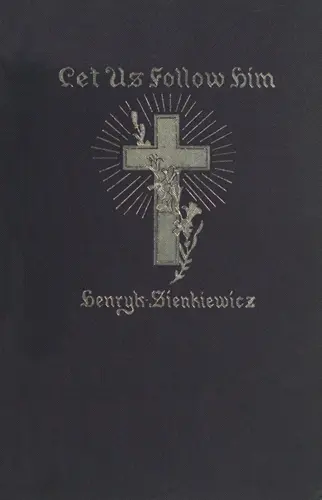
Henryk Sienkiewicz
BEHIND THE BOOK
This eBook is for the use of anyone anywhere in the United States and most other parts of the world at no cost and with almost no restrictions whatsoever. You may copy it, give it away or re-use it under the terms of the Project Gutenberg License included with this eBook or online at www.gutenberg.org. If you are not located in the United States, you will have to check the laws of the country where you are located before using this eBook. Read the source licence.
The original source file, including credits and licence, is retained by this library. Request an original-format copy at no charge. Please include the book title and Project Gutenberg identifier #46454.
KEEP YOUR CURIOSITY GOING
Coulson Kernahan

Maurice Baring
Frances Wright
Cécile Tormay

Frederic Jesup Stimson

W. H. P. (William Henry Pope) Jarvis