
Through the Desert
Henryk Sienkiewicz

THE CLASSIC COLLECTION · 1899
"In Vain" by Henryk Sienkiewicz is a novel written in the late 19th century. The story revolves around the experiences of a young Jewish student named Yosef Shvarts as he navigates university life in Kieff, where ambition, friendships, love, and sacrifice intertwine in his quest for knowledge. Central to the narrative is the character of Helena, a widow with a tragic past, whose presence profoundly affects both Yosef and his friend Gustav. The opening of "In Vain" introduces Yosef as he arrives in Kieff, filled with excitement and idealism about the vast world of knowledge awaiting him at the university. He soon reconnects with his friend Gustav, who reveals the harsh realities of student life and the challenges they face, including poverty and emotional turmoil. As the narrative unfolds, existential themes emerge, particularly through Gustav's relationship with the widow, Helena. The complexity of their feelings lays the groundwork for future conflict and character development, foreshadowing the struggles of love and sacrifice that will unfold throughout the novel.
Introduction adapted from the source catalogue; source summaries may be automatically generated.
Free to read · English · 46,847 words · No account needed
MAKE TIME FOR A GOOD BOOK
On by default. Untick to stop anonymous reading totals. Each page counts after 10 seconds in view. How this works.
Anonymous counting is on unless you have switched it off.
"How is the patient?" inquired he.
"Ill," answered Augustinovich, abruptly.
The doctor thrust out his lower lip with importance, wrinkled his forehead, and felt the pulse of the sick man.
"What do you think?" inquired Augustinovich.
"Well, what? I think nothing--he is ill, very ill."
A shade of irony passed over Augustinovich's face.
"But I think, professor, that medicine is a very dull child which believes that if it takes its heels in its hands it can lift itself. Is this not the case?"
The doctor nodded a couple of times, prescribed some cooling medicine, and went out. Augustinovich, looking at the prescription, shook his head in his turn, shrugged his shoulders, and sat at the bed.
Meanwhile the patient grew worse toward evening, about midnight he was almost dying. Augustinovich wept like a child and knocked himself against the walls of the chamber. He sat up again through the whole night.
Toward morning it seemed to him that he noticed a slight improvement, but that improvement was deceptive. Pale and red spots appeared on the sick man; evidently he had burnt out in fever and was quenching.
In the evening Pani Visberg came. Augustinovich would not admit her to the room. From his face she learned that something terrible must be happening.
"Is he alive?" cried she.
"He is dying!" answered Augustinovich, briefly.
A few hours later the chaplain of the hospital anointed Yosef. Augustinovich had not strength to be present at the ceremony; he ran out into the city.
He needed to collect his thoughts, he needed to draw breath; he felt that his thoughts were beginning to grow dim--very likely the loss of Yosef would destroy his balance. He had expected everything, but not that Yosef would die.
He did not know himself whither he was hurrying; a number of times he halted as if in fear that he would return too late.
All at once some thought flashed through his head; he noticed that he was standing before Helena's lodgings.
"I will go in. Let her take farewell of him!"
Half an hour later Helena was kneeling at Yosef's bed. Her unbound hair was lying in broad tresses on the bed; she was embracing the sick man's feet with her hands, her face resting on them.
In that room of the hospital reigned a silence of the grave; nothing was heard but the quick broken breath of Yosef.
So passed the long, cursed night, every moment of which seemed the last one for Yosef. Finally, on the thirteenth day from the first the disease was vanquished. Yosef was decidedly better.
Your reading position is saved on this browser. Take it to another device with a library code. Reading pages adapt to text, rather than matching a printed edition.
Henryk Sienkiewicz

Henryk Sienkiewicz
Henryk Sienkiewicz
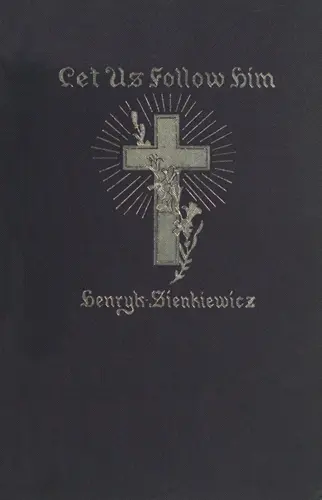
Henryk Sienkiewicz
BEHIND THE BOOK
This eBook is for the use of anyone anywhere in the United States and most other parts of the world at no cost and with almost no restrictions whatsoever. You may copy it, give it away or re-use it under the terms of the Project Gutenberg License included with this eBook or online at www.gutenberg.org. If you are not located in the United States, you will have to check the laws of the country where you are located before using this eBook. Read the source licence.
The original source file, including credits and licence, is retained by this library. Request an original-format copy at no charge. Please include the book title and Project Gutenberg identifier #46454.
KEEP YOUR CURIOSITY GOING
Coulson Kernahan

Maurice Baring
Frances Wright
Cécile Tormay

Frederic Jesup Stimson

W. H. P. (William Henry Pope) Jarvis