
The story of Betty
Carolyn Wells
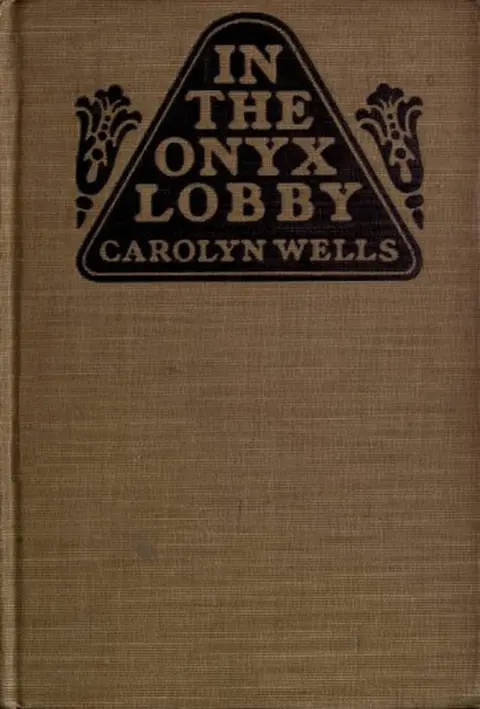
THE CLASSIC COLLECTION · 1920
"In the Onyx Lobby" by Carolyn Wells is a novel written in the early 20th century. The narrative intertwines themes of love, ambition, and rivalry primarily surrounding two feuding women, Miss Letitia Prall and Mrs. Everett, who share a long-standing animosity. At the heart of this drama is Richard Bates, a young inventor caught between his ambitions and familial loyalty, as he navigates his feelings for Dorcas Everett amidst the backdrop of their mothers' feud. At the start of "In the Onyx Lobby," we are introduced to the fraught dynamics between Miss Prall and Mrs. Everett, residents of The Campanile, who have maintained their rivalry for several decades. Richard Bates, Miss Prall's nephew, is reluctant to take up his Uncle Binney's offer to join a bakery business, preferring to pursue his inventive ideas. However, when Bates and Dorcas Everett's romantic feelings emerge, the tension escalates as both young lovers grapple with their mothers' opposition and the pressures stemming from their families’ feud. This complex beginning sets the stage for a murder mystery that intertwines personal relationships with deeper themes of social class and gender roles, as well as the potential consequences of long-held grudges.
Introduction adapted from the source catalogue; source summaries may be automatically generated.
Free to read · English · 65,246 words · No account needed
MAKE TIME FOR A GOOD BOOK
On by default. Untick to stop anonymous reading totals. Each page counts after 10 seconds in view. How this works.
Anonymous counting is on unless you have switched it off.
“And here you are,” the Englishman returned, with a generous bestowal of
silver.
“To the Hotel Magnifique,” he said, and his cab rolled away.
During the evening hours the attendants of The Campanile shifted. The elevator girls were replaced by young men, and the telephone operator was changed. The doorman, too, was another individual, and by midnight no one was on duty who had been on at dusk.
After midnight, the attendants were fewer still, and after two o’clock Bob Moore, the capable and efficient night porter, was covering the door, telephone and elevator all by himself.
This arrangement was always sufficient, as most of the occupants of The Campanile were average citizens, who, if at theater or party, were rarely out later than one or two in the morning.
On this particular night, Moore welcomed four or five theater-goers back home, took them up to their suites and then sat for a long time uninterruptedly reading a detective story, which was his favorite brand of fiction.
At two o’clock Mr Goodwin came in, and Moore took him up to the twelfth
floor.
Returning to his post and to his engrossing book, the next arrival was Mr Vail. He belonged on the tenth floor and as they ascended, Moore, full of his story, said:
“Ever read detective stories, Mr Vail?”
“Occasionally; but I haven’t much time for reading. Business men like more active recreation.”
“Likely so, sir. But I tell you this yarn I’m swallowing is a corker!”
“What’s it called?”
“‘Murder Will Out,’ by Joe Jarvis. It’s great! Why, Mr Vail, the victim was killed,—killed, mind you,—in a room that was all locked up——”
“How did the murderer get in?”
“That’s just it! How did he? And he left his revolver,——”
“Left his revolver? Then he did get in and get out! Must have been a
secret passage——”
“No, sir, there wasn’t! That is, the author says so, and all the people,—the characters, you know, try to find one, and they can’t! Oh, it’s exciting, I’ll say! I can’t guess how it’s coming out.”
“I suppose you wouldn’t peek over to the last page?”
“No, that spoils a story for me. The fun I get out of it is the trying to ferret out the solution, on my own. That’s sport for me. Why, you see, Mr Vail,—but, excuse me, sir, I’m keeping you.”
The elevator had stopped at the tenth floor, and Vail had left the car, but he stood waiting till the enthusiastic Moore should pause.
“Oh, well, go on,—what were you saying?”
Your reading position is saved on this browser. Take it to another device with a library code. Reading pages adapt to text, rather than matching a printed edition.
Carolyn Wells

Carolyn Wells & Harry Persons Taber

Carolyn Wells

Carolyn Wells
BEHIND THE BOOK
This eBook is for the use of anyone anywhere in the United States and most other parts of the world at no cost and with almost no restrictions whatsoever. You may copy it, give it away or re-use it under the terms of the Project Gutenberg License included with this eBook or online at www.gutenberg.org. If you are not located in the United States, you will have to check the laws of the country where you are located before using this eBook. Read the source licence.
The original source file, including credits and licence, is retained by this library. Request an original-format copy at no charge. Please include the book title and Project Gutenberg identifier #35254.
KEEP YOUR CURIOSITY GOING
Coulson Kernahan

Maurice Baring
Frances Wright
Cécile Tormay

Frederic Jesup Stimson

W. H. P. (William Henry Pope) Jarvis