THE CLASSIC COLLECTION✦From Gretna Green to Land’s End: A Literary Journey in England.CLASSIC FREE BOOKS
From Gretna Green to Land’s End: A Literary Journey in England.
Katharine Lee Bates
THE CLASSIC COLLECTION · 1913
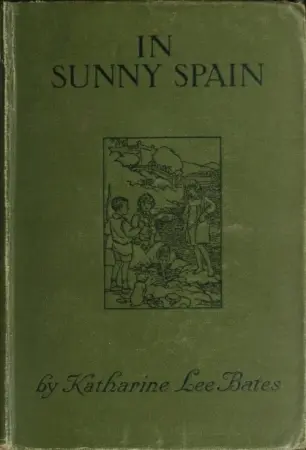
"In Sunny Spain with Pilarica and Rafael" by Katharine Lee Bates is a fictional children's book likely written in the early 20th century. The narrative follows the adventures of two young siblings, Pilarica and Rafael, as they explore their enchanting surroundings in Granada, Spain, filled with cultural richness and vivid imagery. The story weaves together their playful interactions, family dynamics, and the warmth of relationships against the backdrop of historical references and local traditions. The opening chapters introduce Pilarica, a lively little girl, fidgeting after finishing some embroidery and eager to play in the beautiful Moorish garden that once belonged to her ancestors. After a brief encounter with her older brother Rafael, who has quickly transitioned into a playful game where he takes on the role of a Moorish prince, the children engage in whimsical adventures and riddles with their grandfather. As they explore the garden, their interactions encapsulate the themes of childhood innocence, familial love, and the allure of the past. The stage is set for the siblings' adventures in a world marked by rich folklore and childhood imagination.
Introduction adapted from the source catalogue; source summaries may be automatically generated.
Free to read · English · 54,464 words · No account needed
MAKE TIME FOR A GOOD BOOK
On by default. Untick to stop anonymous reading totals. Each page counts after 10 seconds in view. How this works.
Anonymous counting is on unless you have switched it off.
Sir. Used as Mr. before the surname, not, like Don, before the Christian name. In this story, the children’s father would be addressed by friends as Don Carlos; by strangers as Señor Moreto.
=Señora.= (Say-nyor´-ah.)
Madame. Used as Mrs. before the surname, not, like Doña, before the
Christian name.
=Señorito.= (Say-nyōr-ee´-to.)
Young sir.
=Serení.= (Say-ray-nee´.)
See pages 33-34.
=Sierra Nevada.= (Se-er´-rah Nay-vah´-dah.)
=Nevada= is an adjective from =nieve= (ne-ay´-vay), snow; the first meaning of =sierra= is saw; so that Snowy Saw is the literal name given to the white, keenly cleft mountain-range of southern Spain.
=Siesta.= (Se-es´-tah.)
The nap after the midday meal, in the heat of early afternoon.
=Sombrero.= (Som-bray´-ro.) Hat.
=Sultan.= (Sool-tahn´.)
In Moorish and Turkish lands, Sultan is the title given to the emperor.
=Sultana.= (Sool-tah´-nah.) Empress.
=Teresa.= (Tay-ray´-sah.)
Theresa. This name, which means Carrying Ears of Corn, is often given to Spanish girls, because of the sixteenth-century mystic and reformer, Santa Teresa, who was born in Castile.
=Tia.= (Tee´-ah.) Aunt.
=Titirinela.= (Te-te-re-nay´-lah.)
A group of singing syllables much like Hey diddle diddle.
=Toledo.= (To-lay´-dō.)
The oldest and most wonderful city of Castile. See page 186.
=Tenorio.= (Tay-nō´-re-oh.)
In this story, the name of a tall, thin muleteer.
=Ventera.= (Ven-tay´-rah.) The woman who keeps an inn. The =venta= (ven´-tah) in Spain is a poor tavern by the wayside, not so good as the =posada= (po-sah´-dah) and far inferior to the hotel.
=Vigo.= (Vee´-go.) A seaport of Galicia.
=Virgen.= (Veer´-hen.)
Virgin. The Madonna of Saragossa is known as Virgin del Pilar.
=Xarifa.= (Xah-ree´-fah.)
Xarifa is a Moorish name for a woman. It is used with fine musical effect in Lockhart’s ballad =The Bridal of Andalla=. There is nothing better than Lockhart’s =Spanish Ballads= to fill one’s mind with the romance of Spain.
=Zinga.= (Zin´-gah.) A general name for gypsies in Spain is =Zingari= (Zin´-gah-e). In this story, Zinga is the name of a gypsy-girl.
Typographical error corrected by the etext transcriber:
fragant air=> fragrant air {pg 102}
Your reading position is saved on this browser. Take it to another device with a library code. Reading pages adapt to text, rather than matching a printed edition.
Katharine Lee Bates
Katharine Lee Bates
Katharine Lee Bates
BEHIND THE BOOK
This eBook is for the use of anyone anywhere in the United States and most other parts of the world at no cost and with almost no restrictions whatsoever. You may copy it, give it away or re-use it under the terms of the Project Gutenberg License included with this eBook or online at www.gutenberg.org. If you are not located in the United States, you will have to check the laws of the country where you are located before using this eBook. Read the source licence.
The original source file, including credits and licence, is retained by this library. Request an original-format copy at no charge. Please include the book title and Project Gutenberg identifier #45441.
KEEP YOUR CURIOSITY GOING
Coulson Kernahan

Maurice Baring
Frances Wright
Cécile Tormay

Frederic Jesup Stimson

W. H. P. (William Henry Pope) Jarvis