THE CLASSIC COLLECTION✦From Gretna Green to Land’s End: A Literary Journey in England.CLASSIC FREE BOOKS
From Gretna Green to Land’s End: A Literary Journey in England.
Katharine Lee Bates
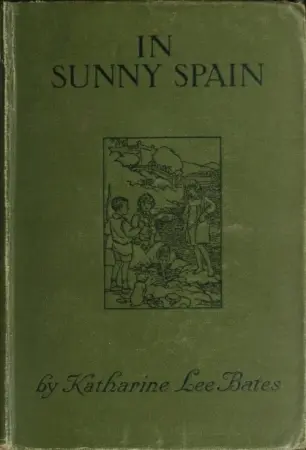
THE CLASSIC COLLECTION · 1913
"In Sunny Spain with Pilarica and Rafael" by Katharine Lee Bates is a fictional children's book likely written in the early 20th century. The narrative follows the adventures of two young siblings, Pilarica and Rafael, as they explore their enchanting surroundings in Granada, Spain, filled with cultural richness and vivid imagery. The story weaves together their playful interactions, family dynamics, and the warmth of relationships against the backdrop of historical references and local traditions. The opening chapters introduce Pilarica, a lively little girl, fidgeting after finishing some embroidery and eager to play in the beautiful Moorish garden that once belonged to her ancestors. After a brief encounter with her older brother Rafael, who has quickly transitioned into a playful game where he takes on the role of a Moorish prince, the children engage in whimsical adventures and riddles with their grandfather. As they explore the garden, their interactions encapsulate the themes of childhood innocence, familial love, and the allure of the past. The stage is set for the siblings' adventures in a world marked by rich folklore and childhood imagination.
Introduction adapted from the source catalogue; source summaries may be automatically generated.
Free to read · English · 54,464 words · No account needed
MAKE TIME FOR A GOOD BOOK
On by default. Untick to stop anonymous reading totals. Each page counts after 10 seconds in view. How this works.
Anonymous counting is on unless you have switched it off.
It is customary in Spain for one to keep, as here, the surnames of both father and mother, united by =y= meaning =and=. See page 89.
=Murillo.= (Moo-ree´-lyo.)
A famous Spanish painter of the seventeenth century. See page 168.
=Patio.= (Pah´-te-o.)
An open court. See pages 90 and 102.
=Pedrillo.= (Pay-dree´-lyo.)
Little Peter. From =Pedro= (Pay´-drō), Peter, meaning A Rock.
=Peligros.= (Pay-lee´-gros.)
Perils. The full name would be Maria de los Peligros.
=Pepito.= (Pay-pee´-to.)
Little Joe. A pet-name from =José=.
=Peregrina.= (Pay-ray-gree´-nah.)
Pilgrim. In this story, the name of a mule.
=Peseta.= (Pay-say´-tah.)
A silver Spanish coin, looking much like our quarter dollar, but worth
only about twenty cents.
=Pilar.= (Pe-lar´.)
Pillar. Many Spanish girls are called Pilar, the full name being Maria del Pilar, after the Madonna of Saragossa. See pages 221-222.
=Pilarica.= (Pe-lah-ree´-kah.)
Little Pilar.
=Pinta.= (Pin´-ta.)
In the circle-dances, the name of a bird.
=Puchero.= (Poo-chay´-rō.)
A stew made up of beef or lamb, ham or bacon, chickpeas and other vegetables,--a standing dish in all Spanish countries. See page 173.
=Quixote.= (Ke-hō´-tā.)
Don Quixote is the hero of a celebrated Spanish romance by Cervantes (Ther-vän´-tes). See page 76. Our word quixotic is derived from Don Quixote.
=Rafael.= (Rah-fah-el´.)
Raphael. A name, meaning The Healing of God, often given to boys in Italy and Spain. Raphael the Archangel, deemed the guardian of all humanity and especially of the young and of travellers, is a saint of the church calendar.
=Rita.= (Ree´-tah.)
See page 3.
=Rodrigo.= (Ro-dree´-go.)
Roderick. A boy’s name meaning Rich in Fame,--a name famous in the early
history of Spain.
=Rocinante.= (Rō´-the-nahn´-tay.)
A name, meaning a wornout old cab-horse, that Don Quixote gave to his
gaunt steed.
=Rosita.= (Rō-see´-tah.)
Little Rose. A pet-name from =Rosa= (Rō-sah.)
=Roxa.= (Rō-xah.)
Roxana, meaning Dawn of Day. In this story, the name of a cat.
=San.= (Sahn.)
Saint. The feminine form is Santa (Sahn´-tah.)
=Sancho Panza.= (Sahn´-ko Pahn´-thah.)
The name, suggesting a round body set on spindle-shanks, is that of Don Quixote’s esquire. Don Quixote, the very soul of romance, arming himself in what seemed to everybody else a ridiculous fashion, rode forth on his lean nag to redress the wrongs of the world, and after him jogged Sancho Panza, on his donkey Dapple, a goblin of commonsense.
=Santiago.= (Sahn-te-ah´-gō.)
St. James; also the city called by his name. The full name of this Galician city is Santiago de Compostela.
=Señor.= (Say-nyōr´.)
Your reading position is saved on this browser. Take it to another device with a library code. Reading pages adapt to text, rather than matching a printed edition.
Katharine Lee Bates
Katharine Lee Bates
Katharine Lee Bates
BEHIND THE BOOK
This eBook is for the use of anyone anywhere in the United States and most other parts of the world at no cost and with almost no restrictions whatsoever. You may copy it, give it away or re-use it under the terms of the Project Gutenberg License included with this eBook or online at www.gutenberg.org. If you are not located in the United States, you will have to check the laws of the country where you are located before using this eBook. Read the source licence.
The original source file, including credits and licence, is retained by this library. Request an original-format copy at no charge. Please include the book title and Project Gutenberg identifier #45441.
KEEP YOUR CURIOSITY GOING
Coulson Kernahan

Maurice Baring
Frances Wright
Cécile Tormay

Frederic Jesup Stimson

W. H. P. (William Henry Pope) Jarvis