
The Writing of News A Handbook with Chapters on Newspaper Correspondence and Copy Reading
Charles G. (Charles Griffith) Ross
THE CLASSIC COLLECTION · 1919
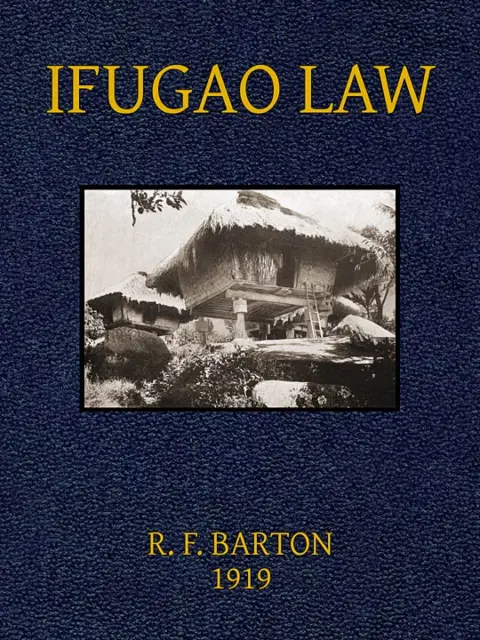
"Ifugao Law" by R. F. Barton is an ethnographic account written in the early 20th century. This publication delves into the legal system and customs of the Ifugao people, a group known for their intricate rice terraces in the Philippines. It examines the roots of Ifugao law, including its connection to customs and taboos, and explores topics ranging from family law and property rights to criminal law and social responsibilities. The opening of the work introduces the Ifugao culture, emphasizing its lack of formal political governance yet robust systems of customary law derived from taboos and social norms. It posits that, despite being labeled as "barbaric" by outsiders, the Ifugao people maintain relative peace and cohesion through their customary laws, which are crucial to their social fabric. Barton sets the stage for a thorough examination of the unique aspects of Ifugao law, including marriage contracts, property inheritance, and clan responsibilities, while situating these practices within a broader anthropological discourse on primitive societies.
Introduction adapted from the source catalogue; source summaries may be automatically generated.
Free to read · English · 54,145 words · No account needed
MAKE TIME FOR A GOOD BOOK
On by default. Untick to stop anonymous reading totals. Each page counts after 10 seconds in view. How this works.
Anonymous counting is on unless you have switched it off.
gagaom, funeral shrouds.
*gansa, or gangha, a gong made of copper alloyed with zinc, tin, or silver. Many are very old. Some have been made in Igorot-land, others imported from China.
gatang, purchase price; business transaction, the main payment.
gibu, fine for marital or postmarital delinquency.
goba, arson, burn.
gogod, cut, bisect.
gulad, intent.
guling, a small but valuable, and usually artistic, rice-wine jar.
habalag, a peg on which articles are hung up. One of the payments in the fine for illegal confiscation.
habale, peg or bracket upon which articles are hung.
hablal, flood; flooding of fields with water.
hagabi, a lounge cut out of a large tree trunk. It is the insignia of the upper class Ifugao. Its carving out of the trunk, and its bringing in from the forest, is an affair in which many villages participate, and is accompanied by pretentious ceremonies and feasts.
hagaphap, cleaning of terrace wall; chopping off grass and weeds.
hailiyu, a lesser fine.
hakba, gifts to kindred of bride from kindred of bridegroom.
hakit, hurt, anguish.
halat, payment due persons of a foreign village who find the body of
one dead by violence.
halupe, a class of deities somewhat corresponding to the Greek Furies; suggesting and harassing deities.
hapud, blowing, or breathing on.
haynub, follower; succeeding units of a series.
hibul, treachery.
hidit, peace ceremony; peace deities; sickness inflicted by peace deities because of delayed peace ceremony.
hin, a form of the word oha, meaning "one".
hingot, the third of the marriage ceremonies.
hogop, damages due the injured party in case of breach of contract.
hokwit, scandalous adultery, accompanied by insults to the offended
spouse.
honga, a general welfare ceremony.
hudhud, fine for offense against engagement or for breaking off
engagement.
hukup, lid.
hulul, exchange.
iba, companions; sometimes, kindred.
ibuy, ceremony at transfer of ownership of rice field.
iho, evil, bad.
imbango, sacrifice at second ceremony of marriage.
ina, mother (see Appendix 1).
inagagong, a kind of Ifugao blanket.
inagamid, adopted; taken to oneself.
inaon, uncle's wife, etc. (see Appendix 1).
inay, exclamation of pain or awe.
inhida, eaten; one of the payments at the ibuy ceremony.
inipit, something held with pincers or pliers; also something grasped between the toes. In eating meat the Ifugao holds his knife between the toes and, grasping the meat with his hands, cuts it by sawing it back and forth on the knife.
inlaglaga, bastard.
iyao, form of iho.
iyu, a form of iho.
kadangyang, a wealthy person; person of the upper class. Some observers have interpreted kadangyang as "noble"; others as "chieftain". Correctly speaking, there are neither chieftains nor nobles among the Ifugaos. The more powerful kadangyang rise to the dignity of headmen--no further.
Your reading position is saved on this browser. Take it to another device with a library code. Reading pages adapt to text, rather than matching a printed edition.
BEHIND THE BOOK
This eBook is for the use of anyone anywhere in the United States and most other parts of the world at no cost and with almost no restrictions whatsoever. You may copy it, give it away or re-use it under the terms of the Project Gutenberg License included with this eBook or online at www.gutenberg.org. If you are not located in the United States, you will have to check the laws of the country where you are located before using this eBook. Read the source licence.
The original source file, including credits and licence, is retained by this library. Request an original-format copy at no charge. Please include the book title and Project Gutenberg identifier #40807.
KEEP YOUR CURIOSITY GOING
Charles G. (Charles Griffith) Ross
Hannah Webster Foster

Emily Lawless
Edwin Hamlin Carr

Charles De Lano Hine
Andrew Ure