
The Writing of News A Handbook with Chapters on Newspaper Correspondence and Copy Reading
Charles G. (Charles Griffith) Ross
THE CLASSIC COLLECTION · 1919
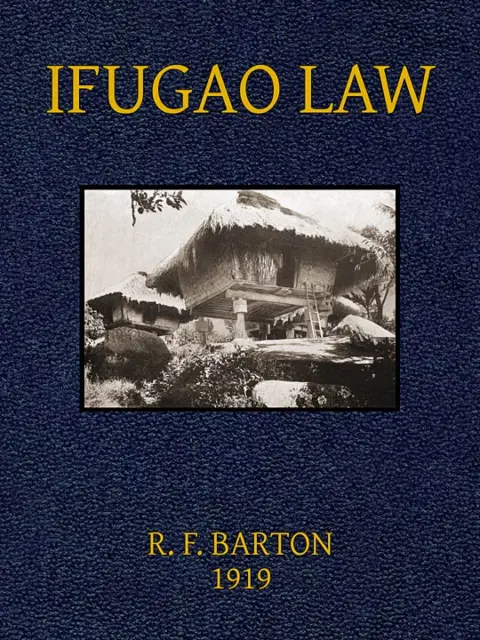
"Ifugao Law" by R. F. Barton is an ethnographic account written in the early 20th century. This publication delves into the legal system and customs of the Ifugao people, a group known for their intricate rice terraces in the Philippines. It examines the roots of Ifugao law, including its connection to customs and taboos, and explores topics ranging from family law and property rights to criminal law and social responsibilities. The opening of the work introduces the Ifugao culture, emphasizing its lack of formal political governance yet robust systems of customary law derived from taboos and social norms. It posits that, despite being labeled as "barbaric" by outsiders, the Ifugao people maintain relative peace and cohesion through their customary laws, which are crucial to their social fabric. Barton sets the stage for a thorough examination of the unique aspects of Ifugao law, including marriage contracts, property inheritance, and clan responsibilities, while situating these practices within a broader anthropological discourse on primitive societies.
Introduction adapted from the source catalogue; source summaries may be automatically generated.
Free to read · English · 54,145 words · No account needed
MAKE TIME FOR A GOOD BOOK
On by default. Untick to stop anonymous reading totals. Each page counts after 10 seconds in view. How this works.
Anonymous counting is on unless you have switched it off.
*areca, a slender graceful palm which produces the areca nut, erroneously called the betel-nut, which, with the leaf of the betel pepper and lime, are universally chewed by the Ifugaos. The physiologic effect is similar to that of coffee.
ayak, sorcery.
baag, facetious or uncalled-for remarks.
baal, a hand servant; a household servant.
bakid, a "ten"; a half-score.
balal, a form of pawning of family property, in which a sum is loaned, the property passing into the hands of the lender, and remaining so until the sum is repaid. The use of the property constitutes the interest on the loan.
baloblad, interest paid in advance at the time a loan is made.
banga, a pot or tobacco pipe.
bango, a back-basket used for carrying necessities on a journey. It affords a considerable protection against rain.
banting, flint and steel for fire making. Even applied sometimes, though improperly, to modern methods of fire drawing by means of matches. Never applied to fire making by means of sticks or fire syringe.
bayaó, a kind of fancy blanket.
binangwa, anything that has been cut in two; halved. Sometimes used to denote the half of anything.
binawit, a child spouse that lives in the home of his or her
parents-in-law.
binokbok, a ceremony performed three days after a burial. The soul of the deceased is brought back to the village and interviewed.
bobod, a tie, a knot.
*bolo, a heavy knife about 14 to 16 inches long, whose shape varies among the different tribes. It serves a multitude of purposes, answering now for an axe, now for a spade or hoe, now for a weapon, now for the ordinary uses of knives.
bubun, the final ceremony of marriage. Its main purpose is to secure
offspring for the couple.
budut, one of the principal payments in the Benaue district in the
purchase of a rice field.
bukad, a religious ceremony in which a myth is recited for its
magic effect.
bultong, a wrestling match; trial by wrestling.
bungol, jewel, specifically, ancient agate beads.
bungot, ferocity; the nearest approach in the Ifugao language perhaps to "bravery". The Ifugao's ideal of bravery seems to be an aggressive and relentless, boastful, angry assertiveness. Mahui, a synonym, has the sense of relentless boldness.
*camote, a tropical sweet potato, of which there are numerous
varieties.
dalag, offering to the soul of a deceased person.
dangale, funeral feast.
datok, offering to the soul of a deceased person.
di, the article, "of the."
dotag, flesh; meat.
duyu, a wooden dish.
*fiat, a term which I use to denote those phrases in religious ceremonies in which the priest clinches or compels the magic effect of an analogy by means of the spoken word.
Your reading position is saved on this browser. Take it to another device with a library code. Reading pages adapt to text, rather than matching a printed edition.
BEHIND THE BOOK
This eBook is for the use of anyone anywhere in the United States and most other parts of the world at no cost and with almost no restrictions whatsoever. You may copy it, give it away or re-use it under the terms of the Project Gutenberg License included with this eBook or online at www.gutenberg.org. If you are not located in the United States, you will have to check the laws of the country where you are located before using this eBook. Read the source licence.
The original source file, including credits and licence, is retained by this library. Request an original-format copy at no charge. Please include the book title and Project Gutenberg identifier #40807.
KEEP YOUR CURIOSITY GOING
Charles G. (Charles Griffith) Ross
Hannah Webster Foster

Emily Lawless
Edwin Hamlin Carr

Charles De Lano Hine
Andrew Ure