
The Writing of News A Handbook with Chapters on Newspaper Correspondence and Copy Reading
Charles G. (Charles Griffith) Ross
THE CLASSIC COLLECTION · 1898
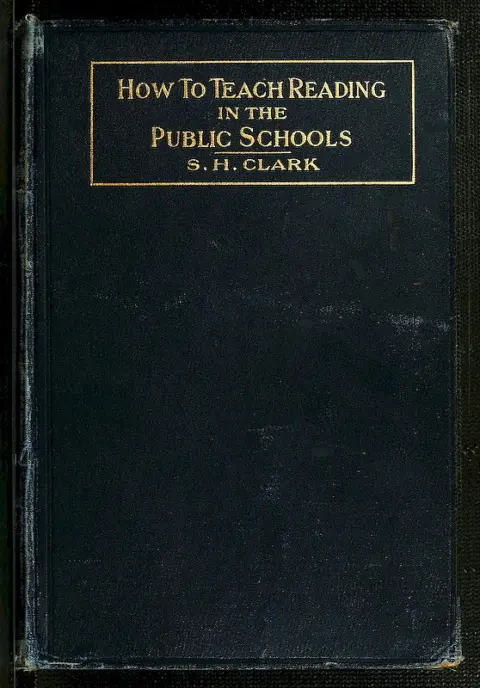
"How to Teach Reading in the Public Schools" by S. H. Clark is an instructional manual aimed at educators, written in the late 19th century. This work provides insights and methodologies for teaching reading effectively in public schools, stressing the importance of understanding vocal expression and its various components. The book appears to focus on improving both the teachers’ and students’ abilities to extract meaning from text, thereby elevating the standard of reading instruction. The opening of this manual establishes its purpose by addressing the inadequacies of reading education in public schools. The author outlines common remedial approaches, such as mechanical methods of teaching vocal expression and comprehension techniques, explaining why they often fall short in fostering a true understanding of literature. Clark emphasizes the need for teachers to appreciate great literature, to understand the psychology behind vocal expression, and to implement a structured, methodical approach to instruction that prioritizes clarity and comprehension, rather than rote learning.
Introduction adapted from the source catalogue; source summaries may be automatically generated.
Free to read · English · 80,383 words · No account needed
MAKE TIME FOR A GOOD BOOK
On by default. Untick to stop anonymous reading totals. Each page counts after 10 seconds in view. How this works.
Anonymous counting is on unless you have switched it off.
In 1815 M. Charles Myriel was the bishop of D----. He was a man of about seventy-five years of age, and had held the see of D---- since 1806. Although the following details in no way affect our narrative, it may not be useless to quote the rumors that were current about him at the moment when he came to the diocese; for what is said of men, whether it be true or false, often occupies as much space in their life, and especially in their destiny,[2] as what they do.
The beams of the rising sun had gilded the lofty domes of Carthage, and given, with its rich and mellow light, a tinge of beauty even to the frowning ramparts of the outer harbor.
When, for any reason, we do not desire to assert strongly; when what we have to say is trite, trivial, repetitious; when we are uncertain or doubtful; when we entreat; when we ask a question to which the answer yes or no is expected, we also use the rising inflection.
I do not claim this is the only method.
I cannot promise definitely, but I think you may rely upon
getting it.
I shall wait for you in the lobby, if you don’t tarry too long.
It doesn’t look like rain, does it?
There are some arguments in its favor, but they are not weighty.
No, nobody claims that.
I grant I may have taken the honorable gentleman by surprise.
I cannot tell what you and other men
Think of this life, but, for my single self,
I had as lief not be as live to be
In awe of such a thing as I myself.
I do not charge the gentleman with wilful misstatement, but I would rather say he is a great economizer of the truth.
I do not like to think that the opposition is purposely delaying
the vote on this question.
Never fear that: if he be so resolved,
I can o’ersway him.
You won’t leave me, father.
Good friends, sweet friends, let me not stir you up to such a
sudden flood of mutiny!
O, Hamlet, speak no more.
Pity the sorrows of a poor old man.
It would be idle to base an opinion on any argument of Mr.
Webster.
O, that is of no consequence; you don’t believe that.
It is hardly necessary for me to go over the charges of the attorney for the plaintiff; they are trivial and unimportant.
It goes without saying that you know the early history of these
people.
There are very few who haven’t a bowing acquaintance with this
subject.
Your reading position is saved on this browser. Take it to another device with a library code. Reading pages adapt to text, rather than matching a printed edition.
BEHIND THE BOOK
This eBook is for the use of anyone anywhere in the United States and most other parts of the world at no cost and with almost no restrictions whatsoever. You may copy it, give it away or re-use it under the terms of the Project Gutenberg License included with this eBook or online at www.gutenberg.org. If you are not located in the United States, you will have to check the laws of the country where you are located before using this eBook. Read the source licence.
The original source file, including credits and licence, is retained by this library. Request an original-format copy at no charge. Please include the book title and Project Gutenberg identifier #61727.
KEEP YOUR CURIOSITY GOING
Charles G. (Charles Griffith) Ross
Hannah Webster Foster

Emily Lawless
Edwin Hamlin Carr

Charles De Lano Hine
Andrew Ure