
Last letters from the living dead man
David Patterson (Spirit) Hatch
THE CLASSIC COLLECTION · 1917
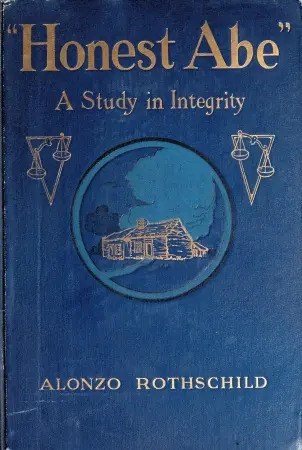
"Honest Abe: A Study in Integrity Based on the Early Life of Abraham Lincoln" by Alonzo Rothschild is a historical account written in the early 20th century. This work explores the formative years of Abraham Lincoln, focusing on his character, integrity, and the influence of his family background. It aims to shed light on how his early experiences shaped him into the emblematic figure of honesty and moral fortitude that he is celebrated as today. The opening of the book sets the foundation for a detailed exploration of Lincoln’s life, particularly emphasizing his inherent honesty and the hardships faced by his family during his upbringing. It describes the poverty Lincoln endured in his childhood and how the moral values instilled by his parents, especially his mother, played a crucial role in shaping his character. The narrative recounts anecdotes that highlight his early understanding of right and wrong and his unwavering commitment to truth, such as his willful efforts to settle debts and his conscientiousness in dealings with others. Throughout this introductory segment, Rothschild firmly establishes Lincoln's reputation as "Honest Abe," illustrating how his integrity was evident from a young age.
Introduction adapted from the source catalogue; source summaries may be automatically generated.
Free to read · English · 102,593 words · No account needed
MAKE TIME FOR A GOOD BOOK
On by default. Untick to stop anonymous reading totals. Each page counts after 10 seconds in view. How this works.
Anonymous counting is on unless you have switched it off.
=Law=, relation of lawyer to client, 58-60, 71-75;
sham pleas, 88, 342;
technicalities, 117-119;
statute of limitations, 122-123, 346;
legal fees, 136-138, 144, 166, 335, 349, 350.
=Lincoln, Abraham=, genealogy, 1;
born at Nolin Creek, Ky., 4;
early poverty, 4;
on his father’s lack of “money sense,” 5;
influenced by father’s honesty, 6;
earliest recollections of mother, 6, 7;
“my angel mother,” 7, 9;
influenced by stepmother, 9;
frontier life and hardships, 10;
lack of schooling, 10;
ambition for learning, 10;
borrows books, 11;
damages Crawford’s book, 10;
writes lampoons, 12;
emulates Weems’s Washington, 13, 326;
sent on trading voyage to New Orleans by Gentry, 14;
experience with counterfeit money, 15, 16, 327;
commended by Gentry, 15;
cross-examination of J. Parker Green, 16;
second trading voyage, 17;
admired by Denton Offutt, 17, 18;
hired as clerk by Offutt at New Salem, 18, 197;
lack of mercantile ability, 18, 23, 131, 133;
his honesty attracts attention, 20;
in Black Hawk War, 21;
fails for election to state legislature, 21, 202;
buys Rowan Herndon’s share of general store, 21;
stature, 21;
buys Radford’s store from Greene, 22;
buys business of Rutledge, 22;
sells out to the Trents, 22;
charitable to memory of Berry, 22;
burden of debts, 24, 225;
his debts compared to Hamlin’s, 328;
appointed local postmaster, 24, 204, 355;
meager living, 24;
sensitiveness to honor, 25;
deputy surveyor, 26, 133, 204, 206;
sued by Van Vergen and Watkins, 26;
“the national debt,” 27, 38, 42, 133, 223;
feats of strength, 29;
wrestling match, 29-31;
sportsmanlike conduct, 31;
borrows books from Justice Pitcher, 35;
attends sessions at Boonville, 35;
desire to study law, 35-36, 38;
reads Blackstone’s commentaries, 37;
elected to state legislature, 37;
poverty, 38;
uses Major Stuart’s library, 39;
enters law, 40;
journey to Springfield, 41-42;
accepts Speed’s hospitality, 43;
partner of Stuart, 44;
treatment of the money of others, 45-47;
attitude toward clients, 49-50, 66-70, 73-76;
the Matheney case, 50;
attitude toward fraudulent cases, 54-60;
partnership with Logan, 55;
refuses to take Matteson case, 56, 338;
“law honesty,” 56-57;
conscience in law, 56-59, 77-78;
habit of asking questions, 60, 61;
intellectual modesty, 61-63;
admiration for Stanton, 62;
logical reasoning powers, 63;
freedom from guile, 65;
attitude when suspects client’s guilt during trial, 66-70, 340;
Patterson murder trial, 67, 339;
Hoblit vs. Farmer, 70-71;
skill as an advocate, 79-80, 97-100, 341, 342;
his methods in court, 80-83, 101, 125;
treatment of witnesses, 84-86;
experience with sham pleas, 88;
sits for Judge Davis, 89, 90;
qualifications as judge, 92-93;
Rock Island Bridge case, 96-98;
his colleagues’ jealousy, 104;
the Quinn Harrison murder case, 105-107;
methods of meeting personal attacks, 107-108;
“Duff Armstrong case,” 108-111, 344, 355;
false reflections on his character, 108, 111-115, 215, 345;
the almanac episode, 110-111;
attitude toward slurs on his character, 114-115;
attitude toward technicalities in law, 117-118;
his wit, 119;
dishonest litigants, 120-122;
statute of limitations, 122-123, 346;
love of justice, 127;
attitude toward money, 130-135, 173;
earns his first money, 132, 347;
aversion to land-grabbers, 133-135;
fee in Armstrong case, 136;
the Trailor case, 137-138;
generosity to Trailor brothers, 139;
the “shirt sleeve court,” 140;
generosity to Linder, 141-142, 348;
represents Atlantic R.R. Co. in suit, 144-145;
proneness to underrate his services, 147, 148;
duns Douglas for money, 148, 149;
charges Daniel Webster absurdly small fee, 151;
Dungee slander suit, 152-155;
Chiniquy case, 155;
generosity to Chiniquy, 158;
returns part of fee to Floyd, 159-160;
forces Lamon to return part of fee, 160;
rebuked by Davis for undercharging, 161;
arraigned at mock trial, 162;
writes to Irwin about fees, 169;
does not speculate, 172;
marries Mary Todd, 173, 267;
at the Globe Tavern, 175;
his simplicity, 176, 183, 352;
makes unfavorable first impression, 178, 180, 182;
lack of taste in dress, 179;
his appearance, 180-182;
demands on him as married man, 183;
his generosity, 183-185, 353;
his wife’s trials, 185-188;
treatment of his father, 190-191, 353;
refuses partnership with Goodrich, 192;
indifference to wealth, 193;
first entrance into politics, 195, 199;
his ambition, 197, 260, 266;
admires Clay, 200;
analysis of results of his first campaign, 203, 355, 356;
political sincerity, 207, 233, 238, 354;
elected to state legislature, 208;
appointed to committee on accounts and expenditures, 209;
attracts notice as politician, 210;
reëlected, 210;
leader of the “Long Nine,” 211;
campaign to transfer capital from Vandalia to Springfield, 212-219;
“log-rolling,” 213-215, 216, 218, 239;
emulates De Witt Clinton, 218;
befriended by Wilson, 224;
borrows money from Smoot, 225;
takes up fight against usury, 227;
secures law limiting rates of interest, 230;
handling of financial troubles of state, 232-236;
his exit through church window, 237;
his part in debate on “Subtreasuries,” 240, 241;
experience with political graft, 242;
retort to Forquer, 242-243;
his treatment of office-seekers, 245-246;
elected Speaker of Illinois House, 247;
his personality, 247;
his qualities as a politician, 248-250, 252, 256, 258;
his methods of appeal to the people, 253, 254;
the Harrison campaign, 254;
his system of political organization, 255;
his aggressiveness, 257;
his modesty, 259, 261;
readiness to assist beginners, 262;
campaign for Congress, 267;
helps Schurz, 262;
his candor, 269;
member of delegation, 270;
letter to Morris, 271;
at the convention, 272;
“making a slate,” 274;
dissolution of partnership with Logan, 275;
turned against by Hardin, 276;
his candidacy for Congress, 277, 279;
charged with impiety, 279, 280;
elected to Congress, 281, 282;
arbitrator of disputes, 28, 32-35, 48-49, 52-53, 331;
his honesty, 1, 9, 18, 20, 28, 32, 45-46, 63-65, 85-86, 129, 245;
attitude toward legal fees, 136, 139, 141, 142, 147, 150, 152, 158-160, 163, 165, 166, 171, 349, 350, 351;
attitude toward fees similar to Hamlin’s, 335;
sells “dogskin” gloves to Ross, 328;
letter to Spears, 329;
on Surveyor-General Beale, 330;
on his prowess as wrestler, 330;
eulogizes Ferguson, 331;
date of his admission to bar, 333, 334;
evidence that he kept accounts, 335;
did not win every case he should have won, 341;
compared to Horace Binney, 342;
habit of waiting on himself, 351;
habit of carrying documents under his hat, 205, 355;
proposes resolution for bill against fraudulent voting, 358;
his proposed duel with Shields, 268, 359;
avoids traps set by Hardin, 360.
=anecdotes about Lincoln=, 13, 16, 19, 25, 30-31, 36, 42, 45, 47, 64, 65, 92-93, 178, 182, 261, 272, 357, 359.
=anecdotes about Lincoln and the law=, 49-51, 55, 57, 66-67, 68-69, 75-76, 77-78, 80-83, 89-91, 95, 98, 102, 103, 116, 118-119, 120-121, 124-126, 127-128, 338.
=anecdotes about Lincoln and money=, 131-132, 137-141, 143, 145-147, 148-151, 154, 158-160, 164, 166, 172, 187, 189, 225, 351.
=anecdotes about Lincoln and politics=, 206, 214, 219-221, 222-223, 226, 237, 242-244, 246, 254, 258, 269-270.
=anecdotes by Lincoln=, 5-6, 59-60, 131-132, 229.
Your reading position is saved on this browser. Take it to another device with a library code. Reading pages adapt to text, rather than matching a printed edition.
BEHIND THE BOOK
This eBook is for the use of anyone anywhere in the United States and most other parts of the world at no cost and with almost no restrictions whatsoever. You may copy it, give it away or re-use it under the terms of the Project Gutenberg License included with this eBook or online at www.gutenberg.org. If you are not located in the United States, you will have to check the laws of the country where you are located before using this eBook. Read the source licence.
The original source file, including credits and licence, is retained by this library. Request an original-format copy at no charge. Please include the book title and Project Gutenberg identifier #49679.
KEEP YOUR CURIOSITY GOING
David Patterson (Spirit) Hatch
Cécile Tormay

Moritz Busch
Coulson Kernahan
John L. Ransom

Ralph Waldo Emerson