
Last letters from the living dead man
David Patterson (Spirit) Hatch
THE CLASSIC COLLECTION · 1917
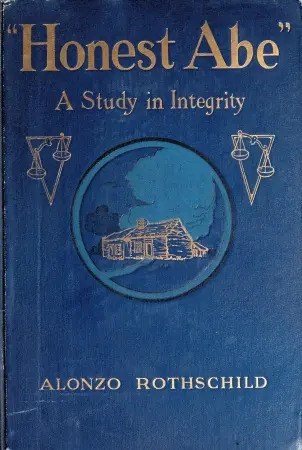
"Honest Abe: A Study in Integrity Based on the Early Life of Abraham Lincoln" by Alonzo Rothschild is a historical account written in the early 20th century. This work explores the formative years of Abraham Lincoln, focusing on his character, integrity, and the influence of his family background. It aims to shed light on how his early experiences shaped him into the emblematic figure of honesty and moral fortitude that he is celebrated as today. The opening of the book sets the foundation for a detailed exploration of Lincoln’s life, particularly emphasizing his inherent honesty and the hardships faced by his family during his upbringing. It describes the poverty Lincoln endured in his childhood and how the moral values instilled by his parents, especially his mother, played a crucial role in shaping his character. The narrative recounts anecdotes that highlight his early understanding of right and wrong and his unwavering commitment to truth, such as his willful efforts to settle debts and his conscientiousness in dealings with others. Throughout this introductory segment, Rothschild firmly establishes Lincoln's reputation as "Honest Abe," illustrating how his integrity was evident from a young age.
Introduction adapted from the source catalogue; source summaries may be automatically generated.
Free to read · English · 102,593 words · No account needed
MAKE TIME FOR A GOOD BOOK
On by default. Untick to stop anonymous reading totals. Each page counts after 10 seconds in view. How this works.
Anonymous counting is on unless you have switched it off.
[iv-41] Joseph Gillespie, in Oldroyd, 462. Still another one of the famous cavalcade, Leonard Swett, said: “Beds were always too short, coffee in the morning burned or otherwise bad, food often indifferent, roads simply trails, streams without bridges and often swollen, and had to be swum, sloughs often muddy and almost impassable, and we had to help the horses, when the wagon mired down, with fence-rails for pries, and yet I never heard Lincoln complain of anything.”
In the same vein, Henry C. Whitney wrote: “At the table, he ate what came first, without discrimination or choice. Whatever room at the hotel came handy, or whatever bed he came to first, he took without criticism or inspection.”
[iv-42] Quoted from manuscript of Ninian W. Edwards by Herndon, i, 186; also: Lamon, 190; French, 60; Coffin, 99; Browne, 138-39; Master, 55-56.
[iv-43] Whitney, 32; see, also, Herndon, ii, 15-16.
[iv-44] Schurz, ii, 90-91.
[iv-45] Chief Justice John Marshall, whom Lincoln resembled in not a few particulars, is said to have made a similarly unfavorable impression upon a prospective client, during his younger days at the Richmond bar. But in the Virginian’s case, the critical suitor discovered, even before the trial began, that a poorly dressed lawyer is not necessarily a poor advocate. So Marshall was retained, at the eleventh hour, to assist an immaculately attired colleague, whose ability was found to fall far short of the promise held forth by broadcloth and powdered wig.
[iv-46] Master, 224-25, 469.
[iv-47] Works, iv, 199.
[iv-48] Jayne, 11; and Dr. William Jayne to the author, October 2,
1912.
[iv-49] Gibson W. Harris, quoted in Columbia (Ky.) Spectator, January 27, 1905. The same witness, writing elsewhere (Browne, 219) on the same theme, says: “Mr. Lincoln had a heart that was more a woman’s than a man’s,--filled to overflowing with sympathy for those in trouble, and ever ready to relieve them by any means in his power.”
[iv-50] Mrs. Lincoln to Mrs. Keckley, November 15, 1867, in Keckley,
352.
[iv-51] John F. Mendonsa to the author, August 31, 1912.
[iv-52] Haynie, 7-8.
[iv-53] Fellowship, 1908, pp. 12-13; see, also, Works, ii, 313-14.
[iv-54] Lincoln to Johnston, January 12, 1851, Works, ii, 148.
[iv-55] Works, ii, 96.
[iv-56] This deed may be found in Coles County Deed Records, G, p. 5. Of the same date, October 25, 1841, entered in Mortgage Record, i, p. 43, is an instrument whereby Abraham Lincoln binds himself and his heirs to convey the property to John D. Johnston or his heirs, after the death of the parents, upon repayment of the two hundred dollars, without interest and without regard to any increase in the value of the tract.
Your reading position is saved on this browser. Take it to another device with a library code. Reading pages adapt to text, rather than matching a printed edition.
BEHIND THE BOOK
This eBook is for the use of anyone anywhere in the United States and most other parts of the world at no cost and with almost no restrictions whatsoever. You may copy it, give it away or re-use it under the terms of the Project Gutenberg License included with this eBook or online at www.gutenberg.org. If you are not located in the United States, you will have to check the laws of the country where you are located before using this eBook. Read the source licence.
The original source file, including credits and licence, is retained by this library. Request an original-format copy at no charge. Please include the book title and Project Gutenberg identifier #49679.
KEEP YOUR CURIOSITY GOING
David Patterson (Spirit) Hatch
Cécile Tormay

Moritz Busch
Coulson Kernahan
John L. Ransom

Ralph Waldo Emerson