
Last letters from the living dead man
David Patterson (Spirit) Hatch
THE CLASSIC COLLECTION · 1917
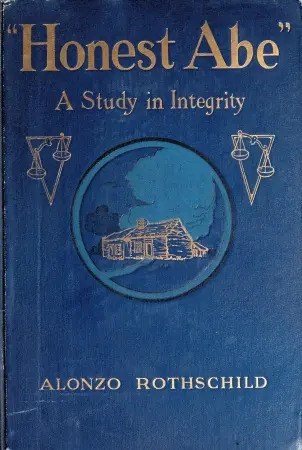
"Honest Abe: A Study in Integrity Based on the Early Life of Abraham Lincoln" by Alonzo Rothschild is a historical account written in the early 20th century. This work explores the formative years of Abraham Lincoln, focusing on his character, integrity, and the influence of his family background. It aims to shed light on how his early experiences shaped him into the emblematic figure of honesty and moral fortitude that he is celebrated as today. The opening of the book sets the foundation for a detailed exploration of Lincoln’s life, particularly emphasizing his inherent honesty and the hardships faced by his family during his upbringing. It describes the poverty Lincoln endured in his childhood and how the moral values instilled by his parents, especially his mother, played a crucial role in shaping his character. The narrative recounts anecdotes that highlight his early understanding of right and wrong and his unwavering commitment to truth, such as his willful efforts to settle debts and his conscientiousness in dealings with others. Throughout this introductory segment, Rothschild firmly establishes Lincoln's reputation as "Honest Abe," illustrating how his integrity was evident from a young age.
Introduction adapted from the source catalogue; source summaries may be automatically generated.
Free to read · English · 102,593 words · No account needed
MAKE TIME FOR A GOOD BOOK
On by default. Untick to stop anonymous reading totals. Each page counts after 10 seconds in view. How this works.
Anonymous counting is on unless you have switched it off.
[i-42] William H. Herndon, Lincoln’s law partner, relates (Herndon, i, 100): “He was a long time meeting these claims, even as late as 1848 sending to me from Washington portions of his salary as Congressman to be applied on the unpaid remnant of the Berry and Lincoln indebtedness. But in time he extinguished it all, even to the last penny.”
According to Nicolay (36): “It was not until his return from Congress, seventeen years after the purchase of the store, that he finally relieved himself of the last installment of his ‘national debt.’”
[i-43] Several decades thereafter, when reference was made in President Lincoln’s hearing to the large tracts of valuable land acquired by Surveyor-General Edward F. Beale, in California, the Executive may be said to have suffered no twinges of conscience if he remarked, as was reported: “Yes, they say Beale is monarch of all he surveyed.”
[i-44] Henry McHenry, in Herndon, i, 113.
[i-45] The Grigsby affair. (Master, 16-17.)
[i-46] Frank E. Stevens, in Magazine of History, February, 1905, pp.
86-90.
[i-47] William G. Greene, who was present, so quotes Lincoln; but Lamon (111) and Stevens (Black Hawk, 283) report him to have said: “Boys, the man actually threw me once fair, broadly so; and the second time, this very fall, he threw me fairly, though not so apparently so.”
[i-48] Magazine of History, February, 1905, pp. 86-90. See also Stevens’s Black Hawk, 281-83; Oldroyd, 516-17; Browne, 112-13; Lamon, 109-12; Herndon, i, 87-88; Nicolay and Hay, i, 94; Thayer, 239-40; Lincoln and Douglas, 194a-194b; Master, 39-40.
[i-49] The whole experience left a deep impression in Lincoln’s mind. After his first nomination to the Presidency, he received one day a delegation of college men, among whom was Professor Risdon M. Moore, the son of Jonathan, that quondam referee.
“Which of the Moore families do you belong to?” inquired the candidate, with a twinkle of the eye. “I have a grudge against one of them.”
To which the Professor, with a still merrier twinkle, replied: “I suppose it is my family you have the grudge against; but we are going to elect you President, and call it even.”
Thereupon Mr. Lincoln, narrating to those who were present the story of his defeat by Thompson, concluded with the words: “I never had been thrown in a wrestling-match until the man from that company did it. He could have thrown a grizzly bear.”
Your reading position is saved on this browser. Take it to another device with a library code. Reading pages adapt to text, rather than matching a printed edition.
BEHIND THE BOOK
This eBook is for the use of anyone anywhere in the United States and most other parts of the world at no cost and with almost no restrictions whatsoever. You may copy it, give it away or re-use it under the terms of the Project Gutenberg License included with this eBook or online at www.gutenberg.org. If you are not located in the United States, you will have to check the laws of the country where you are located before using this eBook. Read the source licence.
The original source file, including credits and licence, is retained by this library. Request an original-format copy at no charge. Please include the book title and Project Gutenberg identifier #49679.
KEEP YOUR CURIOSITY GOING
David Patterson (Spirit) Hatch
Cécile Tormay

Moritz Busch
Coulson Kernahan
John L. Ransom

Ralph Waldo Emerson