THE CLASSIC COLLECTION✦An outlaw’s diary: the CommuneCLASSIC FREE BOOKS
An outlaw’s diary: the Commune
Cécile Tormay
THE CLASSIC COLLECTION · 1900
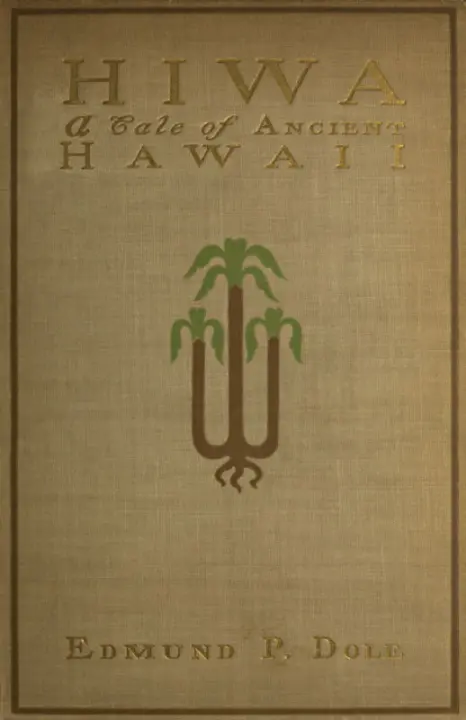
"Hiwa: A Tale of Ancient Hawaii" by Edmund P. Dole is a historical novel written in the late 19th century. The story unfolds in ancient Hawaii, focusing on the life of Hiwa, a goddess-queen, and her struggles against the formidable high-priest Aa amidst themes of love, loyalty, and sacrifice. The narrative follows Hiwa's quest for her son Aelani, who is fated to become a ruler, and her turmoil surrounding her vow to the god Ku, which threatens both her life and the fate of the kingdom. The opening of the tale introduces readers to a lush and vibrant Waipio Valley, where the royal court lies in revelry after a night of indulgence. Hiwa, in her desperate flight from enemies, encounters Eaeakai, a fisherman who unwittingly aids her while fearing the repercussions of his actions. As the narrative progresses, Hiwa's regal background and her complicated relationship with both her lover, Kaanaana, and the treacherous Aa become clear. She ultimately seeks to protect her child and uphold her divine legacy, all while grappling with the consequences of her past actions as she strives to fulfill her vow in a world rife with danger and political intrigue. This rich tapestry of myth and profound destiny sets the stage for an epic story that promises love, conflict, and the harsh demands of a ruler's duty.
Introduction adapted from the source catalogue; source summaries may be automatically generated.
Free to read · English · 19,136 words · No account needed
MAKE TIME FOR A GOOD BOOK
On by default. Untick to stop anonymous reading totals. Each page counts after 10 seconds in view. How this works.
Anonymous counting is on unless you have switched it off.
Ii--a word that has a variety of meanings, among which are: a selfish person, a cruel person, a sour person, a collection of small things. It is often used as a proper noun, as is also the single vowel, I. Repeated three times it forms another word--iii.
Ilima--a shrub which bears beautiful green and yellow flowers; also,
the flowers.
Iiwi--a small red bird.
Kaanaana--the name of a man or woman, quite common.
Kahiki--foreign parts.
Kahlooawe--One of the smaller islands.
Kahuna--a witch-doctor or sorcerer; also, at the present time, a
native quack.
Kanaka-wale--a landless freeman.
Kanaloa--one of the gods, Kane's younger brother.
Kane--a male, applied equally to human beings and animals; also, the name of one of the great gods.
Kanehoalani--the god of the sky.
Kanehulikoa--the god of the sea.
Kaukihi--a small boat, a single dug-out.
Keike--a child.
Kihei--a mantle or cloak.
Kini akua--elves.
Koa--a hard wood in great demand on account of the beautiful finish
which it takes.
Kohala--North and South Kohala, the two northern districts in the
Island of Hawaii.
Konohiki--a great landholder under the moi, virtually a feudal lord.
Ku--the name of the fiercest and most cruel of the ancient gods.
Kukailimoke--the god of war.
Kukuihaele--the high land adjoining the southeast of Waipio Valley.
Kuleana--a small holding of land.
Kupua--a demi-god.
Lanai--the name of one of the smaller islands, literally, The Hump, from its shape; the name is applied to a veranda.
Lawalu--fish or meat wrapped in ti leaves, and cooked on coals or
hot stones.
Lei--a wreath.
Lilii--usually spelled Liilii, little one, small, often added to a name to indicate youth, or as a term of affection.
Lolo--idiotic, a fool.
Lono--the mildest and most benevolent of the Hawaiian deities. The tradition was that he taught peace and good-will, and inaugurated a golden age, and that, when he went away, he promised to return some time. When Captain Cook discovered the islands in 1778 the natives welcomed him as the long-expected Lono.
Maile--a beautiful dark green odoriferous vine, alyxia olive-formia.
Makai--towards the sea. In the Hawaiian Islands one rarely hears the words north, south, east or west, in any reference to locality or direction. It is makai, towards the sea, mauka, away from the sea, or to windward, or to leeward, or the direction is designated by another place, as, for example, Chicago is New York of the Rocky Mountains, and Denver is San Francisco of St. Paul.
Malo--the loin-cloth formerly worn by men.
Mamo--a small bird with yellow feathers, formerly sacred to royalty. Hence a garment made of its yellow feathers. The bird is nearly or quite extinct, and the ancient robes that have been preserved have fabulous values.
Manao--what one thinks or advises, an opinion.
Your reading position is saved on this browser. Take it to another device with a library code. Reading pages adapt to text, rather than matching a printed edition.
BEHIND THE BOOK
This eBook is for the use of anyone anywhere in the United States and most other parts of the world at no cost and with almost no restrictions whatsoever. You may copy it, give it away or re-use it under the terms of the Project Gutenberg License included with this eBook or online at www.gutenberg.org. If you are not located in the United States, you will have to check the laws of the country where you are located before using this eBook. Read the source licence.
The original source file, including credits and licence, is retained by this library. Request an original-format copy at no charge. Please include the book title and Project Gutenberg identifier #61148.
KEEP YOUR CURIOSITY GOING
Cécile Tormay

Moritz Busch
Coulson Kernahan
John L. Ransom

Maurice Baring
Frances Wright