THE CLASSIC COLLECTION✦An outlaw’s diary: the CommuneCLASSIC FREE BOOKS
An outlaw’s diary: the Commune
Cécile Tormay
THE CLASSIC COLLECTION · 1900
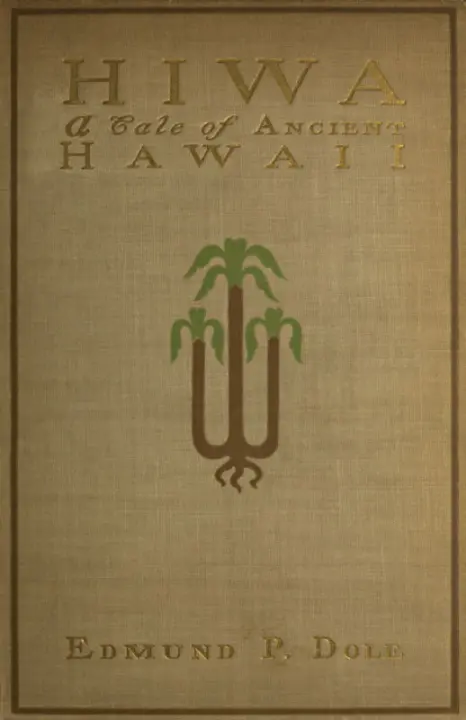
"Hiwa: A Tale of Ancient Hawaii" by Edmund P. Dole is a historical novel written in the late 19th century. The story unfolds in ancient Hawaii, focusing on the life of Hiwa, a goddess-queen, and her struggles against the formidable high-priest Aa amidst themes of love, loyalty, and sacrifice. The narrative follows Hiwa's quest for her son Aelani, who is fated to become a ruler, and her turmoil surrounding her vow to the god Ku, which threatens both her life and the fate of the kingdom. The opening of the tale introduces readers to a lush and vibrant Waipio Valley, where the royal court lies in revelry after a night of indulgence. Hiwa, in her desperate flight from enemies, encounters Eaeakai, a fisherman who unwittingly aids her while fearing the repercussions of his actions. As the narrative progresses, Hiwa's regal background and her complicated relationship with both her lover, Kaanaana, and the treacherous Aa become clear. She ultimately seeks to protect her child and uphold her divine legacy, all while grappling with the consequences of her past actions as she strives to fulfill her vow in a world rife with danger and political intrigue. This rich tapestry of myth and profound destiny sets the stage for an epic story that promises love, conflict, and the harsh demands of a ruler's duty.
Introduction adapted from the source catalogue; source summaries may be automatically generated.
Free to read · English · 19,136 words · No account needed
MAKE TIME FOR A GOOD BOOK
On by default. Untick to stop anonymous reading totals. Each page counts after 10 seconds in view. How this works.
Anonymous counting is on unless you have switched it off.
Ae, keike--yes, child.
Aelani--the pledge from heaven, a promise from the skies. Lani, heavenly, heaven-born, is a common termination of the names of Hawaiian men and women, especially those of exalted rank.
Ahupuaa--a large tract of land under the control of a single person, a
lordship.
Aialo--those who eat at the king's court.
Akela--a berry much like the American raspberry.
Alii-niaupio, tabu moi wahine--freely translated, goddess-queen, a female sovereign of divine or semi-divine lineage, unapproachable, sacred, absolute.
Aloha--Aloha, more appropriately, perhaps, than any other one word, may be taken as typical of the Hawaiian race. It is the first native word the stranger learns, the common salutation on the street, and the last he hears at parting. It signifies kindly feeling, good-will. It is also used to express love.
Aloha nui--great good-will.
Au-we--an exclamation of sorrow, a wailing cry, alas.
Awa--an intoxicating liquor made from the roots of a plant of the same name. It is very stupefying, and, when drunk to excess, causes the skin to turn a dirty-brown color, and to crack and flake off.
Eaeakai--the word, sometimes used as a proper noun, means, covered
with the spray of the sea.
E moe o--the customary exclamation or command to lie prostrate on the
approach of royalty.
Haleakala--the House of the Sun, an extinct volcano ten thousand feet high on the Island of Maui. Its crater, over thirty miles in circumference and two thousand feet deep, is the largest in the world.
Hamakua--the name of a district in the northern part of the Island of
Hawaii.
Haole--a foreigner. The term is applied to white persons, whether of
Hawaiian or foreign birth, and is not often used in speaking of
Asiatics.
Hawaii--the large island, twice the size of all the others combined, from which the group takes it name. It is the second in industrial and commercial importance, and probably the first in undeveloped resources.
Heiau--a temple.
Hilo--the name of two districts, North and South Hilo, on the northeastern side of the Island of Hawaii and of the chief town of the island; also of the first night in which the new moon can be seen, as it is like a twisted thread (from the verb to twist, to spin, to turn). The new moon, a crescent, indicates the outline of Hilo Bay.
Hiwa--the precious one.
Hula hula--a dance, dancers, dancing, and music. The Hawaiian hula is not necessarily immodest, but certain lascivious hulas have won a world-wide and unenviable notoriety.
Ihe--a war-club.
Your reading position is saved on this browser. Take it to another device with a library code. Reading pages adapt to text, rather than matching a printed edition.
BEHIND THE BOOK
This eBook is for the use of anyone anywhere in the United States and most other parts of the world at no cost and with almost no restrictions whatsoever. You may copy it, give it away or re-use it under the terms of the Project Gutenberg License included with this eBook or online at www.gutenberg.org. If you are not located in the United States, you will have to check the laws of the country where you are located before using this eBook. Read the source licence.
The original source file, including credits and licence, is retained by this library. Request an original-format copy at no charge. Please include the book title and Project Gutenberg identifier #61148.
KEEP YOUR CURIOSITY GOING
Cécile Tormay

Moritz Busch
Coulson Kernahan
John L. Ransom

Maurice Baring
Frances Wright