THE CLASSIC COLLECTION✦An outlaw’s diary: the CommuneCLASSIC FREE BOOKS
An outlaw’s diary: the Commune
Cécile Tormay
THE CLASSIC COLLECTION · 1900
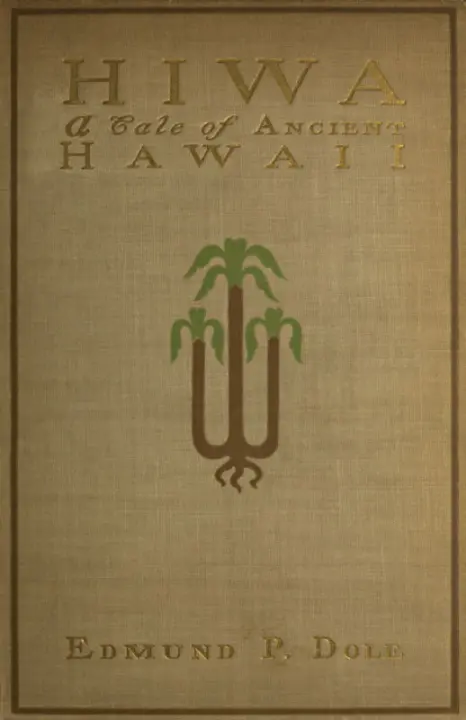
"Hiwa: A Tale of Ancient Hawaii" by Edmund P. Dole is a historical novel written in the late 19th century. The story unfolds in ancient Hawaii, focusing on the life of Hiwa, a goddess-queen, and her struggles against the formidable high-priest Aa amidst themes of love, loyalty, and sacrifice. The narrative follows Hiwa's quest for her son Aelani, who is fated to become a ruler, and her turmoil surrounding her vow to the god Ku, which threatens both her life and the fate of the kingdom. The opening of the tale introduces readers to a lush and vibrant Waipio Valley, where the royal court lies in revelry after a night of indulgence. Hiwa, in her desperate flight from enemies, encounters Eaeakai, a fisherman who unwittingly aids her while fearing the repercussions of his actions. As the narrative progresses, Hiwa's regal background and her complicated relationship with both her lover, Kaanaana, and the treacherous Aa become clear. She ultimately seeks to protect her child and uphold her divine legacy, all while grappling with the consequences of her past actions as she strives to fulfill her vow in a world rife with danger and political intrigue. This rich tapestry of myth and profound destiny sets the stage for an epic story that promises love, conflict, and the harsh demands of a ruler's duty.
Introduction adapted from the source catalogue; source summaries may be automatically generated.
Free to read · English · 19,136 words · No account needed
MAKE TIME FOR A GOOD BOOK
On by default. Untick to stop anonymous reading totals. Each page counts after 10 seconds in view. How this works.
Anonymous counting is on unless you have switched it off.
Manoa--the name of a beautiful valley in the suburbs of Honolulu; also, of an ancient or legendary princess.
Mauna Kea--the White Mountain, from the snow that covers its summit a great part of the year. It is 13,805 feet in height.
Mauna Loa--the Long Mountain, a great volcano, 13,675 feet high. The last eruption was in July, 1899.
Mele--a poem, a song, a hymn, a chant; in particular, the epics of the race, committed to memory and transmitted from generation to generation. Some of these epics are supposed to be hundreds of years old, and are almost as unlike modern Hawaiian as Chaucer is unlike modern English.
Milu--the god of the lower world.
Moi--a sovereign in whom is supreme authority, applied to gods and monarchs descended from the gods; but the title was continued during the half century and more that the Hawaiian government was a constitutional monarchy.
Mokuhalii--the name of the god of sharks. On Hawaii, he was known as
Ukanipo.
Newa--a feather-helmet.
Niho palaoa--a whale-tooth ornament worn only by persons of high rank.
Niulii--the southeast corner of North Kohala, adjoining the Hamakua
mountains.
Ohelo--a reddish-brown berry similar to the whortleberry.
Ohia--a deciduous fruit, something like an apple, but less nutritious
and more juicy.
Olona--a native shrub with the qualities of hemp or flax.
Oo--a small black bird with tufts of yellow feathers, sacred like the
mamo.
Papa--a goddess, wife of Wakea.
Papaakahi--the first of all, the highest in rank.
Pau--stop, hold your tongue, that is all, the end.
Pau--the ordinary female garment of ancient times, tapa cloth wound round the waist, and reaching to the knees.
Pele--the goddess of volcanoes.
Poha--a berry from which a delicious jam is made.
Poi--a paste made from taro. It is to Hawaiians what wheat is to Europeans, and rice to Chinamen.
Polulu--a short spear.
Puka--a hole, an entrance.
Puna--the name of a district at the eastern end of the Island of
Hawaii.
Puuhonua--a city of refuge.
Tabu--prohibited, forbidden, sacred, devoted to the gods, the moi or the chiefs. The tabu, also spelled kapu, was the controlling feature of the ancient religion. It was oppressive to the last degree, and was mercilessly enforced by superstitious terror and the death penalty. After the discovery by Captain Cook, it gradually lost its hold on rulers, priesthood, and people. It was officially abolished in 1819, a few months before the arrival of the first missionaries.
Tapa--a cloth made from the beaten bark of the wauki, or mamaki, or paper-mulberry or other trees; hence, any garment made of tapa. Also spelled kapa.
"Ua mau ke ea o ka aina i ka pono."
Your reading position is saved on this browser. Take it to another device with a library code. Reading pages adapt to text, rather than matching a printed edition.
BEHIND THE BOOK
This eBook is for the use of anyone anywhere in the United States and most other parts of the world at no cost and with almost no restrictions whatsoever. You may copy it, give it away or re-use it under the terms of the Project Gutenberg License included with this eBook or online at www.gutenberg.org. If you are not located in the United States, you will have to check the laws of the country where you are located before using this eBook. Read the source licence.
The original source file, including credits and licence, is retained by this library. Request an original-format copy at no charge. Please include the book title and Project Gutenberg identifier #61148.
KEEP YOUR CURIOSITY GOING
Cécile Tormay

Moritz Busch
Coulson Kernahan
John L. Ransom

Maurice Baring
Frances Wright