THE CLASSIC COLLECTION✦An outlaw’s diary: the CommuneCLASSIC FREE BOOKS
An outlaw’s diary: the Commune
Cécile Tormay
THE CLASSIC COLLECTION · 1880
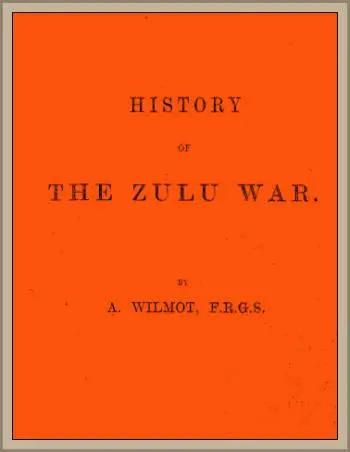
"History of the Zulu War" by Alexander Wilmot is a historical account written in the late 19th century. The book provides an overview of the significant events leading up to and during the Zulu War, focusing on the interactions between the Zulu nation and British colonial forces. It aims to give readers a better understanding of the causes, actions, and implications of this conflict. At the start of the work, the author explores the early history of the Zulu nation and its environment in Natal, detailing the migrations of different races to Southern Africa. The narrative highlights the rise of King Chaka and the militarization of the Zulu people, illustrating the transformation from a small tribe into a formidable military power. This opening sets the stage for an analysis of the political and social dynamics that culminated in the war, hinting at the catastrophic events that will follow as the British attempt to assert their control over the region.
Introduction adapted from the source catalogue; source summaries may be automatically generated.
Free to read · English · 73,674 words · No account needed
MAKE TIME FOR A GOOD BOOK
On by default. Untick to stop anonymous reading totals. Each page counts after 10 seconds in view. How this works.
Anonymous counting is on unless you have switched it off.
On the 17th of May, a road was made in the direction of Landman's Drift, and a few days afterwards all the cavalry proceeded to Rorke's Drift, and thence to Isandhlwana, for the purpose of burying the dead. It was certainly full time to perform this duty. One of the disgraceful occurrences or sad consequences of the Zulu war is the fact, which cannot be slurred over without comment, that the bodies of our brave men who fell at Isandhlwana remained unburied for more than four months. Two regiments of Dragoon Guards, with the Lancers and numerous other troops, moved on with alacrity to perform the honourable task. The force advanced in line, échelon, or column of squadrons, with extensive advance and rear guards, as well as flankers. At night the men bivouacked in groups of twelve, with their saddles turned inwards and placed in a circle. At last they looked down from the Biggarsberg upon Rorke's Drift and the Isandhlwana mountain in the distance. One regiment of the Lancers and one of the Dragoon Guards, as well as half the Natal Carbineers, swept the country in the neighbourhood. The smoke of blazing huts rose up like burnt-offerings from the hill-altars of Zululand. The signal-fires of the savages helped to light up the country at night, and the British were again on the field where Cetywayo had gained his first and last victory. General Marshall, with Dragoons, Lancers, irregular horse, police, and artillery, crossed the river at daybreak, and advanced in open order. But my readers will prefer to read an account of what was seen and done at Isandhlwana from the pen of a soldier who was there. The correspondent of the Times of Natal writes:—
[Sidenote: Troops marching.]
"We pushed on very steadily and carefully, and at half-past nine our advance-guard was on the ridge overlooking the valley beyond Isandhlwana. There it lay, a magnificent stretch of country, with undulating plains for miles, only broken by dongas and small rises, and bordered by high hills on each side. Who would have thought, looking down on the quiet scene, that it had witnessed one of the most terrific fights and disasters of modern times? The grass had grown up over the whole site of what had once been our camp, and was thickly intermixed with mealie stalks and oat hay, green and growing yet. Among these lay the bodies of our poor soldiers, scattered about in all postures, and in all stages of decay; while the positions of our tents were indicated by the broken remains of boxes, trunks, tins of preserved meats, remnants of the tents themselves, and masses of disordered papers, books, and letters, etc., etc. The only thing, however, that at once drew the attention of a casual observer was the broken remains of waggons and the skeletons of horses and oxen. Everything else was hidden at first sight, and required searching for to be noticed. One thing we had observed coming along the road was the fresh spoor of a waggon or two, and we conjectured that it had been recently used in conveying crops from Sirayo's valley away into the strongholds further inland. The spoor of two mounted Kafirs, and one on foot, was also traced by the scouts fresh that morning; one of the horses was shod all round, and these men were evidently of the party left by the enemy to watch the coming of our troops. For some time after our arrival, and while preparations were being actively carried out to harness the horses to the best waggons, all the men except those on vedette or other duty were allowed to wander over the scene of the disaster. The Carbineers, under Captain Shepstone, made immediately for their camp, and tried to find any relics of their dead brethren. Nothing of any consequence was, however, found near their lines; but upon searching over the ground where the bodies of some of them had been seen on the night after Isandhlwana, Captain Shepstone came upon the bodies of Colonel Durnford, Lieutenant Scott, and nearly all the Carbineers, except London and Bullock, and those few who were killed along the fugitive path. Poor Durnford was easily recognizable, and he had on his mess waistcoat, from the pocket of which Shepstone took a small pocket-knife with his name on it. Two rings were also taken, and are with the knife to be sent home in memoriam to the colonel's father. Durrant Scott lay partially hidden under a broken piece of a waggon, and had evidently not been mutilated or touched after his death. He had his patrol jacket on, buttoned across, and although the rest of the body was only a skeleton, yet, strange to say, the face was like in life, all the hair being still on, and the skin strangely parched and dried up, although perfect. Both these bodies lay right in the midst of the rest of the young colonists who fell gallantly in defence of their country; and, judging from the position in which they all were, they must have made one last gallant stand, and have been killed altogether. None of these so found had attempted to run, but had stuck together in life as we found them in death. Knowing all of them well, and how they did their duty, I felt it almost impossible to examine any, and had to leave the scene for another one. I can only add that Durnford's body was wrapped in canvas and buried in a kind of waterwash, while all the others were covered over with stones, etc., and their names written in pencil on wood or a stone close by them.
Your reading position is saved on this browser. Take it to another device with a library code. Reading pages adapt to text, rather than matching a printed edition.
BEHIND THE BOOK
This eBook is for the use of anyone anywhere in the United States and most other parts of the world at no cost and with almost no restrictions whatsoever. You may copy it, give it away or re-use it under the terms of the Project Gutenberg License included with this eBook or online at www.gutenberg.org. If you are not located in the United States, you will have to check the laws of the country where you are located before using this eBook. Read the source licence.
The original source file, including credits and licence, is retained by this library. Request an original-format copy at no charge. Please include the book title and Project Gutenberg identifier #46166.
KEEP YOUR CURIOSITY GOING
Cécile Tormay

Moritz Busch
John L. Ransom
Frances Wright
Cécile Tormay

Mabel Potter Daggett