THE CLASSIC COLLECTION✦An outlaw’s diary: the CommuneCLASSIC FREE BOOKS
An outlaw’s diary: the Commune
Cécile Tormay
THE CLASSIC COLLECTION · 1880
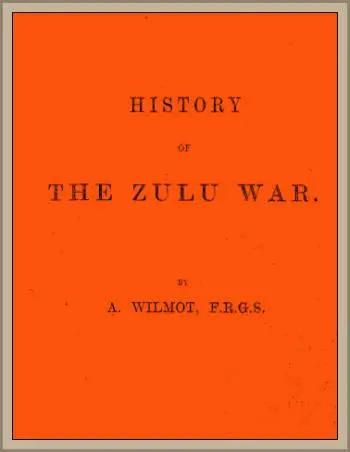
"History of the Zulu War" by Alexander Wilmot is a historical account written in the late 19th century. The book provides an overview of the significant events leading up to and during the Zulu War, focusing on the interactions between the Zulu nation and British colonial forces. It aims to give readers a better understanding of the causes, actions, and implications of this conflict. At the start of the work, the author explores the early history of the Zulu nation and its environment in Natal, detailing the migrations of different races to Southern Africa. The narrative highlights the rise of King Chaka and the militarization of the Zulu people, illustrating the transformation from a small tribe into a formidable military power. This opening sets the stage for an analysis of the political and social dynamics that culminated in the war, hinting at the catastrophic events that will follow as the British attempt to assert their control over the region.
Introduction adapted from the source catalogue; source summaries may be automatically generated.
Free to read · English · 73,674 words · No account needed
MAKE TIME FOR A GOOD BOOK
On by default. Untick to stop anonymous reading totals. Each page counts after 10 seconds in view. How this works.
Anonymous counting is on unless you have switched it off.
Lord Glenelg emphatically stated that the Kafirs had perfect justification for the war of 1835, and this affirmation was the foundation of his entire policy. He identified himself with the pseudo-philanthropists who looked upon the white inhabitants of the Eastern districts as usurpers and persecutors. The ideas of 1836 remain substantially the ideas of 1879, the only difference being that the venue is changed and that the tide of savagery has been pushed further eastward. The settlers of 1820 were placed by the British Government on the frontier of the Cape Colony, and on their part and that of their descendants there was certainly no usurpation, while it positively seems to be the result of monomania to speak of their having persecuted the Kafirs. The incontestable facts of history prove exactly the opposite: it was the Kafirs that harassed and persecuted them. A comparatively small, struggling, and sparsely settled community was persistently tormented and impoverished by most cruel thefts and constant aggressions, which at last culminated in wars of defence most disastrous to the farmers and the principal portion of the settlers. The stock, dwellings, etc., of the poor border population destroyed in the war of 1835 alone were valued at upwards of £280,000! This was a cruel, terrible infliction on those poor settlers, but it was not considered enough by the Exeter Hall party. Christianity was blasphemed by a policy of the grossest injustice adopted in its name. Those who were bound by every tie of justice—putting aside charity—to defend their own countrymen turned against them most virulently, and did everything in their power to cause the re-enactment of the bloody scenes in which British settlers in this distant land had suffered so much.
In Mr. Godlonton's "Case for the Colonists" there is abundant proof of the facts already adduced. The Kafirs were the aggressors and the colonists the sufferers. Gross injustice, faithlessness, rapine, and fraud—or in other words, savagery—had to be grappled with, repelled, and conquered in the Cape Colony, and the pseudo-philanthropists of England, headed by Lord Glenelg, did everything in their power to aid and assist the latter cause. Perhaps the most clear proof of the error of the British policy on which we are now animadverting may be found in the evidence of one of Lord Glenelg's chosen men and champions. Sir George Napier was sent out specially to reverse the policy of Sir Benjamin D'Urban. In answer to a Port Elizabeth address, he said, "I decidedly tell you that I accepted the government of this colony in the conviction that the former system, as regarded our Kafir neighbours, was erroneous; and I am come out here, agreeing in, and determined to support, the system of policy pursued by the Lieutenant-Governor of these districts (Captain Stockenstrom) in accordance with the instructions which his Honour and myself have received from her Majesty's Secretary of State (Lord Glenelg)." Nothing can be clearer than this, or more decided; but when Sir George Napier learnt the facts of the case, the mist of prejudice dropped from his eyes. Most fortunately, this officer was an honest man, and dared to give his testimony in favour of the truth in spite of his employers in England. He found that the policy he had been directed to carry out "shocked one's natural sense of justice" (these are his own words), and that he had been completely duped and deceived. Referring to the aggressions of the Kafirs, Sir George Napier says, "It would not be just to pass over the fact that while much loss has been sustained by the colonists, as stated in the official returns, I am not aware, except in one instance—and that one of no importance—that any aggression has been committed by the border colonists against the persons or property of the neighbouring tribes." It was at Port Elizabeth, and in the month of October, 1840, that Sir George Napier forcibly admitted that the Glenelg treaties "seem to shock our sense of natural justice, and to be unsupported by any considerations of sound policy." Speaking subsequently to a gathering of the Slambie and Congo tribes of Kafirs at Fort Peddie, his Excellency said, "You have sustained no bad treatment on the part of the colonists, and I now appeal to you whether the colonists have not kept their part of the treaties ever since they were made? I ask if there has been a single act of injustice of which you have any reason to complain on the part of the Government and the colonists? You will answer, None. I therefore appeal to you for justice towards the colonists." In fact, Sir George Napier was forced to thoroughly change his opinions, and it is unnecessary to multiply proofs of this well-known fact. Would to God that Sir Michael Hicks-Beach, or even Sir Charles Dilke, could come out to South Africa and report to the Home Government so as to avert the awful catastrophe of surrendering conquered Zululand to Cetywayo! This would be a suicide greater in extent and more terrible even in its consequences than the surrender of the province of Queen Adelaide by Lord Glenelg. But surely if the world had been searched no more reliable man than Sir Bartle Frere could have been chosen. He is a most upright, wise, and experienced administrator; the friend of her Majesty the Queen, and himself distinguished for all the qualities which make men respected and trusted. He belongs to the "Aborigines' Protection Society," and is in all respects above suspicion, yet his most positive assurances weigh lightly in the balance against the monomania existing among certain classes in Europe, that savages must be right and colonists invariably wrong. It is a bitter reflection that Zulu savagery finds its best allies among the very people from whom we spring, and that the most deadly enemies of the white people of South Africa are literally "those of their own household."
Your reading position is saved on this browser. Take it to another device with a library code. Reading pages adapt to text, rather than matching a printed edition.
BEHIND THE BOOK
This eBook is for the use of anyone anywhere in the United States and most other parts of the world at no cost and with almost no restrictions whatsoever. You may copy it, give it away or re-use it under the terms of the Project Gutenberg License included with this eBook or online at www.gutenberg.org. If you are not located in the United States, you will have to check the laws of the country where you are located before using this eBook. Read the source licence.
The original source file, including credits and licence, is retained by this library. Request an original-format copy at no charge. Please include the book title and Project Gutenberg identifier #46166.
KEEP YOUR CURIOSITY GOING
Cécile Tormay

Moritz Busch
John L. Ransom
Frances Wright
Cécile Tormay

Mabel Potter Daggett